
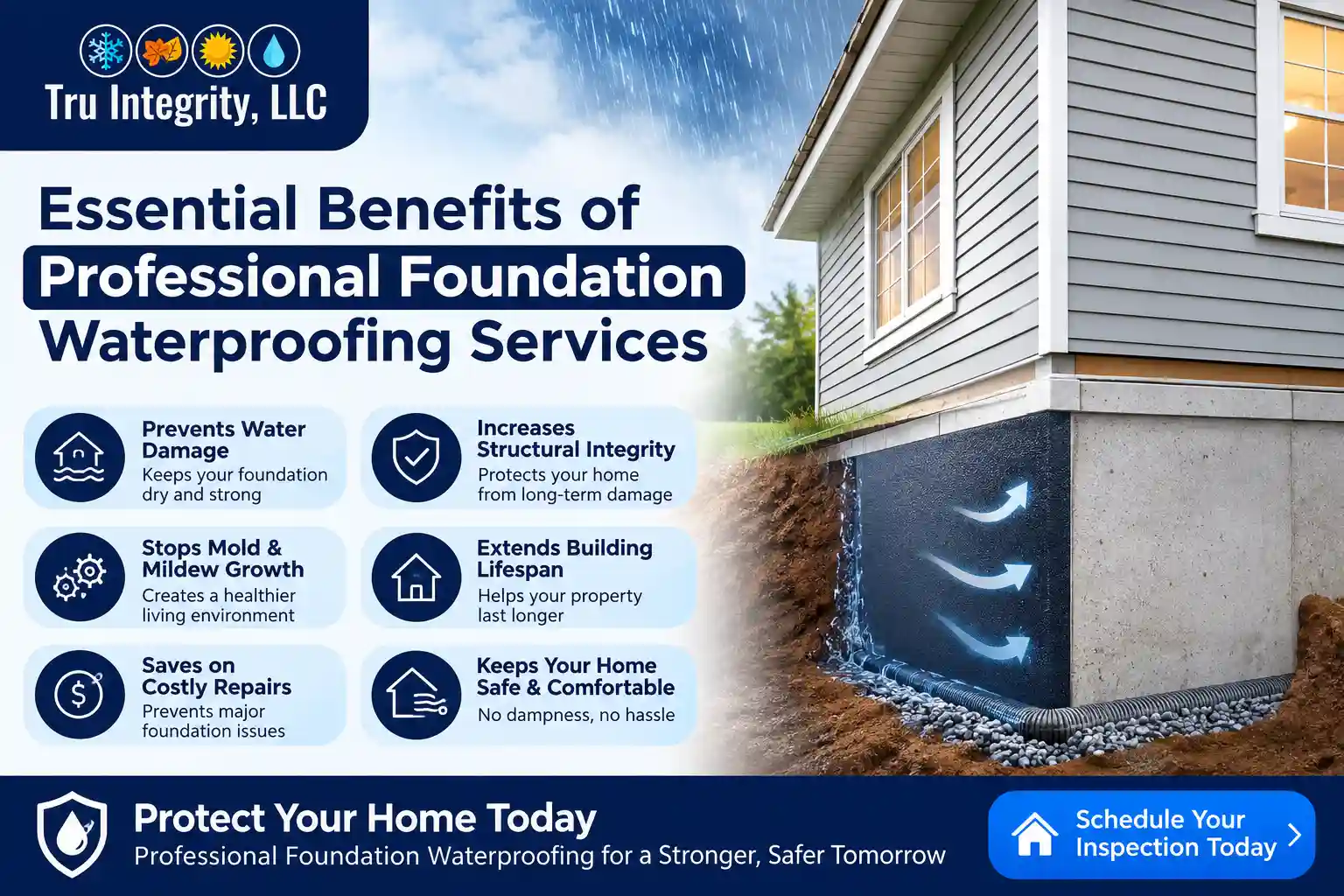
Foundation moisture may begin with a small damp spot, but it can become a much bigger problem when left untreated. Professional foundation waterproofing services help identify the source of water and provide a practical way to protect the foundation, basement, and surrounding areas. The objective is simple: control water before it leads to costly damage.
Key Takeaways:
- Foundation moisture can lead to expensive property damage when ignored.
- Waterproofing should address the source of water, not only visible symptoms.
- Proper drainage is often an important part of moisture control.
- Early action can help reduce the risk of larger repairs.
- A professional inspection can help identify the right waterproofing approach.
- Choosing an experienced contractor is important for long-term results.
Why Foundation Waterproofing Should Not Be Delayed
Water can enter through cracks, joints, porous concrete, poor grading, or drainage problems. Once inside, moisture can damage walls, floors, insulation, and stored items. Homeowners comparing basement waterproofing companies should consider professionals who can identify the actual source.
Early assessment can identify the source and help determine the right repair instead of relying on a temporary fix.
Essential Benefits of Professional Foundation Waterproofing
Professional waterproofing offers more than a solution for an active basement leak. It can provide several long-term benefits when the work is based on the property’s actual moisture conditions.
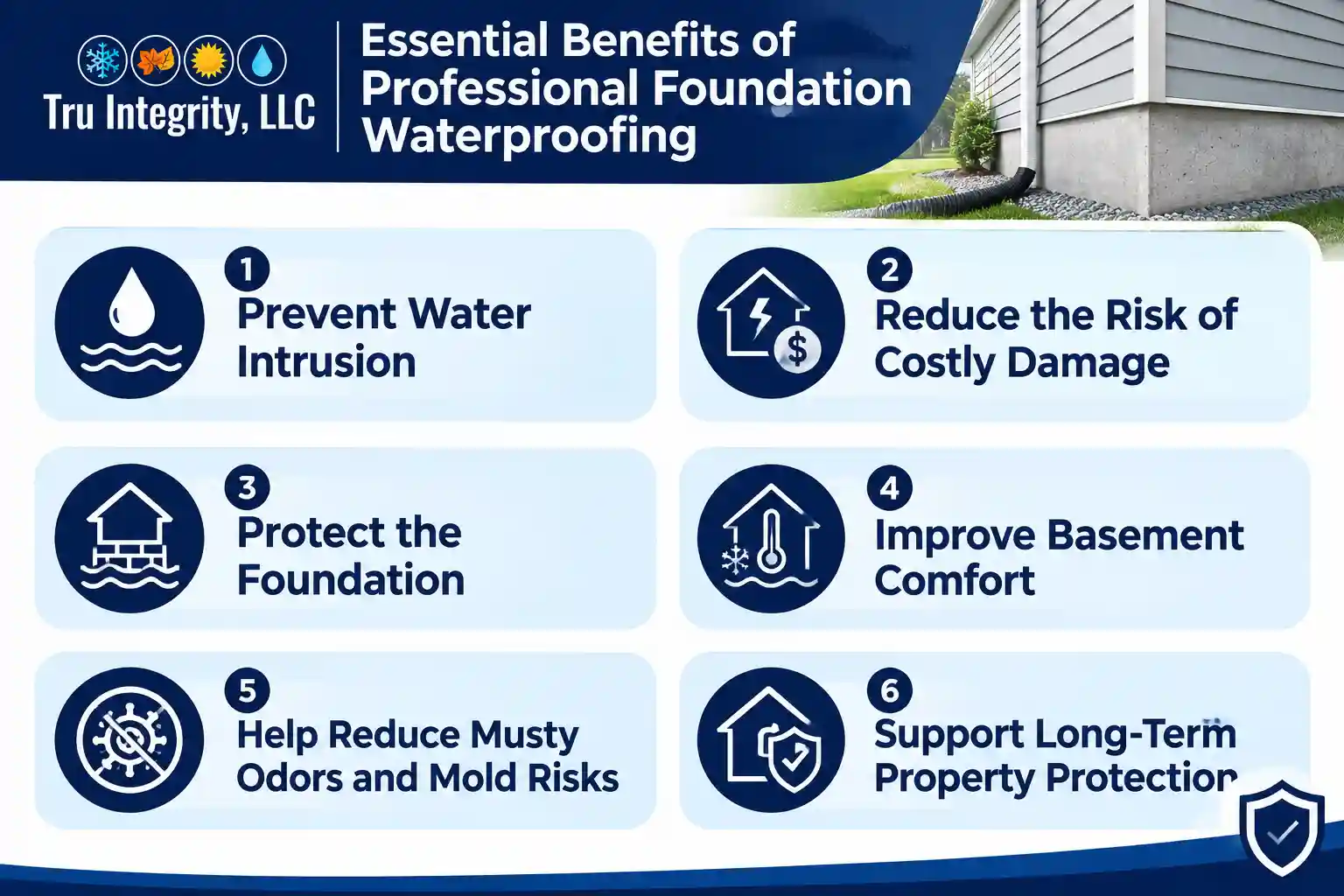
1. Prevent Water Intrusion
Waterproofing helps limit the amount of rainwater and groundwater that reaches the foundation. Addressing entry points can reduce recurring leaks and help keep basement areas drier.
2. Reduce the Risk of Costly Damage
Persistent moisture can damage drywall, flooring, insulation, furniture, and stored belongings. Taking action early may help prevent a small moisture concern from becoming a larger repair project.
3. Protect the Foundation
Water and hydrostatic pressure can place added stress on foundation materials. A suitable waterproofing and drainage approach can help manage moisture around the foundation and reduce water-related deterioration.
4. Improve Basement Comfort
A damp basement can feel cold, humid, and unpleasant. Better moisture control can create a drier environment that is more comfortable for storage, work, recreation, or other household uses.
5. Help Reduce Musty Odors and Mold Risks
Excess moisture can contribute to musty odors and conditions that support mold growth. Controlling water entry is an important step in maintaining a cleaner and drier basement environment.
6. Support Long-Term Property Protection
Waterproofing can be a useful preventive investment. When combined with proper drainage and routine maintenance, it can help reduce recurring moisture concerns and protect important parts of the property over time.
Protect Your Home From Water Damage
One of the biggest benefits of professional waterproofing is better protection against water intrusion. A proper assessment looks beyond the visible moisture and considers where the water is coming from.
Homeowners often compare basement waterproofing companies when they notice leaks or dampness. However, the right solution depends on the property’s foundation, drainage conditions, soil, and source of water.
A professional inspection can help determine whether the problem is related to:
- Foundation cracks
- Poor grading around the property
- Clogged or damaged drainage systems
- Hydrostatic pressure
- Leaking joints
- Poor exterior drainage
- Groundwater movement
Understanding the cause is important because simply sealing a wet wall may not solve the underlying problem.
Improve Basement Comfort and Usability
A damp basement is rarely a comfortable space. Excess moisture can make the area feel cold, humid, or unpleasant.
Effective waterproofing can help create a drier environment. That can make a basement more suitable for storage, a home office, a recreation area, or other uses.
Homeowners searching for basement waterproofing companies near me should look for professionals who examine the entire moisture problem rather than focusing only on the most obvious leak.
A good evaluation may include the foundation walls, floor, drainage, grading, gutters, downspouts, and other areas that can affect basement moisture — including basement windows, which are an often-overlooked entry point.
Help Prevent Mold and Musty Odors
Moisture creates an environment where mold can become a concern. Even when there is no visible mold, persistent dampness can contribute to musty smells and poor indoor conditions.
Keeping water out is an important part of moisture management. Waterproofing alone cannot address every indoor air or moisture issue, but controlling water entry can remove one major source of excess moisture.
Homeowners should also address leaks quickly and keep basement areas properly ventilated when appropriate.
Protect the Foundation Over Time
The foundation supports the entire home, so protecting it should be a long-term priority. Water does not always cause immediate structural damage, but repeated exposure can put unnecessary stress on foundation materials.
Professional assessment can identify conditions that may need attention before they become more serious.
At Tru Integrity, the focus is on understanding the property’s specific moisture conditions and helping homeowners choose practical solutions. The right approach should consider both the current problem and the conditions that may cause it to return.
Choose the Right Waterproofing Approach
There is no single waterproofing method that works for every property. The appropriate solution depends on where water enters and how it moves around the foundation.
Possible approaches may include:
- Exterior foundation waterproofing
- Interior drainage systems
- Sump pump solutions
- Crack repair
- Drainage improvements
- Grading adjustments
- Gutter and downspout improvements
A professional evaluation helps determine which options make sense for the property. It can also prevent homeowners from spending money on repairs that only treat the symptom.
Know What to Look for in a Waterproofing Professional
Choosing the right contractor is just as important as choosing the right waterproofing method. Look for professionals who take time to inspect the property and explain their recommendations clearly.
Experienced waterproofing specialists should be able to discuss the likely source of moisture, possible solutions, and the expected purpose of the recommended work. Clear answers can help homeowners make a more informed decision.
Search Locally, But Compare More Than Price
Searching for basement waterproofing companies near me can make it easier to find professionals who understand local soil, weather, and common drainage conditions. However, location should not be the only deciding factor.
Compare experience, inspection practices, proposed solutions, warranties where applicable, and customer service. The cheapest option may not always address the actual cause of the moisture.
A proper waterproofing project should be based on the property’s needs rather than a one-size-fits-all package.
Protect Your Foundation Before Problems Grow
Foundation moisture is easier to manage when the cause is identified early. If you notice leaks, dampness, or other warning signs, professional foundation waterproofing services can help you understand the problem and choose a practical solution.
inspection can help identify the right waterproofing approach. Tru Integrity can help property owners take the right steps toward a drier, better-protected foundation.
Frequently Asked Questions:
1. How do I know if my foundation needs waterproofing?
Signs may include water stains, damp walls, recurring basement leaks, musty odors, cracks, or standing water. A professional inspection can help determine whether waterproofing is appropriate.
2. Can foundation waterproofing stop basement leaks?
It can help prevent or control water intrusion when the correct method is used. The solution depends on the source of the leak and the property’s drainage and foundation conditions.
3. Is exterior or interior waterproofing better?
Neither method is automatically better for every home. The right choice depends on the source of water, foundation condition, drainage, accessibility, and other property factors.
4. How often should a foundation be inspected?
There is no universal schedule for every property. It is wise to have the foundation checked when you notice new cracks, leaks, dampness, drainage problems, or other changes.
5. Can waterproofing prevent future foundation problems?
Proper waterproofing can reduce water-related risks, but it cannot prevent every type of foundation problem. Regular drainage maintenance and timely repairs are also important.