
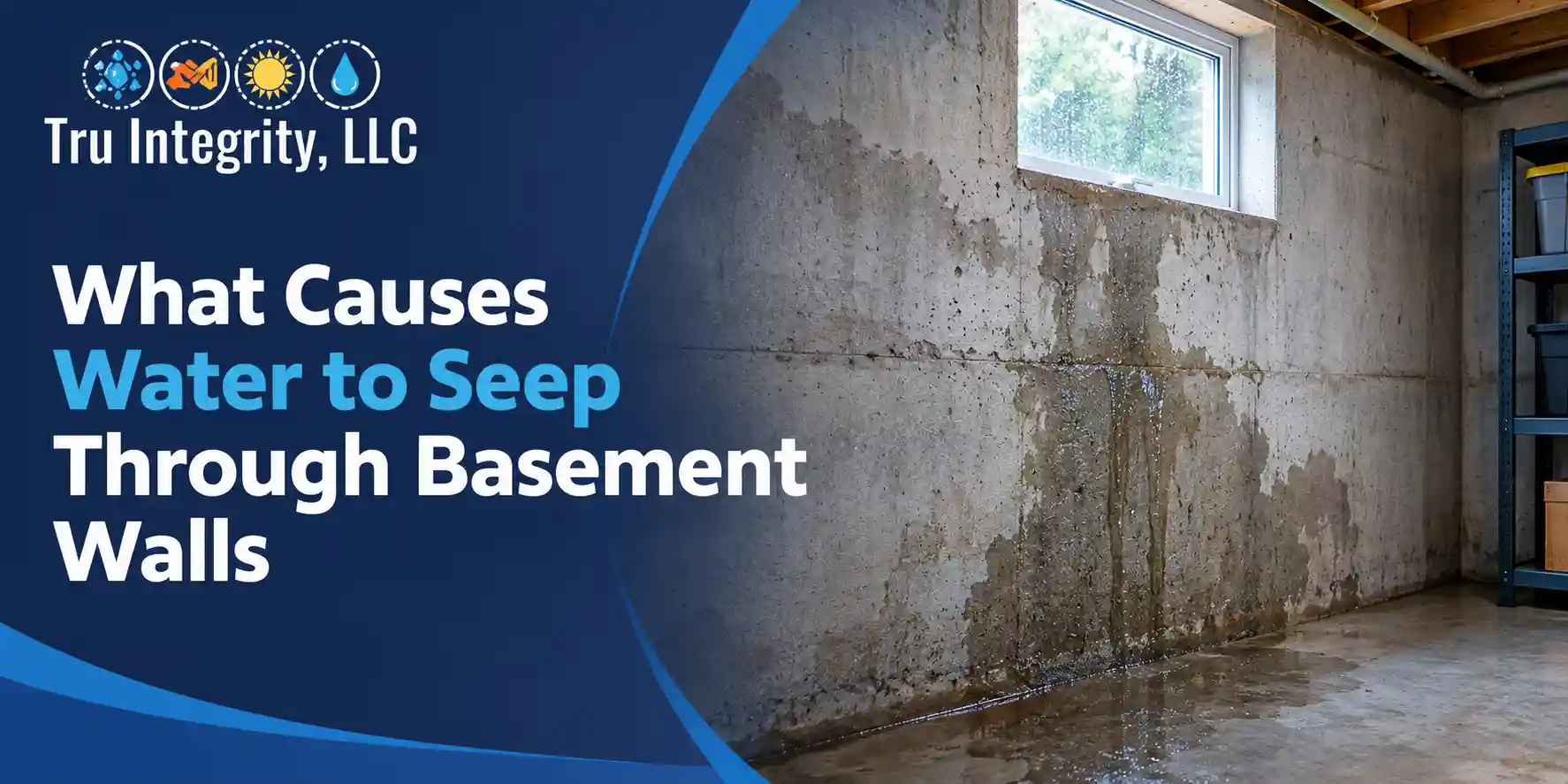
Water problems in a basement can begin with a small damp spot and become a bigger issue over time. Regular sump pump maintenance can reduce the risk of water buildup, but finding the actual source is just as important.
The goal is simple: identify where the water is entering, fix the cause, and take steps to prevent it from returning.
Key Takeaways:
- Water can enter through walls, floors, cracks, joints, and windows.
- Hydrostatic pressure is a common reason for basement water intrusion.
- Poor exterior drainage can increase moisture around the foundation.
- Cracks should be inspected instead of simply covered.
- Floor leaks may come from groundwater, slab cracks, or wall-floor joints.
- Drainage systems and sump pumps can help manage groundwater.
- Regular maintenance can reduce the chance of recurring water problems.
- Persistent leaks should be professionally assessed.
Start by Finding Where the Water Comes From
Before choosing a repair, first determine where the moisture is appearing. Water may enter through foundation walls, floor cracks, windows, joints, or plumbing areas.
Water seeping through basement walls is often linked to soil pressure, foundation cracks, or poor exterior drainage. The timing of the leak can provide useful clues.
Look for these signs:
- Damp patches on foundation walls
- Water appearing after rainfall
- Cracks with visible moisture
- Puddles near the wall-floor joint
- Wet areas around windows
- Water collecting near the sump pit
- Musty smells or peeling paint
Pay attention to when the problem occurs. If moisture appears mainly after storms, groundwater or drainage may be involved. If it happens without rain, a plumbing issue could be responsible.
Understand Why Basement Walls Let Water In
Several conditions can allow moisture to pass through a foundation. Some develop slowly, while others become noticeable after heavy rainfall.
Common causes include:
Hydrostatic pressure
Saturated soil can create pressure against foundation walls. That pressure may force water through cracks and porous concrete.
Foundation cracks
Even small cracks can become pathways for water. Larger or changing cracks need closer inspection.
Poor grading
When soil slopes toward the home, rainwater can collect around the foundation instead of moving away from it.
Gutter problems
Clogged gutters or short downspouts can send concentrated water toward basement walls.
The floor can also be involved. Knowing how to fix water coming through basement floor areas starts with determining whether groundwater, cracks, joints, or drainage problems are responsible.
Check Your Exterior Drainage First
A simple walk around your property can reveal drainage problems.
Go outside after rainfall and observe how water moves. Look for areas where water remains close to the foundation or collects near basement windows.
Complete this quick exterior check:
- Inspect the gutters. Remove leaves and other debris.
- Check downspouts. Make sure they move water away from the foundation.
- Look at the soil. Low spots may allow water to collect beside the house.
- Check window wells. Make sure they are not holding standing water.
- Inspect nearby surfaces. Driveways and patios should not direct water toward the foundation.
These changes may not solve every basement leak, but they can reduce the amount of water reaching the foundation.
Inspect Cracks and Wall-Floor Joints
Foundation cracks can let water enter when outside pressure increases. Horizontal cracks need attention if they grow or show movement. The wall-floor connection, or cove joint, can also allow moisture in.
What should you check?
- Is the crack leaking?
- Does moisture appear after rain?
- Is the crack getting wider?
- Is water coming from the joint?
If you are researching how to fix basement walls that leak, identify the source before choosing a repair. Covering the surface may only hide the problem.
Know When Water Comes Through the Floor
A wet basement floor does not always mean the foundation walls are leaking. Groundwater can rise beneath the concrete slab when soil becomes saturated.
Water may also enter through cracks in the slab or through the joint where the floor meets the foundation wall.
The source can often be narrowed down by location:
Water in the center of the floor
→ Check for slab cracks or groundwater pressure.
Water along the edges
→ Inspect the wall-floor joint and drainage system.
Water near plumbing
→ Consider a possible plumbing leak.
For homeowners dealing with basement water seeping through floor areas, the right solution depends on the entry point.
Some situations may require crack repair. Others may need an interior drainage system and sump pump to control groundwater.
Improve Your Basement Drainage System
When groundwater is the main concern, managing that water is often more effective than simply sealing visible moisture.
An interior drainage system can collect water around the basement perimeter and direct it toward a sump pit. The sump pump then removes the collected water from the home.
A drainage system should:
- Collect groundwater effectively
- Direct water toward the sump pit
- Have a suitable discharge point
- Handle the expected water volume
- Include reliable pump operation
The sump pump is an important part of this setup. If it fails during heavy rainfall, water can quickly accumulate.
During routine sump pump maintenance, inspect the pump, discharge line, power connection, and backup system. Also remove debris from the pit and test whether the pump activates correctly.
Prevent Future Basement Water Problems
Fixing an active leak is only one part of basement protection. The next step is reducing the chances of the same problem returning.
Make these habits part of your home maintenance:
- Clean gutters regularly.
- Keep downspouts clear.
- Direct water away from the foundation.
- Inspect foundation walls after major storms.
- Check basement windows and window wells.
- Test the sump pump.
- Watch for new cracks.
- Look for standing water outside.
Inside the basement, pay attention to changes. A new stain, damp smell, peeling paint, or wet patch may indicate that water is returning.
Early action can prevent a small moisture problem from becoming a much more expensive repair.
Choose the Right Repair for the Problem
There is no universal basement waterproofing solution. The correct approach depends on how water reaches the basement.
Match the solution to the source:
| Problem | Possible approach |
| Foundation crack | Appropriate crack repair |
| Poor surface drainage | Improve grading and downspouts |
| Water pressure around foundation | Drainage or waterproofing |
| Groundwater beneath the floor | Interior drainage and sump system |
| Leaking basement window | Window or window-well drainage repair |
| Recurring wall moisture | Professional waterproofing assessment |
Homeowners asking how to stop water from leaking into basement areas should focus on controlling the source rather than only covering visible stains.
If water continues despite basic maintenance, professional evaluation can help determine whether the problem involves drainage, foundation conditions, or groundwater pressure.
Know When to Call a Basement Waterproofing Professional
Routine maintenance can help with minor moisture, but recurring or severe leaks need professional attention.
Consider an inspection if:
- Water returns after storms.
- Foundation cracks are growing.
- The floor stays wet.
- Drainage changes have not helped.
- The sump pump cannot keep up.
- Water appears in multiple areas.
Tru Integrity can identify the water source and recommend a suitable waterproofing solution.
Delaying repairs can lead to material damage, musty odors, and bigger moisture problems.
Take Action Before a Small Leak Gets Worse
Basement water problems are easier to manage when the source is identified early. Exterior drainage, foundation repairs, waterproofing, and sump systems can all play a role depending on the situation.
Regular sump pump maintenance can also help keep the drainage system ready when heavy rain arrives. If your basement continues to experience leaks or moisture, Tru Integrity can help you determine the most practical next step.
Frequently Asked Questions:
Q1. Why does water seep through basement walls after heavy rain?
Heavy rain can saturate the soil around a foundation. As water pressure increases, moisture may move through cracks, porous concrete, joints, or other weak points.
Q2. Can gutters contribute to basement leaks?
Yes. Clogged gutters and poorly positioned downspouts can release water close to the foundation. Improving drainage can help reduce the amount of water collecting around basement walls.
Q3. What should I do if water keeps entering through the basement floor?
Start by identifying the entry point. Check the floor for cracks, inspect the wall-floor joint, and look for signs of groundwater pressure or plumbing problems.
Q4. Is sealing a basement wall enough to stop water?
Not always. If groundwater pressure or poor drainage is causing the leak, sealing the visible area may not address the underlying source. A broader waterproofing or drainage solution may be needed.
Q5. How often should a sump pump be checked?
A sump pump should be tested regularly, particularly before periods of heavy rainfall. Check that it starts properly, the discharge line is clear, and the backup system is ready if one is installed.