
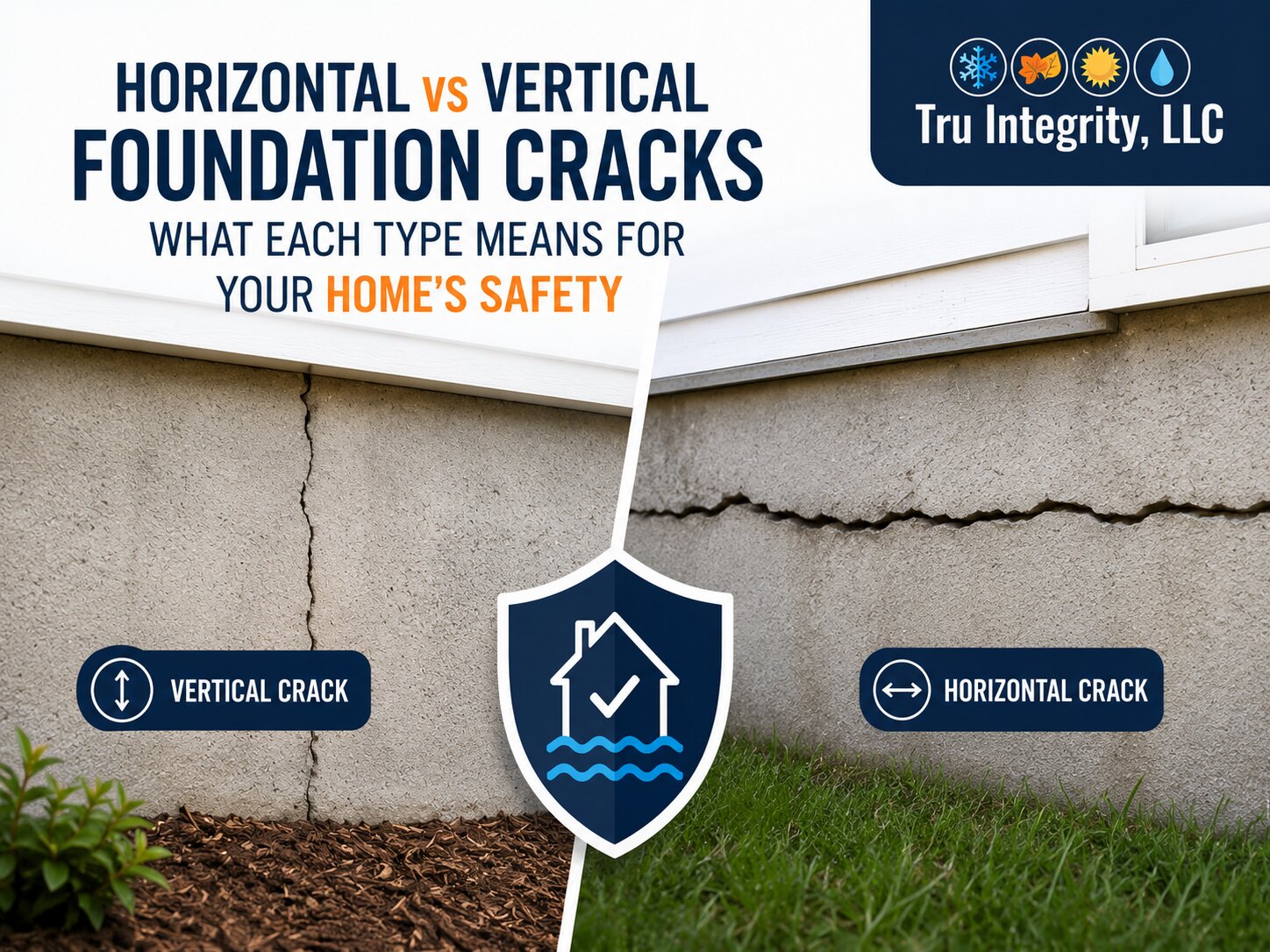
Foundation of a house is the main element that supports the whole building above it. Since soil shifting, changes in moisture levels, and settling of the building are the major reasons that keep affecting foundations, cracks may develop over time. Still, not all cracks should be treated equally; knowing their peculiarities will enable homeowners to determine when to call a professional for further inspection.
“Did You Know ? According to the Federal Emergency Management Agency (FEMA), water and moisture related issues can lead to foundation concerns and structural damage if homeowners leave them unaddressed over time.“
Recognizing the most typical crack patterns will allow homeowners not only to identify signs that might indicate problems but also to decide on the best course of action when it comes to repairs and maintenance.
At Tru Integrity LLC, we believe that determining what type of crack one has is a solid step toward finding out what could be going on underneath or in the vicinity of a home’s foundation. Some cracks may merely point to a part of the house that has settled properly, while others may be a sign of something more serious and a need for a professional.
Key Takeaways
- Vertical and horizontal foundation cracks can have different causes.
- It’s not just about the look; it’s about the size, location, and behavior of a crack.
- Moisture and drainage conditions can affect foundation performance.
- A professional should evaluate any cracks that are changing over time.
- An inspection will help determine if repairs are needed.
Why do foundation cracks appear in the first place?
Over its lifetime, the foundation sustains different external and internal forces due to its location and structure.
Here are some typical factors:
- Natural settling of the home
- Soil expansion and contraction
- Changes in moisture levels
- Drainage issues
- Hydrostatic pressure
- Seasonal weather fluctuations
Since several factors may contribute to cracking, it is often necessary to consult a professional to identify the biggest reason.
Understanding the various types of foundation cracks can help a lot in deciding if a crack is only cosmetic or if it needs the attention of a structural engineer.
What are vertical cracks, and what might they indicate?
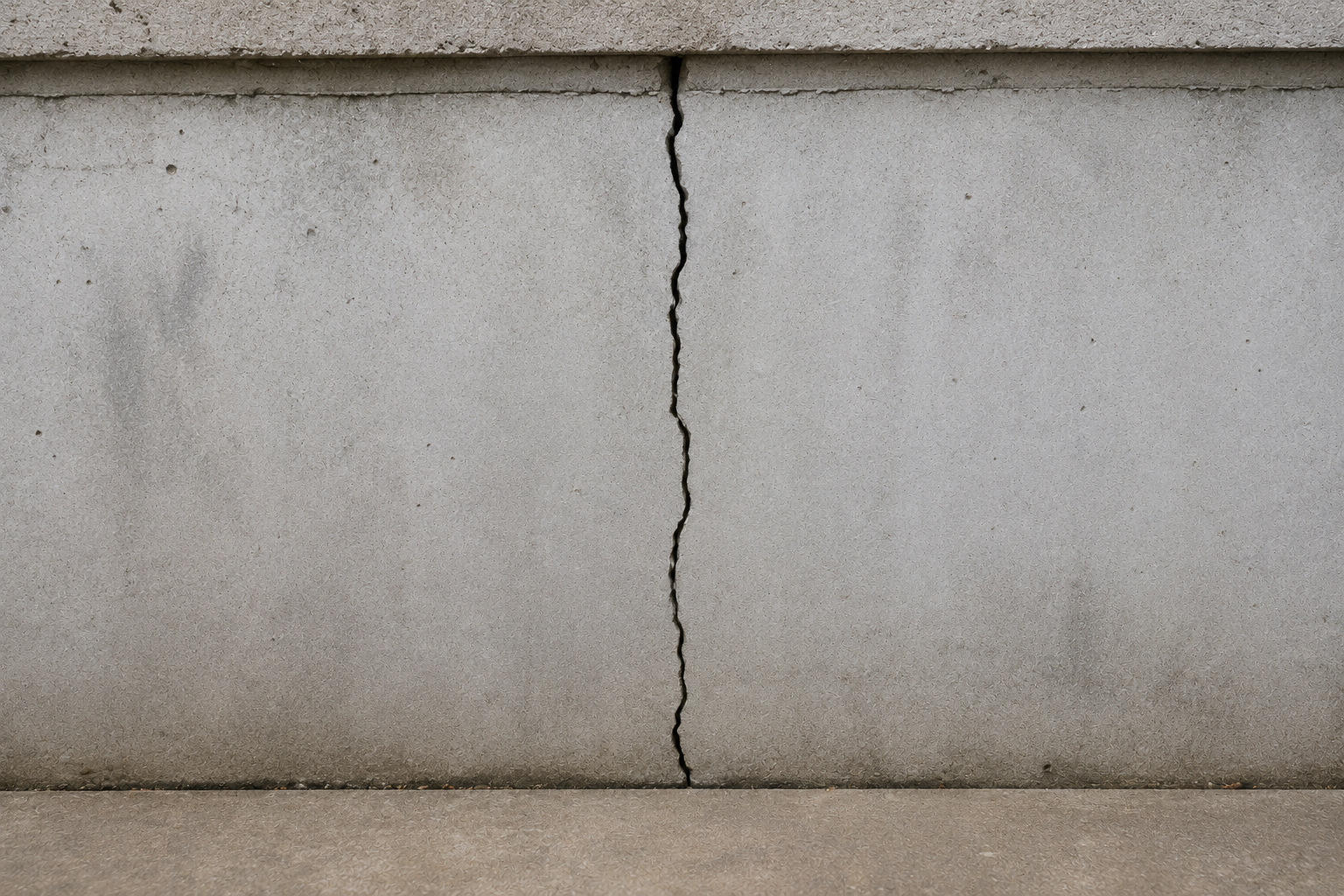
One of the more common crack patterns seen in the residential foundation is vertical cracking.
These cracks are vertical or slightly angled and generally appear over time due to natural settlement.
Usually the following are used to identify vertical cracks:
- Relatively narrow openings
- Limited displacement between sides
- Appearance near corners or wall sections
- Gradual development over time
In some cases, vertical cracks may be of little structural importance, but each case is different. In assessing foundation conditions, factors such as crack width, location, and moisture intrusion should always be considered.
Homeowners should monitor any crack that widens or permits water into the basement or crawl space.
How are horizontal cracks different?
Since horizontal cracks can indicate that pressure is acting on foundation walls, they are often the kind of cracks builders are concerned about.
These cracks are usually horizontal, parallel to the ground, and can occur in either poured concrete or masonry foundation walls.
Possible factors that may have contributed to this may include:
- Soil pressure
- Water accumulation around the foundation
- Poor drainage conditions
- Seasonal freeze-thaw cycles
Given the variety of horizontal cracking patterns, it is a sensible idea to get them checked by a professional when such cracks are seen.
Foundation cracks alone do not point to grave structural damage. Yet, analyzing the pattern and direction of cracks can help us a lot in identifying the underlying situations.
Which type of crack should homeowners be more concerned about?
There is no single answer.
Several factors determine how worried you should be about a crack:
- Crack width
- Length of the crack
- Location within the foundation
- Presence of wall movement
- Signs of moisture intrusion
- Changes over time
The owner may need only to monitor a small vertical crack, but a horizontal crack with signs of movement should be inspected in detail.
Some horizontal cracks may remain stable for a long time, whereas others may be the signs of rising tensions against foundation walls.
For this reason, professional assessments look at the whole foundation system rather than just the crack pattern.
What warning signs should homeowners watch for?
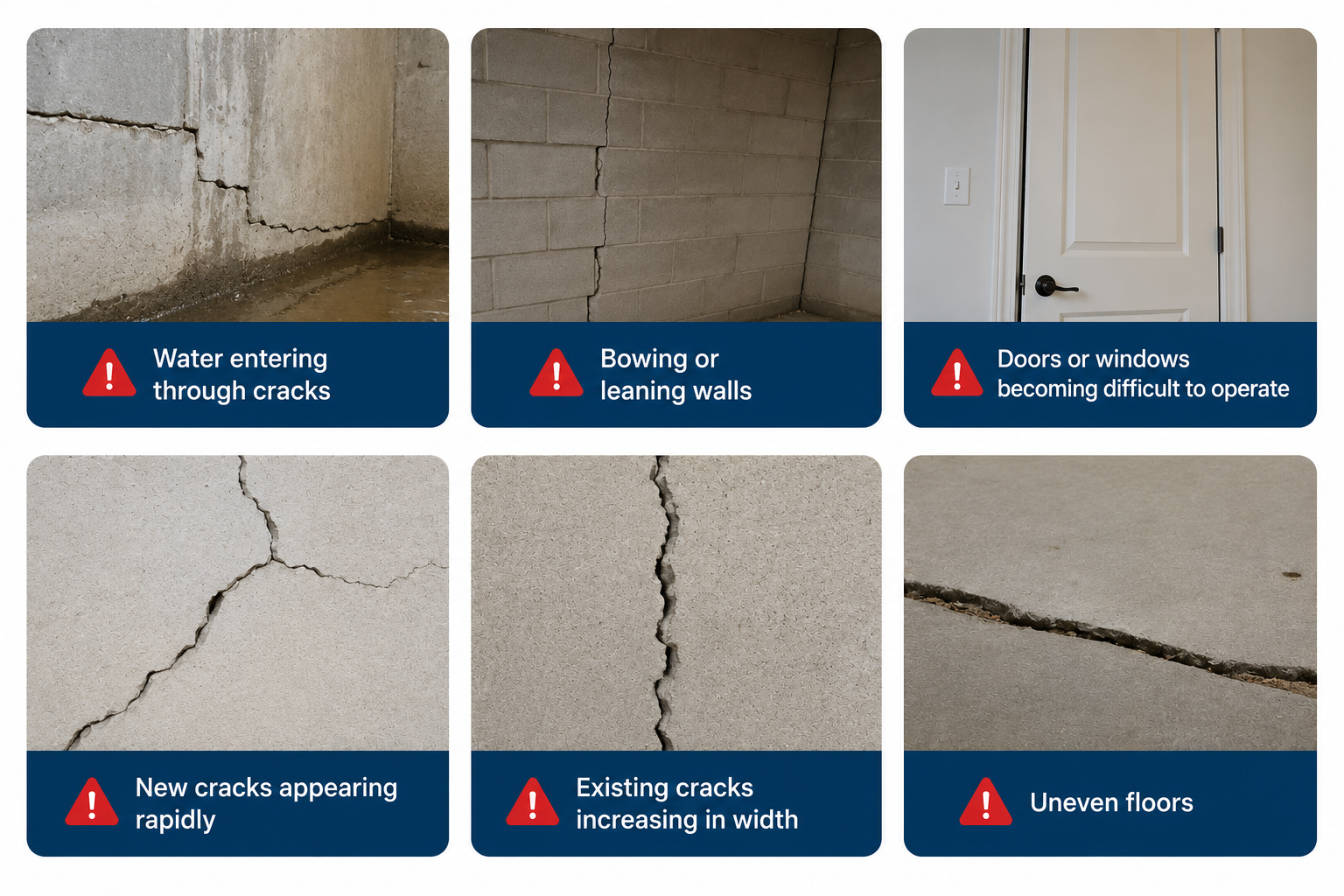
There are some conditions that may warrant further investigation.
These can include:
- Water entering through cracks
- Bowing or leaning walls
- Doors or windows becoming difficult to operate
- New cracks appearing rapidly
- Existing cracks increasing in width
- Uneven floors
If these signs come with the sight of cracks, a house owner can really benefit from having a chat with a knowledgeable expert.
Inspection can reveal whether foundation crack repair will be needed, taking into account conditions observed at the site.
Can moisture make foundation crack problems worse?
Water is usually an important factor in how well a foundation performs.
If there is water gathering around a home, the soil may expand, the foundation walls may experience more pressure, and the stability of the ground may change.
This is why having good drainage around a property is usually considered an essential part of foundation upkeep.
At Tru Integrity LLC, we check not only visible cracks but also the surroundings that can affect a foundation’s long-term performance.
Finding and fixing drainage problems early may actually decrease the factors that cause foundation issues in the future.
Why professional inspections are important
Crack patterns just by themselves hardly ever convey the entire story.
Two cracks that look similar on the surface may have very different causes and repair needs.
A professional inspection is a great tool to assess:
- Foundation condition
- Structural movement indicators
- Moisture related concerns
- Drainage conditions
- Crack progression
Using this data, homeowners can decide better on what to do after seeing the actual condition rather than guessing.
In case it is necessary, a professional foundation crack repair service will provide the homeowner with appropriate fixes that align with the home’s structural situation.
Schedule a Foundation Inspection for Peace of Mind
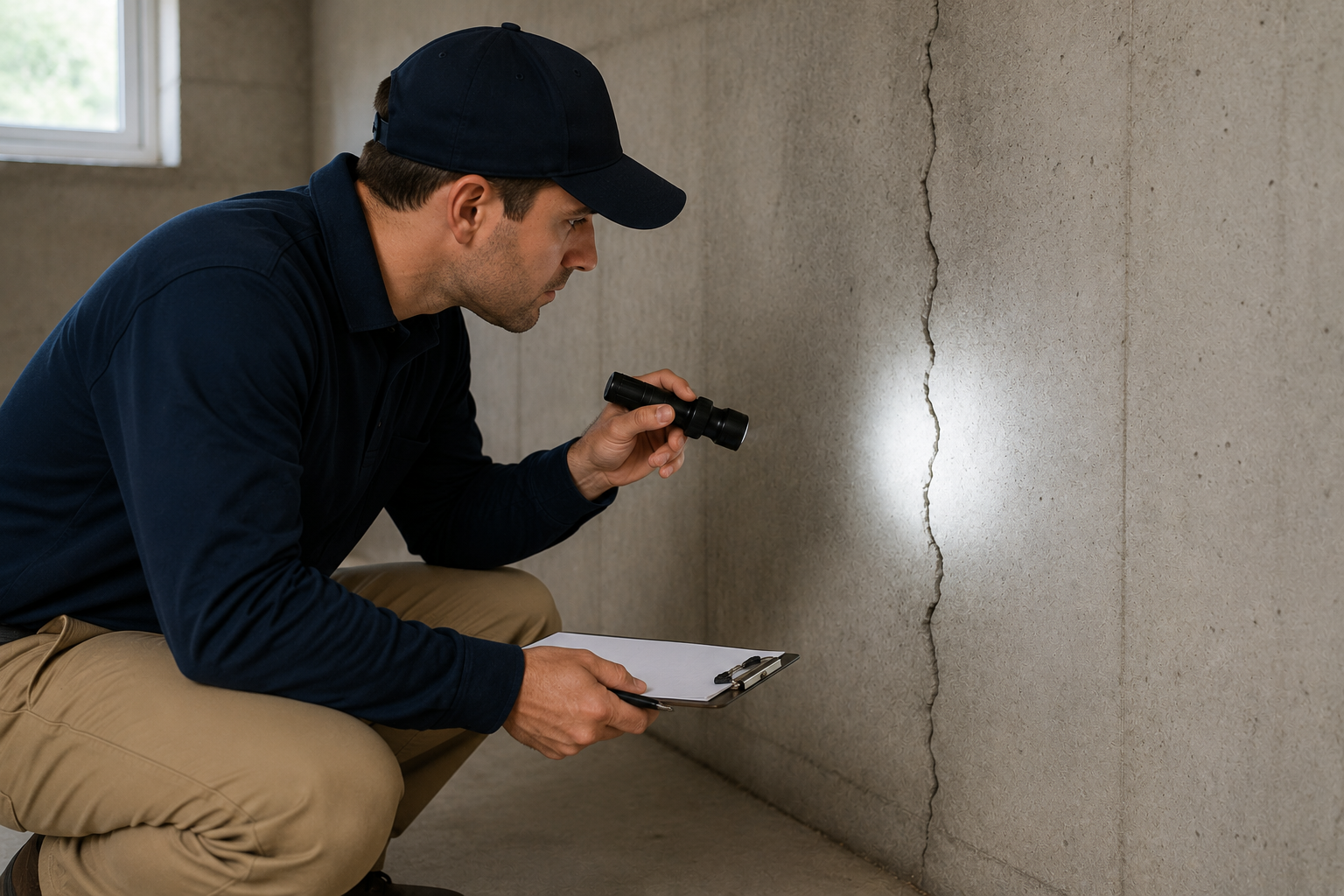
If you find cracks in your foundation walls, basement, or crawl space, a professional assessment is a valuable way to get some clarity. Often the cause of the cracking can help decide whether repairs or regular monitoring are the best options.
Tru Integrity LLC assists home owners in evaluating their foundation problems and finding the best solution to suit the particular conditions of their property. Contact us to learn about ways to maintain the structural stability of your home in the long run.
Frequently Asked Questions
Q1. What are the most common types of foundation cracks?
Ans: Besides vertical cracks, horizontal cracks and zigzag/step cracks are also commonly found in residential foundations.
Q2. Are horizontal foundation cracks always serious?
Ans: Not necessarily. Still, since horizontal cracks have the potential of resulting from pressure against the walls of the foundation, it is always a wise idea to have a professional check them.
Q3. Can vertical cracks allow water into the basement?
Ans: It is Yes possible for water to enter the basement through vertical cracks, Mainly if the cracks are large, located where water can enter, or if the surrounding conditions are favorable for water intrusion.
Q4. When should I consider foundation crack repair?
Ans: Professional assessment may become necessary if cracks appear to be growing or are causing water leakage or if other signs such as shifting walls and uneven floors are also present.
Q5. How can a foundation crack repair service determine the cause of a crack?
Ans: Before providing solutions, a certified inspector will consider the crack features, evaluate drainage, assess foundation structures, and look for other potential contributors.