
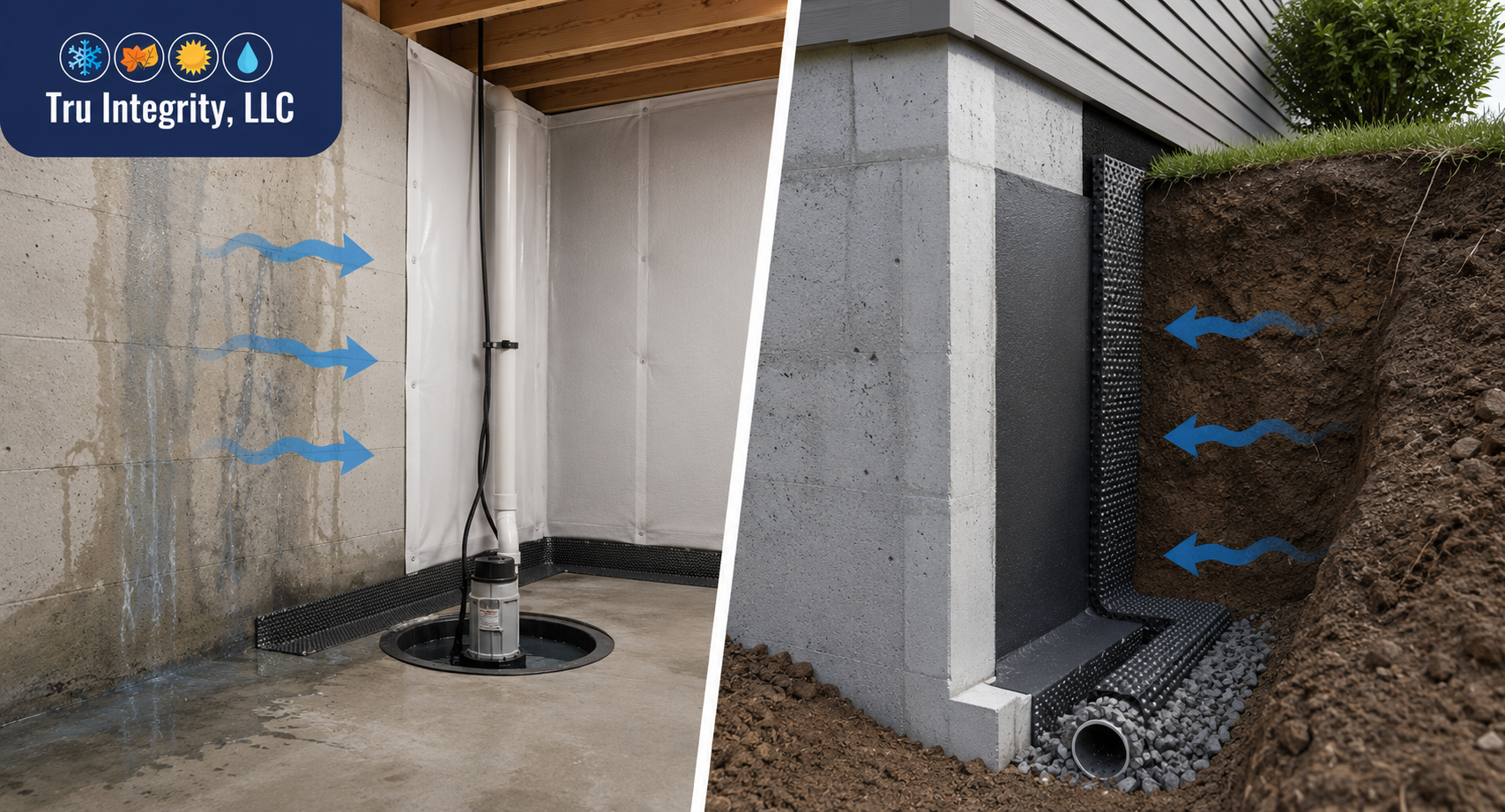
The basement must stay dry to ensure the structural integrity of the house and provide additional living space. In case of frequent water infiltration issues, people may wonder whether to choose interior or exterior waterproofing for the foundation. There is a need to choose waterproofing according to the source and way of moisture infiltration.
Did you know? According to the U.S. Environmental Protection Agency (EPA), reducing moisture around a home’s foundation and addressing water intrusion promptly can help protect building materials and indoor spaces from moisture related damage.
At Tru Integrity LLC, we realize that every property is different. The best waterproofing solution is usually decided after assessing where the moisture is coming from, how it drains, and the state of the foundation itself.
Knowing the difference between interior and exterior waterproofing can be an asset for homeowners prior to moisture damage becoming a bigger problem.
Key Takeaways
- Interior and exterior waterproofing solve different types of moisture problems.
- The source of the water determines the best way to waterproof a home.
- Certain homes require a blend of waterproofing methods.
- Maintaining the house prevents moisture problems.
- An expert can determine the correct waterproofing solution for your home.
Why isn’t every basement waterproofed the same way?
No two homes experience water intrusion for exactly the same reason.
Hydrostatic pressure from underneath may cause some basements to leak moisture, while other basements are affected by leakage through their walls. There is a need to understand the factors that determine the right choice of waterproofing procedure for each project.
Proper identification of the source of moisture is key in selecting the waterproofing solution for basement projects.
What are interior waterproofing methods?
As the name implies, interior waterproofing methods mainly deal with handling water once it enters the foundation or basement of the building.
Depending on the condition of the home, these techniques may include the following:
- Interior drainage channels
- Moisture management systems
- Crack sealing where appropriate
- Sump pump integration
- Water collection systems
Interior waterproofing techniques usually aim to handle water efficiently within the basement and direct it away from the home.
The exact technique will depend on the construction of the house and the conditions identified during a professional inspection.
How do exterior waterproofing systems work?
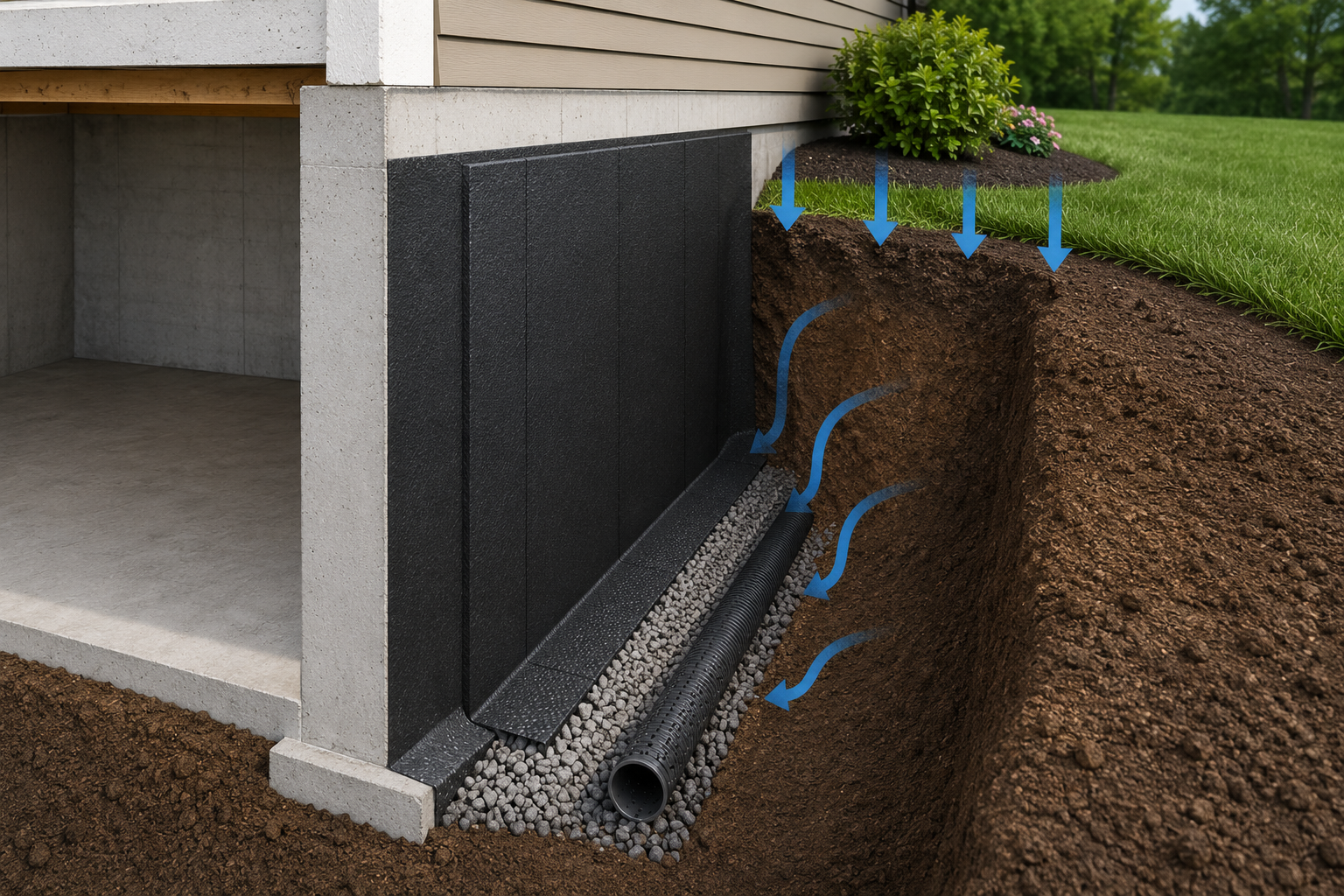
Unlike interior methods, exterior waterproofing systems aim to reduce water from reaching the foundation walls in the first place.
Depending on site conditions, exterior work may include the following:
- Foundation wall protection
- Exterior drainage improvements
- Grading corrections
- Water diversion strategies
- Waterproof membranes where appropriate
Because this work occurs outside the home, recommendations often depend on accessibility, landscape conditions, and the source of water intrusion.
Is one option always better than the other?
Not always.
Homeowners often think that external waterproofing will be better in all cases, whereas others think that internal systems can handle everything. It is not true; each option will have its merits.
The best solution to employ will depend on the following aspects, among others:
- Source of water intrusion
- Foundation condition
- Soil and drainage characteristics
- Severity of moisture problems
- Existing waterproofing measures
In some situations, it will make more sense to combine interior and exterior methods.
Can interior waterproofing solve every moisture issue?
Not necessarily.
When homeowners ask about waterproofing inside basement areas, the response will depend on the cause of the moisture problem.
Where moisture occurs as a result of drainage problems, ground water pressure, or conditions of the foundation outside the building, other fixes may also be needed.
This is why understanding the cause of moisture is sometimes more critical than the choice of waterproofing techniques.
Why is a professional evaluation important?
Visible water is only one part of the picture.
During an inspection, professionals may evaluate:
- Foundation walls
- Floor joints
- Drainage conditions
- Moisture patterns
- Existing waterproofing systems
- Signs of structural movement
This information helps determine which waterproofing approach best fits the property’s needs.
At Tru Integrity LLC, recommendations are based on observed conditions rather than a one-size-fits-all solution. Every home is evaluated individually so homeowners receive guidance appropriate for their specific situation.
How can homeowners help prevent future moisture problems?
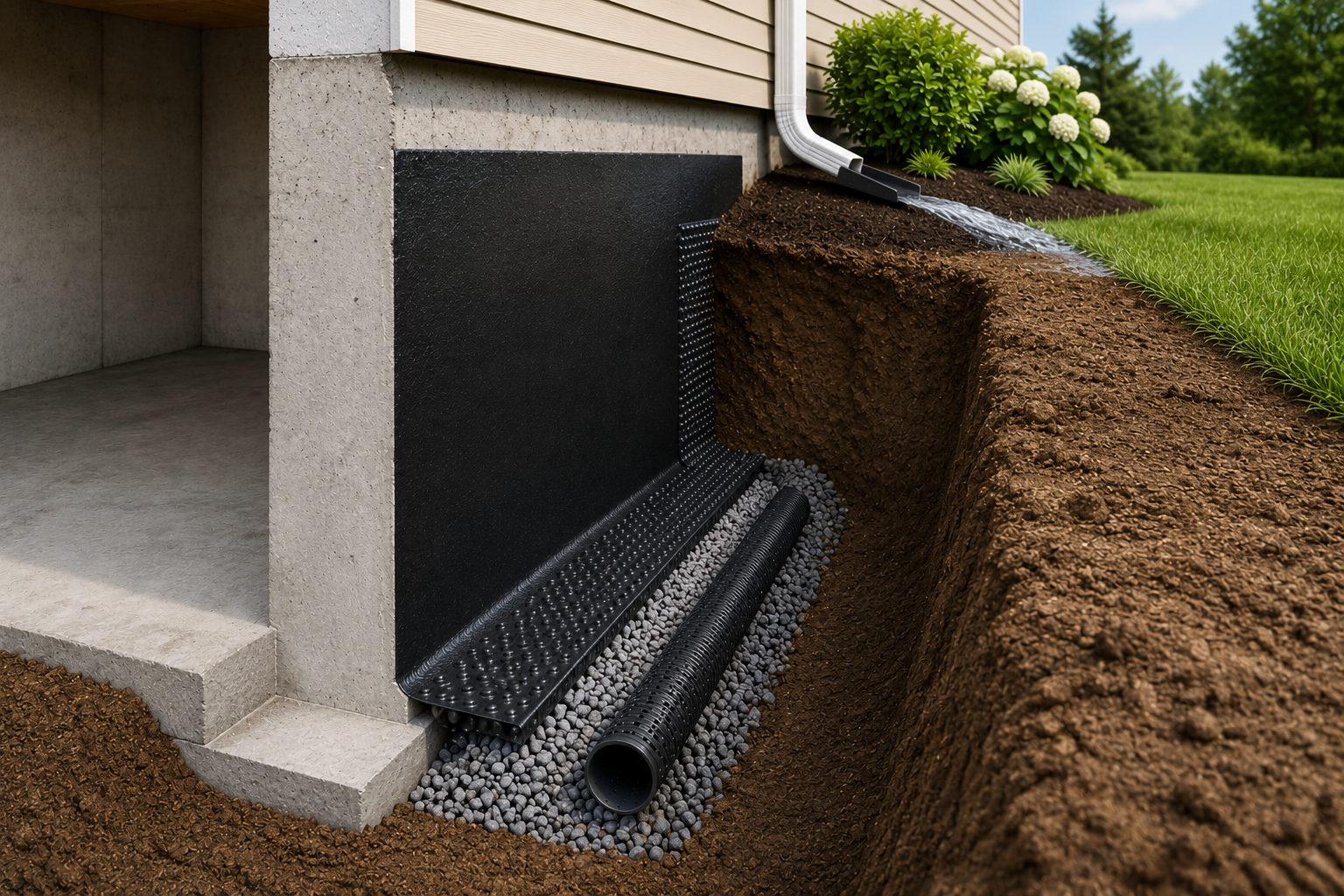
While some moisture issues require professional repairs, regular maintenance can also help reduce future concerns.
Helpful practices include:
- Cleaning gutters regularly
- Extending downspouts away from the home
- Monitoring basement humidity
- Inspecting for new cracks
- Maintaining proper grading around the foundation
Homeowners experiencing recurring water intrusion may also benefit from discussing basement waterproofing services with a qualified professional to better understand available options.
Protect Your Basement with Professional Guidance
The best waterproofing solution for a basement approach depends on understanding where moisture is coming from rather than simply choosing an interior or exterior method. Identifying the source of water intrusion helps ensure that the recommended solution addresses the underlying issue and supports long term basement protection.
If you’ve noticed damp walls, musty odors, water stains, or recurring moisture, a professional evaluation can help determine the most appropriate course of action. At Tru Integrity LLC, we assess each property individually and recommend waterproofing solutions based on its specific conditions.
Contact our team today to schedule an inspection and protect your basement and foundation from future water intrusion.
Frequently Asked Questions
Q1. What is the difference between interior and exterior basement waterproofing?
Ans: Interior waterproofing manages water after it reaches the basement, while exterior waterproofing helps reduce water from reaching the foundation.
Q2. Which waterproofing method is better for my home?
Ans: The most appropriate solution depends on the source of moisture, drainage conditions, and the overall condition of the foundation.
Q3. Can interior waterproofing stop all basement leaks?
Ans: It can address many moisture issues, but additional exterior improvements may be recommended depending on the cause of water intrusion.
Q4. Do all homes need exterior waterproofing?
Ans: No. Some homes may achieve effective moisture management with interior systems or other drainage improvements identified during an inspection.
Q5. How do I know which waterproofing solution is right for my basement?
Ans: A professional inspection can evaluate your home’s conditions and recommend the most appropriate waterproofing approach based on the source of moisture.