
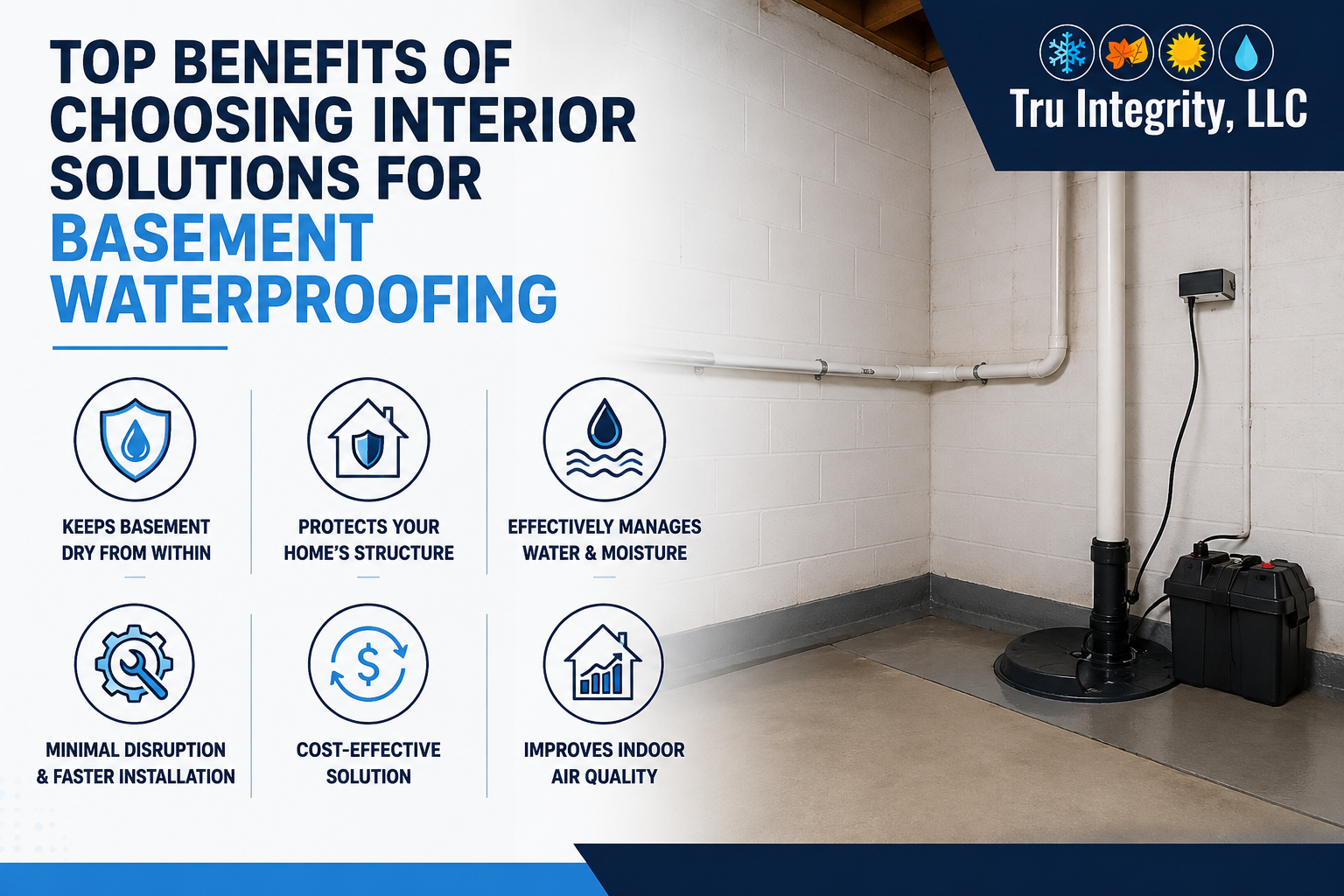
When choosing the right interior solutions for basement waterproofing, you need to understand how these methods help control water once it reaches the foundation. These techniques concentrate on managing the effects of water rather than totally preventing it from entering the basement.
“Did you know? According to the United States Environmental Protection Agency, controlling moisture is the most important part of controlling mold. This shows how important it is to keep indoor moisture levels under control to protect building materials.”
Key Takeaways
- Waterproofing the inside of the basement helps keep moisture under control.
- These fixes make things easier to use and keep them from getting too wet.
- Installation is often less disruptive than methods that are done outside.
- You can get better results by using more than one method.
- An expert evaluation helps make sure the right way is taken.
When it comes to basement moisture control, Tru Integrity LLC usually sees interior waterproofing solutions as just one part of a bigger plan to keep the indoor environment more stable.
Why Do Homeowners Consider Interior Waterproofing?
People often choose waterproofing inside basement systems when moisture has already reached the basement or when outside solutions may not be enough. These systems don’t just keep water out from the outside; they also help control it from the inside.
Common reasons homeowners consider waterproofing inside basement areas include:
- Persistent dampness or humidity
- Minor seepage through walls or floors
- The need for improved moisture control
These solutions are usually used to help with ongoing maintenance instead of replacing whole waterproofing systems.
How Do Interior Solutions Help Manage Moisture Effectively?
Interior waterproofing methods are meant to keep water from getting into or reaching the basement structure in the first place. This could mean guiding water toward drainage systems or keeping it from harming surfaces inside.
These approaches may help:
- Reduce visible signs of moisture
- Improve overall basement conditions
- Support a drier and more usable space
Interior systems are often used to control and manage moisture in a consistent way, though results can vary depending on the situation.
Can Interior Waterproofing Improve Basement Usability?
A basement that is wet may not be able to be used as much. Humidity and moisture can make the environment less comfortable for storage or everyday use, even if there is no standing water.
By supporting basement water protection, interior solutions may help:
- Create a more stable indoor environment
- Reduce dampness-related concerns
- Improve overall functionality of the space
Over time, these changes can make basements more useful for several purposes.
Are Interior Methods Easier to Install?
One benefit of interior approaches is that they are usually put in inside the basement, which may mean that less digging is needed outside.
Such methods may result in:
- Less disruption to landscaping
- Easier installation steps
- Reduced impact on surrounding areas
This feature makes interior solutions a good choice for many homeowners, especially when work on the outside isn’t possible.
How Do Interior Solutions Help with Long-Term Maintenance?
A lot of the time, interior systems are part of a plan to keep moisture under control. These solutions may help lessen the effects of repeated exposure to moisture by keeping water in the basement under control.
Over time, such systems may contribute to:
- Lower maintenance requirements
- Reduced likelihood of surface damage
- Better preservation of basement materials
At this point, Tru Integrity LLC usually looks at the basement’s condition and suggests interior fixes that fit the needs of the property.
What Types of Interior Waterproofing Methods Are Used?
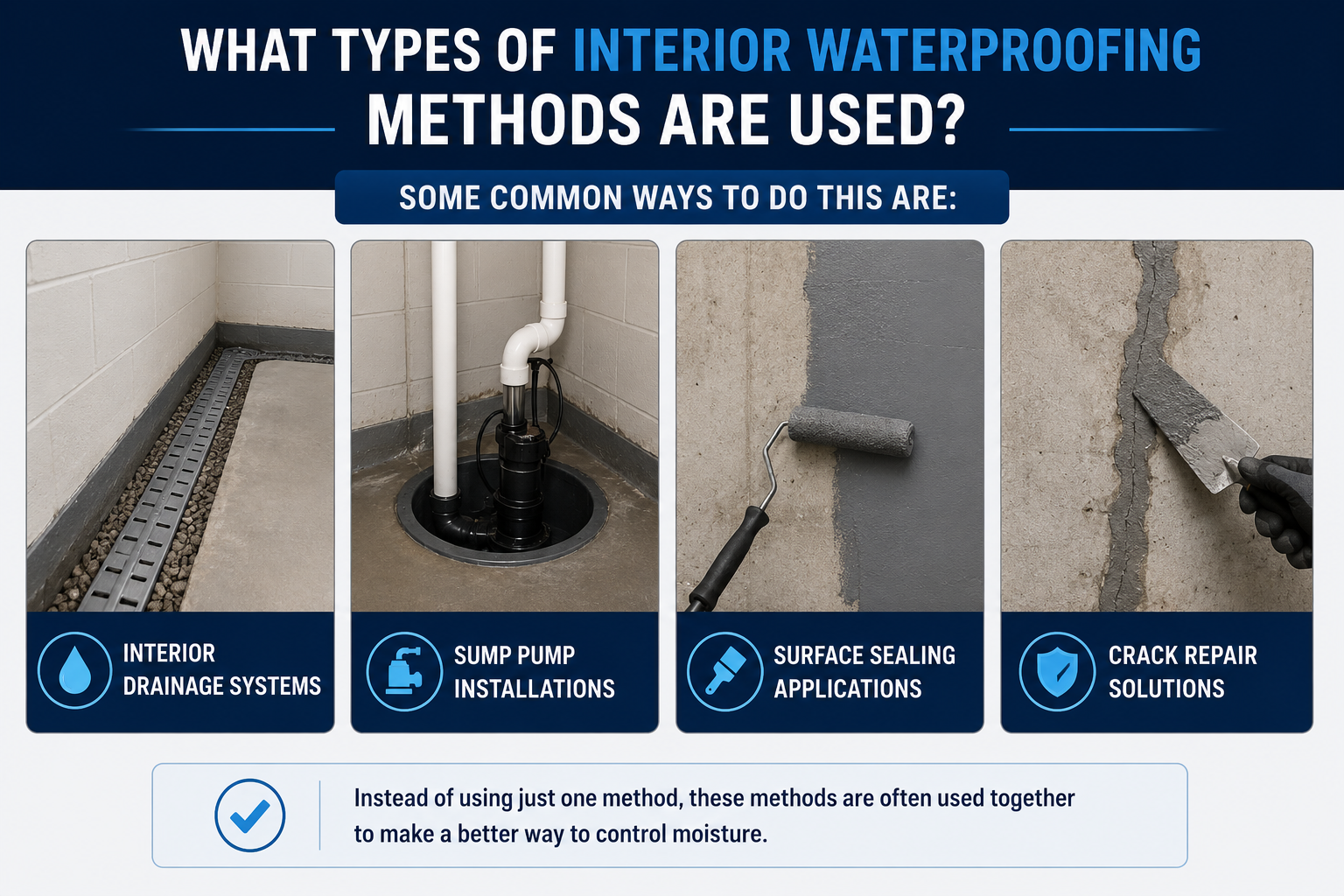
Depending on the condition of the basement, several interior basement waterproofing methods may be used.
Some common ways to do this are:
- Interior drainage systems
- Sump pump installations
- Surface sealing applications
- Crack repair solutions
Instead of using just one method, these methods are often used together to make a better way to control moisture.
Are Interior Solutions Good on Their Own?
Waterproofing the inside of your home can help control moisture, but it works best when used with other methods. In some cases, using both inside and outside methods together may give you better protection.
Things that affect how well something works are:
- The source of moisture
- The condition of the foundation
- Existing drainage systems
A balanced approach ensures that moisture remains under control both inside and outside the building.
What Should You Consider Before Choosing Interior Solutions?
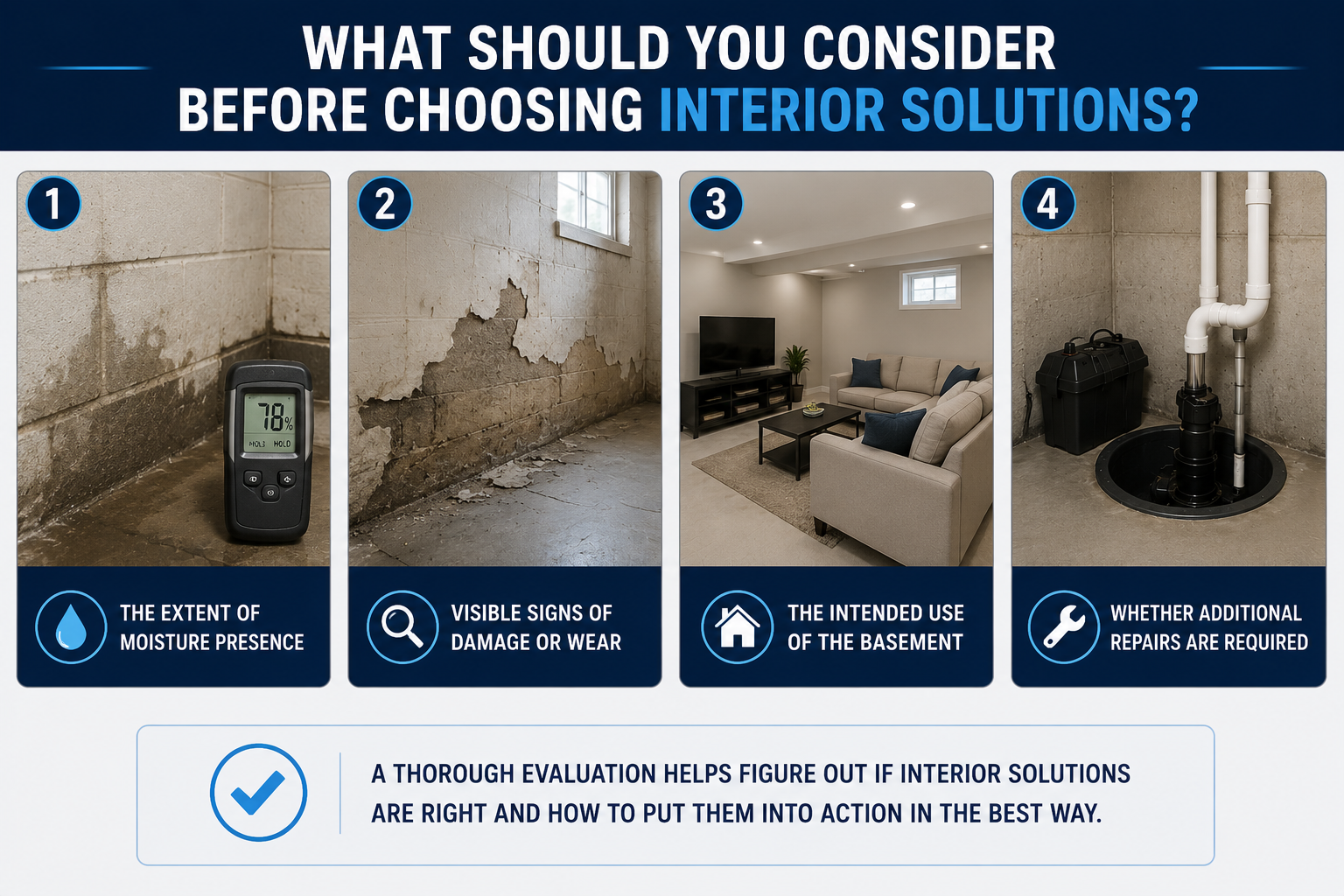
Homeowners may want to think about the following before choosing an interior waterproofing system:
- The extent of moisture presence
- Visible signs of damage or wear
- The intended use of the basement
- Whether additional repairs are required
A thorough evaluation helps figure out if interior solutions are right and how to put them into action in the best way.
Build a More Reliable Basement Environment
Moisture control in the basement is vital to the home’s health. Interior Solutions for Basement waterproofing may not completely stop water from getting in, but they do help control its effects and make the inside of your home more stable.
Homeowners can make their basements more usable and lower the chance of future problems by focusing on moisture control and long-term upkeep. Consider these fixes as part of a larger strategy to ensure the safety of the building.
Tru Integrity LLC offers interior waterproofing solutions that can help you improve the conditions in your basement and protect it for a long time. Get in touch with the team today to talk about options that are right for your home.
Frequently Asked Questions
Q1. What are Interior Solutions for Basement waterproofing?
Ans: Interior Solutions for Basement waterproofing use methods that help control and manage moisture inside the basement instead of stopping water from getting in completely.
Q2. Is waterproofing inside the basement effective?
Ans: Waterproofing the inside of basement areas can help control moisture, especially when used with other drainage or sealing methods.
Q3. What is basement water protection?
Ans: Basement water protection is the use of methods to keep moisture from damaging basement surfaces and keep the indoor environment stable.
Q4. What are common interior basement waterproofing methods?
Ans: Drainage systems, sump pumps, crack repairs, and surface sealing solutions are all ways to waterproof the inside of a basement.
Q5. Do I need both interior and exterior waterproofing?
Ans: Depending on the state of the basement, combining interior and exterior solutions may be the best way to control moisture.