
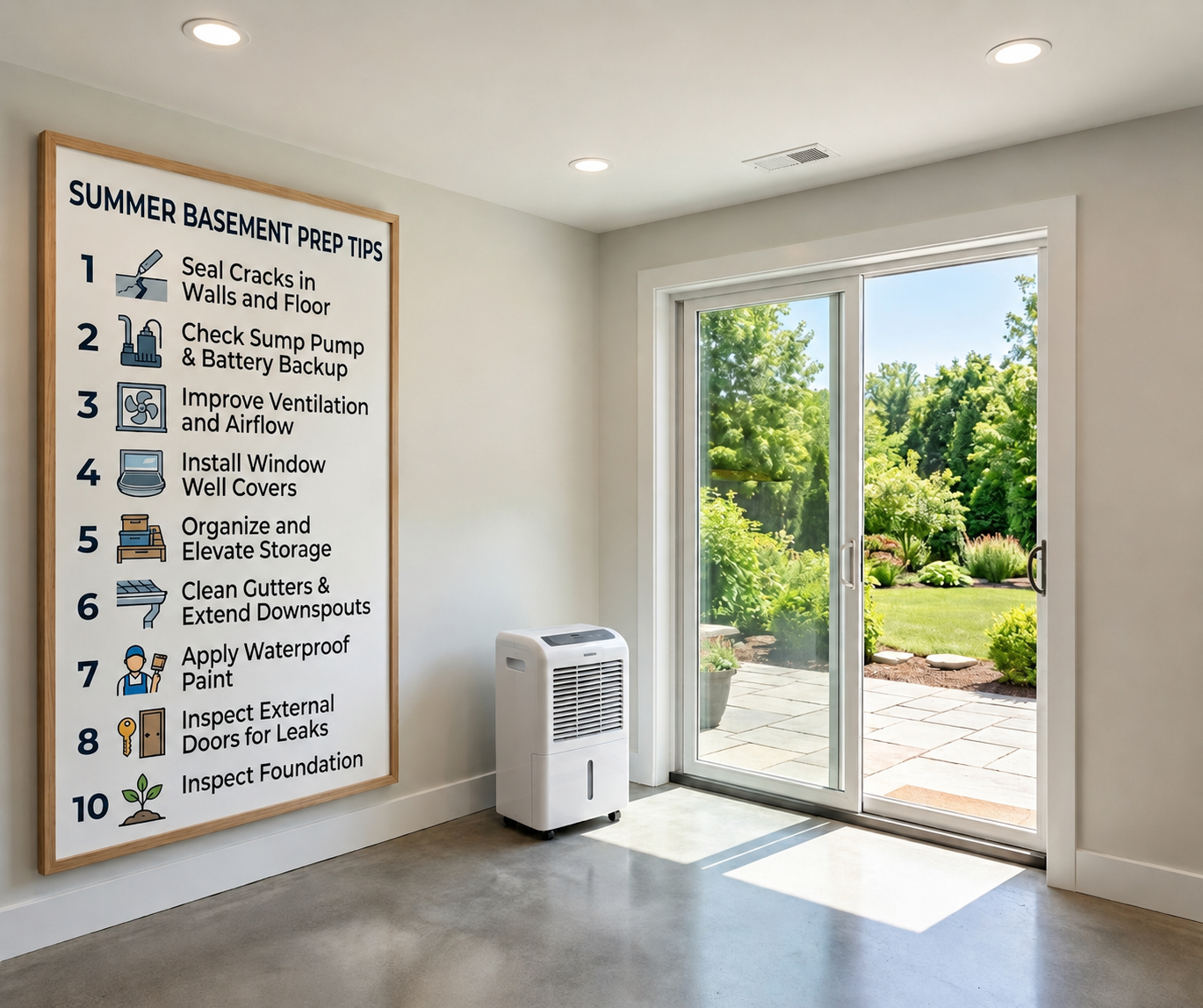
Summer is often associated with warm weather and outdoor projects, but it is also a good time to pay attention to your basement. Seasonal rain, humidity, and changing ground conditions can lead to moisture-related concerns if you do not address them early. Preparing your basement before problems develop may help protect your home’s foundation and interior spaces.
According to the U.S. Environmental Protection Agency (EPA), controlling moisture is one of the most effective ways to prevent mold growth inside homes.
A little preparation each summer can help keep your basement dry and healthy all season long.
At Tru Integrity LLC, we encourage homeowners to take a proactive approach to basement maintenance. Simple inspections and preventive measures can often help identify small concerns before they become larger repair projects.
Key Takeaways
- Summer is a good time to inspect your basement for moisture problems.
- Clean gutters and proper drainage help protect your foundation.
- Regular sump pump testing supports reliable operation.
- Small maintenance issues are easier to address when found early.
- Professional inspections can help identify the source of recurring moisture.
Why should homeowners prepare their basements before summer?
Warmer temperatures tend to be more humid and bring seasonal storms Many homes that are dry throughout the year can experience different moisture conditions during the summer months.
A proper summer basement prep routine helps homeowners identify maintenance needs before heavy rainfall or excess humidity creates larger concerns.
1. Inspect your basement for signs of moisture
Early detection helps you monitor changes and decide if you need professional help. Walk through the basement and look for:
- Damp walls
- Water stains
- Musty odors
- Peeling paint
- Visible mold or mildew
2. Check your gutters and downspouts
Gutters direct rainwater away from your home. Gutters can clog up, or downspouts can be installed wrong, and water can pool near the foundation.
Keep gutters clear and downspouts directed away from the foundation of the house whenever possible.
3. Test your sump pump
Be sure your sump pump is in good working order before the heavy rains come.
Routine sump pump maintenance may include checking power connections, testing the pump’s operation, and making sure the discharge line is clear.
Ensure your system has battery backup and that it is functioning properly.
4. Examine foundation walls carefully
Look for new cracks, cracks getting bigger or places where moisture looks like it’s coming in.
While not every crack means serious structural issues, monitoring changes over time can help you figure out if you need to look into it further.
5. Control indoor humidity
The humidity can be high enough to cause condensation and wet cellars.
Simple steps like increasing ventilation, using a dehumidifier when necessary, and maintaining a steady airflow can help reduce excess moisture inside your home.
6. Look around your crawl space
If you have a crawl space, check your home for standing water, damp insulation, or excessive humidity.
Proper crawl space moisture control can help reduce conditions that may affect other areas of the home over time.
7. Check the grading around your home
If possible, the soil around your house should slope away from the foundation.
Poor grading may allow water to collect near foundation walls during heavy rain, increasing the likelihood of moisture intrusion.
Long term moisture management begins with early attention to drainage.
8. Review your basement waterproofing system
If you have a waterproofing system in your home, summer is a good time to check the visible components and make sure they look like they are working properly.
Homeowners who experience recurring moisture problems can also benefit from basement waterproofing in Maryland by getting a professional evaluation.
9. Watch for signs of foundation moisture
Water around the foundation can contribute to changing soil conditions over time.
Maintaining proper drainage and monitoring areas where moisture regularly collects can support overall foundation waterproofing efforts and help protect the home’s structural system.
10. Get a professional inspection if needed
If you see constant leaking, damp walls, cracks that are getting bigger, or moisture that won’t go away, a professional inspection can give you a better idea of what’s causing the problem.
Tru Integrity LLC offers inspections to assist homeowners in assessing the state of their basements and finding solutions that meet the specific needs of their property.
If you take care of small repairs early, you can prevent them from becoming larger issues.
Prepare Your Basement for a Worry Free Summer
Now is a good time to be proactive about basement maintenance before seasonal rain and humidity become moisture problems. Homeowners should regularly check for potential problems with routine inspections, proper drainage, and routine system checks so they don’t become larger repairs.
Following a complete summer basement prep routine each season can help ensure a drier, healthier basement and peace of mind all season long. If you’ve noticed signs of moisture such as wet spots, musty smells, cracks in your foundation, or anything else, a professional evaluation can help determine the source and best remedy.
At Tru Integrity LLC we offer basement condition assessments and recommend solutions tailored to the unique needs of their property for Maryland homeowners. Contact us today to schedule a professional inspection and help protect your basement, foundation, and home this summer.
Frequently Asked Questions
Q1. Why is summer a good time to inspect my basement?
Ans: Summer provides an opportunity to prepare for seasonal rain and humidity before moisture-related problems become more serious.
Q2. How often should I test my sump pump?
Ans: Many homeowners choose to test their sump pump before periods of heavy rainfall and as part of routine seasonal maintenance.
Q3. Can high humidity affect my basement?
Ans: Yes. Excess humidity may contribute to condensation, musty odors, and conditions that support mold growth.
Q4. How do I know if my basement needs waterproofing?
Ans: Recurring leaks, damp walls, musty odors, and visible moisture may indicate that further evaluation is appropriate.
Q5. When should I schedule a professional basement inspection?
Ans: If you notice recurring moisture, expanding cracks, standing water, or other signs of water intrusion, a professional inspection can help determine the underlying cause.