
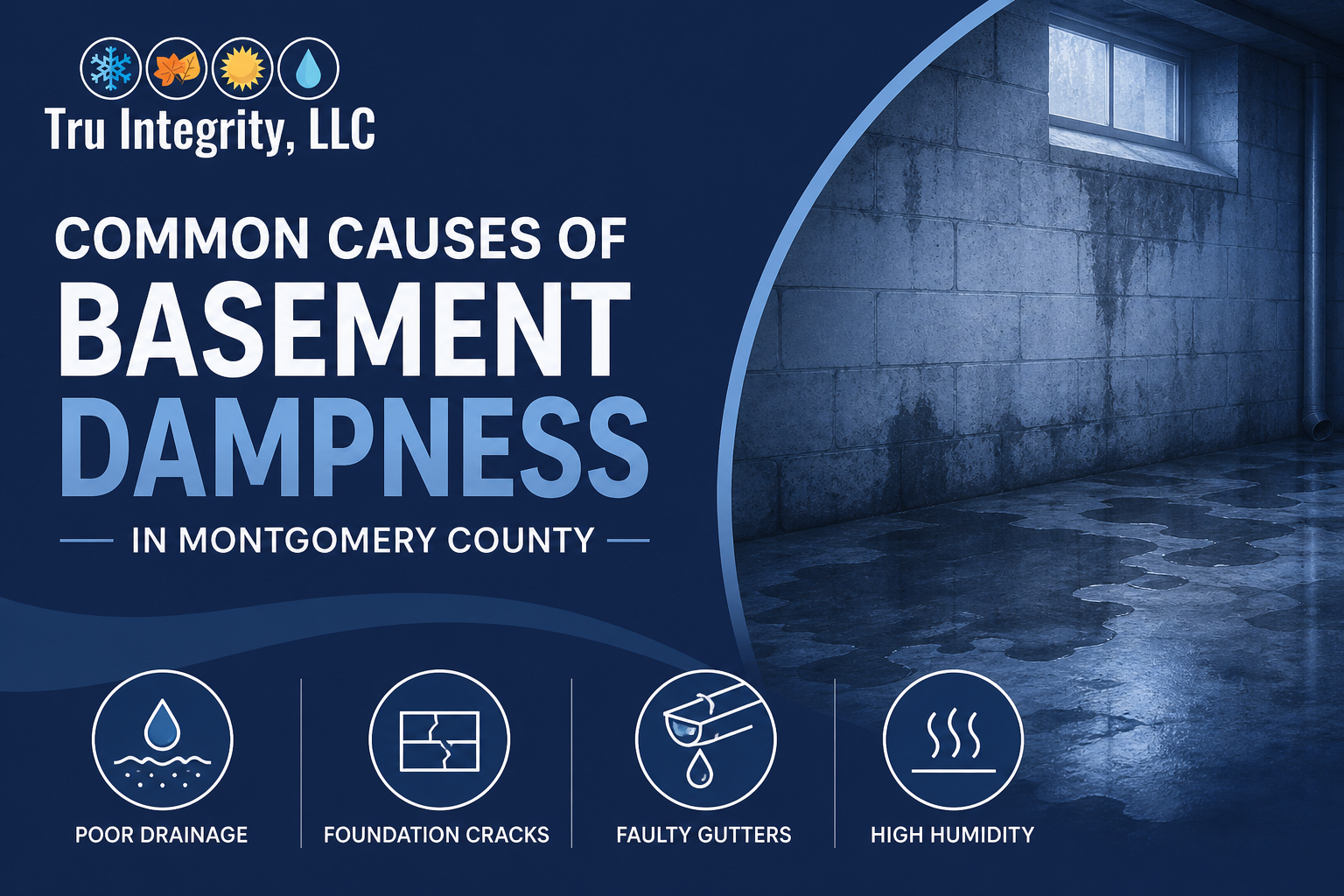
Some signs may not seem like a big deal at first, but over time they can change surfaces and make the basement less useful overall.
Understanding the causes of basement dampness is an important step toward keeping your home safe and stable. Instead of waiting for problems to show up, many homeowners do better by finding the causes early and taking steps to stop them from happening.
Did you know? According to the United States Environmental Protection Agency, the best way to keep mold under control is to control moisture, since damp indoor spaces can cause materials to break down over time.
Key Takeaways
- Basement dampness can result from multiple environmental and structural factors.
- One of the most common reasons for moisture problems is bad drainage.
- Cracks in the foundation can let water in slowly over time.
- Good air flow helps keep the humidity inside at a good level.
- Taking action early can stop basement problems from getting worse.
At Tru Integrity LLC, we look at basement moisture problems by finding the root causes and using solutions that will protect the area for a long time.
What Causes the Basement to Be Damp in the First Place?
There can be more than one cause of basement moisture. It often happens because of how the water interacts with the foundation, the soil around it, and the drainage conditions as a whole.
Common contributing factors may include:
- Poor exterior drainage
- Soil saturation after rainfall
- Minor cracks in foundation walls
- Humidity buildup within enclosed spaces
Over time, these conditions can add up, so it’s important to look at the whole environment instead of just one visible symptom.
Could Poor Drainage Around Your Home Be the Reason?
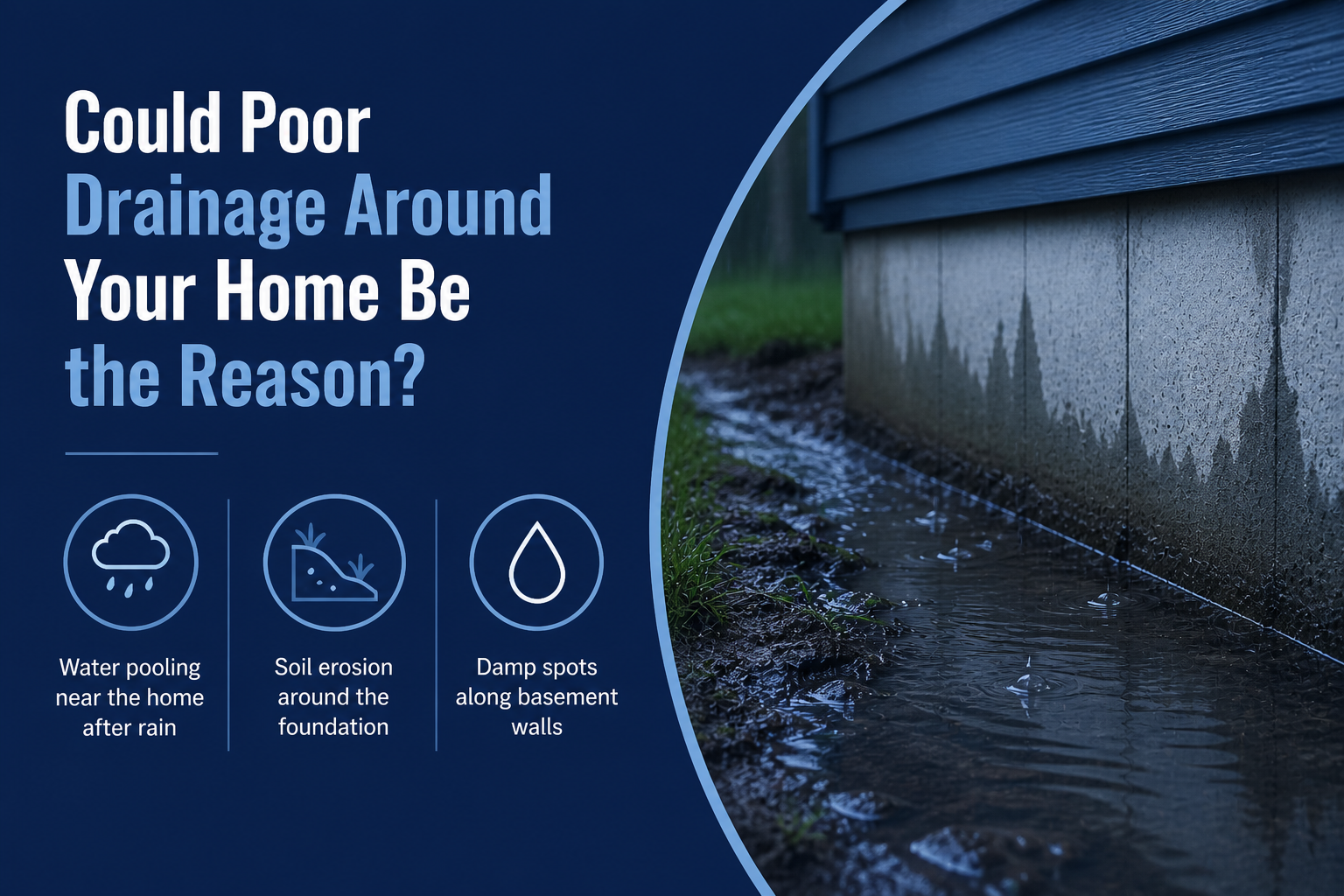
Not having enough drainage around the property is one of the most common reasons for moisture to build up. Water can build up near the foundation and slowly seep into the walls of the basement if it isn’t directed away properly.
Some signs that there may be problems with drainage are:
- Water pooling near the home after rain
- Soil erosion around the foundation
- Damp spots along basement walls
Fixing drainage problems is often an important part of basement leak prevention because it keeps more water from getting to the building.
Are Foundation Cracks Letting Moisture In?
Over time, even small cracks in the walls of a foundation can let water in. These openings might not be easy to see right away, but they can make the air stay damp for a long time.
Cracks may develop due to:
- Natural settling of the home
- Soil pressure against foundation walls
- Temperature-related expansion and contraction
Fixing these areas early can help keep moisture out and keep the basement in good shape overall.
Does Poor Ventilation Increase Indoor Dampness?
Sometimes, moisture problems are caused by high humidity levels inside the house rather than by water getting in from outside. Basements that don’t get a lot of air flow may hold in moisture, making the space feel damp even if there aren’t any visible leaks.
This may result in:
- Condensation on walls or floors
- Musty odors
- A consistently humid environment
Managing humidity and improving airflow can help make the inside of your home more balanced.
Could Improper Grading Be Affecting Your Basement?
The slope of the land around your home is crucial for how water moves when it rains. Water may naturally pool near the basement walls if the ground slopes toward the foundation.
Improper grading may:
- Increase water pressure on foundation walls
- Cause slow seepage over time
- Contribute to ongoing moisture exposure
Fixing the slope can help keep water from getting into the house, which lowers the risk of dampness.
Is Your Waterproofing System Doing Enough?
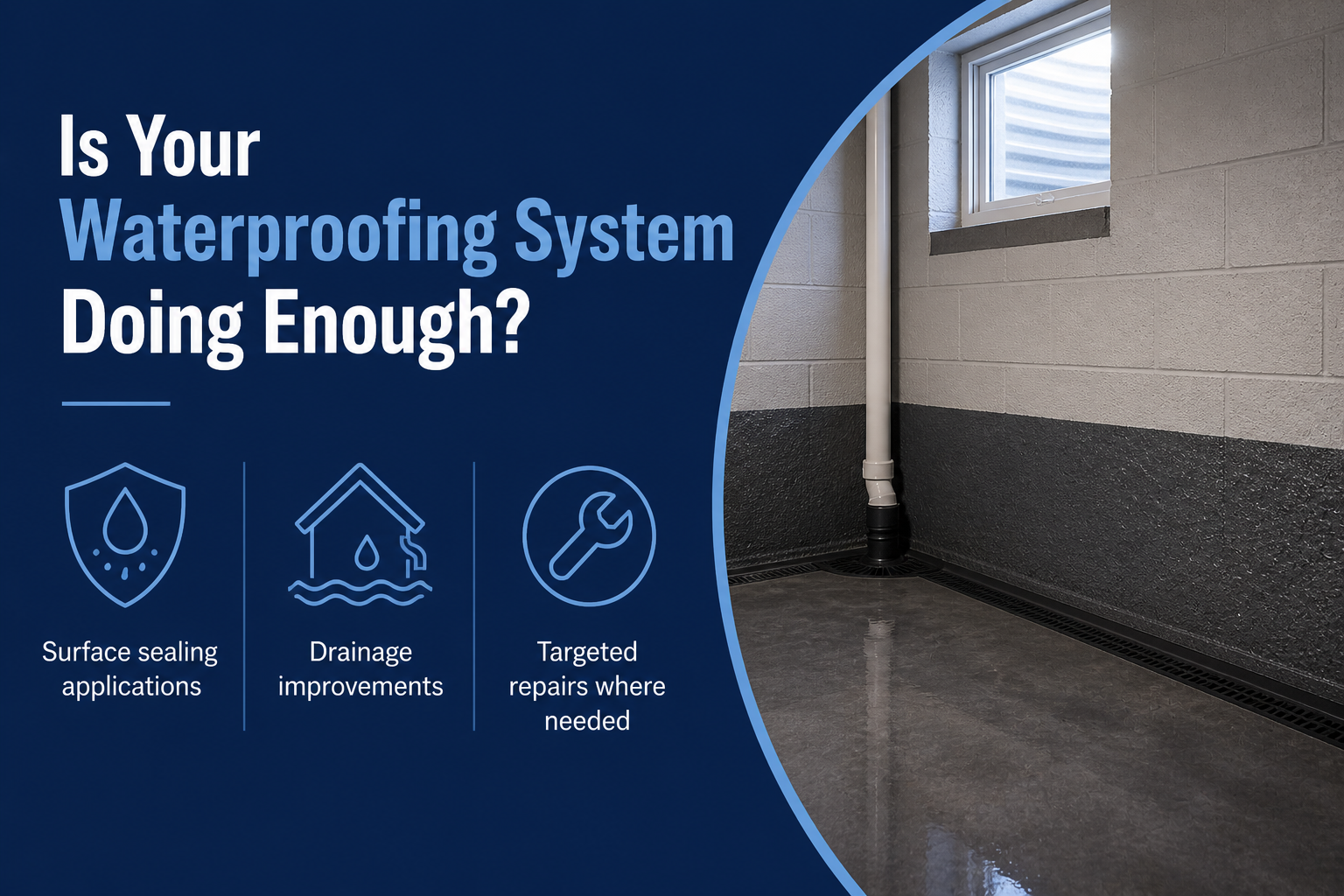
Some homes may not have enough moisture control measures for the current conditions. Over time, systems may need to be updated or changed to continue working.
Looking into basement waterproofing in Montgomery solutions might help with ongoing problems by making it easier to control water around and inside the building.
These solutions may include:
- Surface sealing applications
- Drainage improvements
- Targeted repairs where needed
At this point, Tru Integrity LLC usually looks at the state of the basement and suggests fixes that fit the needs of the property.
Can Seasonal Changes Make Dampness Worse?
Changes in temperature and rainfall during the year can affect how moisture moves around your home. Heavy rain or high humidity for a long time may make it more likely for basements to be damp.
During such times, homeowners may notice:
- More moisture in the air
- Wet or cool surfaces
- Water that collects for a short time
Knowing these patterns can help you plan ways to keep the basement in good shape all year long.
When Should You Consider Professional Help?
If dampness persists despite basic measures, it may be helpful to explore basement waterproofing services near me to assess the situation more thoroughly.
A professional evaluation can help find:
- The primary source of moisture
- Areas that require repair or sealing
- Suitable long-term solutions
Early assessment can often stop small problems from becoming bigger ones.
Protect Your Basement Before Small Issues Grow
There is usually more than one reason for moisture in the basement. Homeowners can take practical steps to deal with and reduce damp conditions by learning about these common problems.
Basement dampness doesn’t always cause damage right away, but taking care of it early helps keep the home in good shape for a long time. Over time, taking steps like fixing cracks, improving drainage, and controlling humidity can make a big difference.
If you are having ongoing problems with moisture, Tru Integrity LLC can help you find the root causes and keep your basement safe for the long term. Call us today to find out what options are best for your property.
Frequently Asked Questions
Q1. What causes basement dampness in Montgomery County homes?
Ans: Bad drainage, cracks in the foundation, high humidity, and inadequate grading around the house can all make the basement damp.
Q2. How can basement leak prevention help?
Ans: Preventing basement leaks means making it harder for water to get in by fixing drainage, sealing cracks, and keeping the foundation strong.
Q3. What are basement waterproofing Montgomery solutions?
Ans: Montgomery offers various methods for waterproofing basements, such as sealing, drainage systems, and moisture control repairs.
Q4. When should I look for basement waterproofing services near me?
Ans: If you notice that your basement is always damp, smells musty, or has moisture problems that keep coming back, you might want to look into basement waterproofing services near me.
Q5. Is basement dampness a serious problem?
Ans: At first, basement dampness may not seem like a big deal, but if you don’t do anything about it, it can damage surfaces, make the air quality worse, and make the whole house less comfortable.