
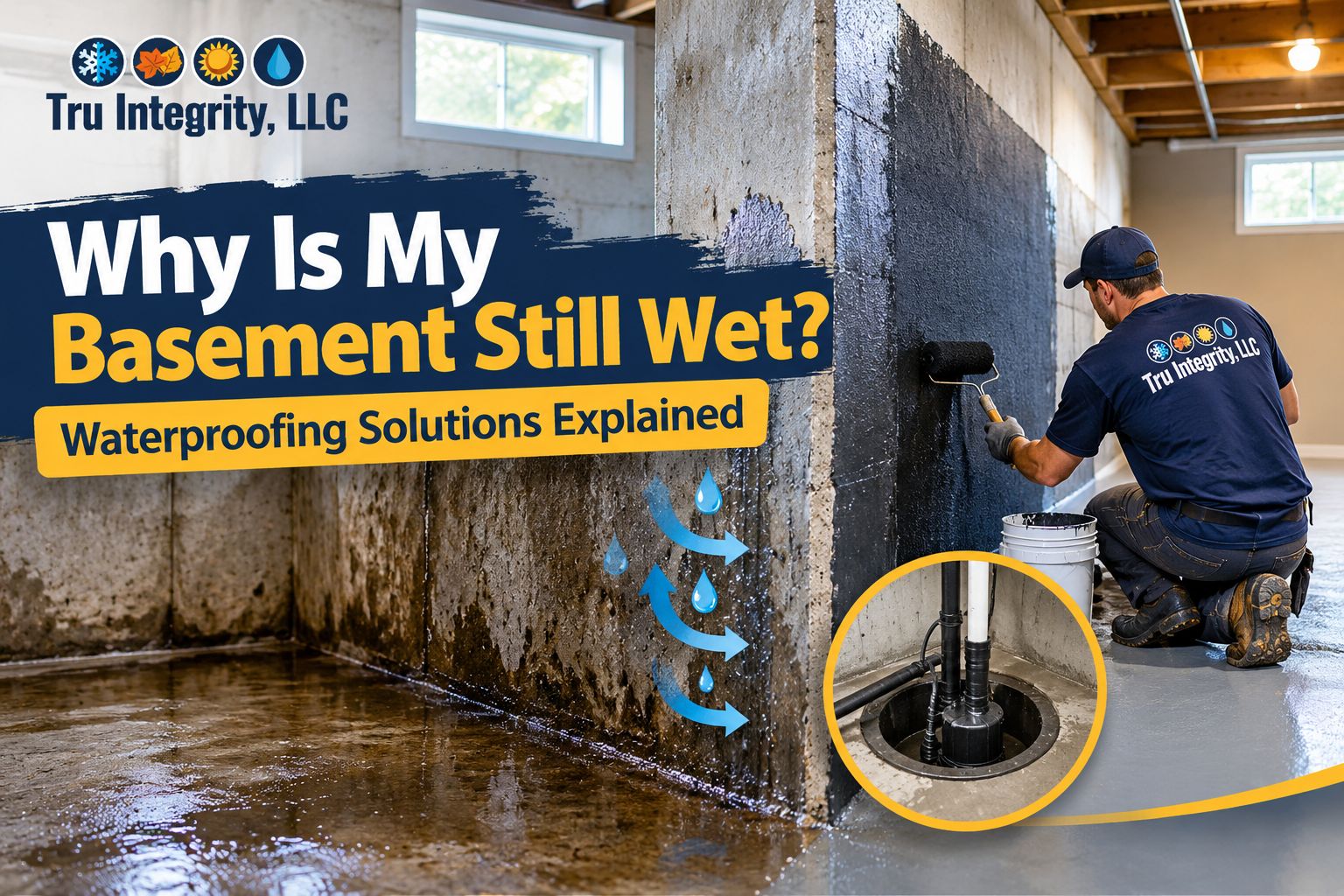
If your basement is still wet after waterproofing, the problem may be that the original repair did not address where the water is coming from. Waterproofing basement issues can continue because of groundwater, foundation cracks, hydrostatic pressure, or poor drainage around the home.
The right solution is to identify the exact entry point and address the cause instead of repeatedly treating the visible moisture. Understanding why water keeps entering can help you choose the right repair and prevent recurring leaks from causing further damage.
Why does my basement keep getting wet?
A basement can stay wet for several reasons. Water may enter through foundation cracks, seep through the wall-floor joint, rise through the concrete floor, or collect against the foundation after heavy rain.
The timing of the leak can provide an important clue. Water that appears after storms often points to rainwater or groundwater pressure. If you are searching for a waterproofing company near me, look for a professional who can identify the source before recommending a repair.
Instead of treating every wet basement the same way, start by identifying where the water appears and when it happens.
Where is the water actually coming from?
Look closely at the areas where moisture first becomes visible. A wet wall does not always mean the wall itself is the main problem.
You may notice:
- Water running down a foundation wall
- Damp spots around cracks
- Water collecting along the floor edge
- Moisture rising through the concrete floor
- White mineral deposits on masonry
- Wet areas that appear only after rainfall
These patterns help narrow down the cause. If you are searching for a waterproofing company near me, look for a professional who investigates the source rather than immediately recommending a standard repair.
What if water is coming through the basement walls?
Water can enter through cracks or porous areas in a foundation wall. When soil outside the home becomes saturated, pressure can push water toward weak points in the foundation.
A small crack may allow only a little moisture at first. During heavy rain, however, the same opening can become an active leak.
The repair depends on the type and condition of the crack. Sealing the opening may work for a localized problem, but it may not be enough if water pressure or exterior drainage is causing the leak.
This is where foundation leak repair should focus on both the visible opening and the conditions causing water to reach it.
Why does water collect where the wall meets the floor?
Key idea: The wall‑to‑floor seam (cove joint) is a built‑in weak line that groundwater targets first when pressure builds around your foundation.
- Cold joint: Wall and slab are poured separately, leaving a tiny continuous gap at the perimeter.
- Hydrostatic pressure: Saturated soil and a high water table push water against and under the foundation.
- Path of least resistance: Water follows that perimeter joint into the basement, showing up as a damp line or puddles after rain.
Simply sealing the joint often fails long‑term because the water still has nowhere to go; it needs a drainage path.
Can water come up through the basement floor?
Yes. A basement can remain wet even when the walls appear dry.
Groundwater beneath the home can create pressure under the concrete slab. If the floor has cracks, joints, or other weak points, moisture may move upward.
This type of leak is different from rainwater running down a foundation wall. Painting or coating the floor may hide the moisture temporarily, but it does not necessarily remove the pressure underneath.
A drainage-based solution may be more appropriate when groundwater is pushing upward. The goal is to collect and redirect the water rather than simply cover the area where it appears.
Why didn’t the last waterproofing repair work?
Diagnosis: The repair treated a symptom (a wet spot) instead of the cause (water pressure and drainage).
If the same area gets wet again, new areas start leaking, or problems return after a short dry period, the underlying driver likely wasn’t corrected.
When does exterior waterproofing make more sense?
Exterior waterproofing can be useful when water is reaching the foundation from surrounding soil.
Poor grading, saturated soil, or inadequate drainage can allow water to remain against the foundation. Over time, that water can find its way through cracks and other weak areas.
Exterior work addresses the problem from the outside. Depending on the property, this may involve improving drainage or accessing the foundation wall to address the affected area.
It can be more involved than an interior repair, but preventing water from reaching the foundation can be an effective approach when outside conditions are the main cause.
Can an interior drain solve a recurring basement leak?
An interior drainage system can be useful when water continues to reach the basement despite other improvements.
An interior French drain basement system creates a controlled path for water along the basement perimeter. Water is collected and directed toward a sump or another appropriate discharge point.
This does not mean every basement needs an interior drain. The system makes the most sense when the water-entry pattern supports this type of solution.
The drainage system also needs to be properly designed. Collecting water without giving it a reliable path away from the home will not solve the problem.
Are waterproof coatings enough for an active leak?
Usually not. Coatings help with mild dampness or vapor, not active, pressurized leaks.
- Active cracks/joints under pressure: Water can push behind or through the coating, causing blistering or peeling.
- Groundwater pressure under the slab: A surface coating does nothing to relieve hydrostatic pressure beneath the floor.
- Outside drainage problems: Coatings don’t correct poor grading, clogged drains, or saturated soil around the foundation.
For an active leak, the better approach is to identify the water source, correct drainage/grading where possible, and use a repair that manages or redirects the water (e.g., interior drainage, exterior waterproofing) rather than just covering the wet spot.
What should you fix first to keep water out?
Start with the source instead of the damaged interior surface.
If rainwater is collecting beside the foundation, drainage conditions may need attention. If water is entering through a crack, the foundation opening should be evaluated. If groundwater is reaching the basement floor, a drainage solution may be necessary.
The order matters because interior repairs can continue to fail when outside water conditions remain unchanged.
For homes with persistent moisture, crawl space repair companies near me may also be relevant when the crawl space is contributing to moisture problems around the lower part of the home. The source should be identified before deciding what needs to be repaired.
How do you choose the right waterproofing solution?
There is no single waterproofing method that works for every wet basement. The correct solution depends on the location, amount, and cause of the water.
A simple way to understand the options is:
- Water through a foundation crack: Evaluate and repair the crack and the conditions around it.
- Water at the wall-floor joint: Consider a drainage method that can collect and redirect water.
- Water through the floor: Investigate groundwater pressure and drainage below the slab.
- Water after heavy rain: Look at how rainwater reaches the foundation.
- Water that keeps returning: Reassess the original repair and identify any remaining entry point.
- Moisture connected to a crawl space: Have the crawl space and surrounding drainage conditions evaluated.
The goal is not simply to make the basement look dry. It is to stop or control the path that allows water to enter.
Find the Right Solution for Your Wet Basement
A basement that keeps leaking needs more than another temporary repair. Identifying the source is the first step toward effective waterproofing basement solutions.
Tru Integrity can evaluate the problem and determine the right solution for your home. Don’t let recurring moisture lead to further damage.
Contact Tru Integrity today to schedule an evaluation and take the right step toward a drier basement.
Key Takeaways:
- A basement that stays wet usually needs a different approach to the source of the water.
- Foundation cracks, wall-floor joints, and basement floors can have different causes.
- Water pressure can make simple surface sealing ineffective.
- Interior drainage can help control water that reaches the basement perimeter.
- Exterior waterproofing can address water before it reaches the foundation.
- Waterproof coatings are not a complete solution for every active leak.
- Repeated leaks should be investigated instead of repeatedly covered.
Frequently Asked Questions:
1. Why is my basement still wet after waterproofing?
The original repair may not have addressed the source of the water. Groundwater pressure, another foundation opening, or drainage problems can allow moisture to return.
2. What is the best way to stop water coming through a foundation crack?
The crack should first be evaluated to understand why water is entering. A suitable repair may be enough for a localized leak, while ongoing water pressure may require additional drainage work.
3. Why does my basement leak only when it rains?
Heavy rainfall can saturate the soil around the foundation and increase water pressure. Poor grading or drainage can make the problem worse by directing more water toward the home.
4. Can an interior French drain stop basement water?
An interior French drain can collect and redirect certain types of basement water. Its suitability depends on where the water is entering and how the drainage system is designed.
5. Should I waterproof the inside or outside of my basement?
The right option depends on the source of the water. Exterior waterproofing can help prevent water from reaching the foundation, while an interior drainage system can manage water that has already reached the basement.