
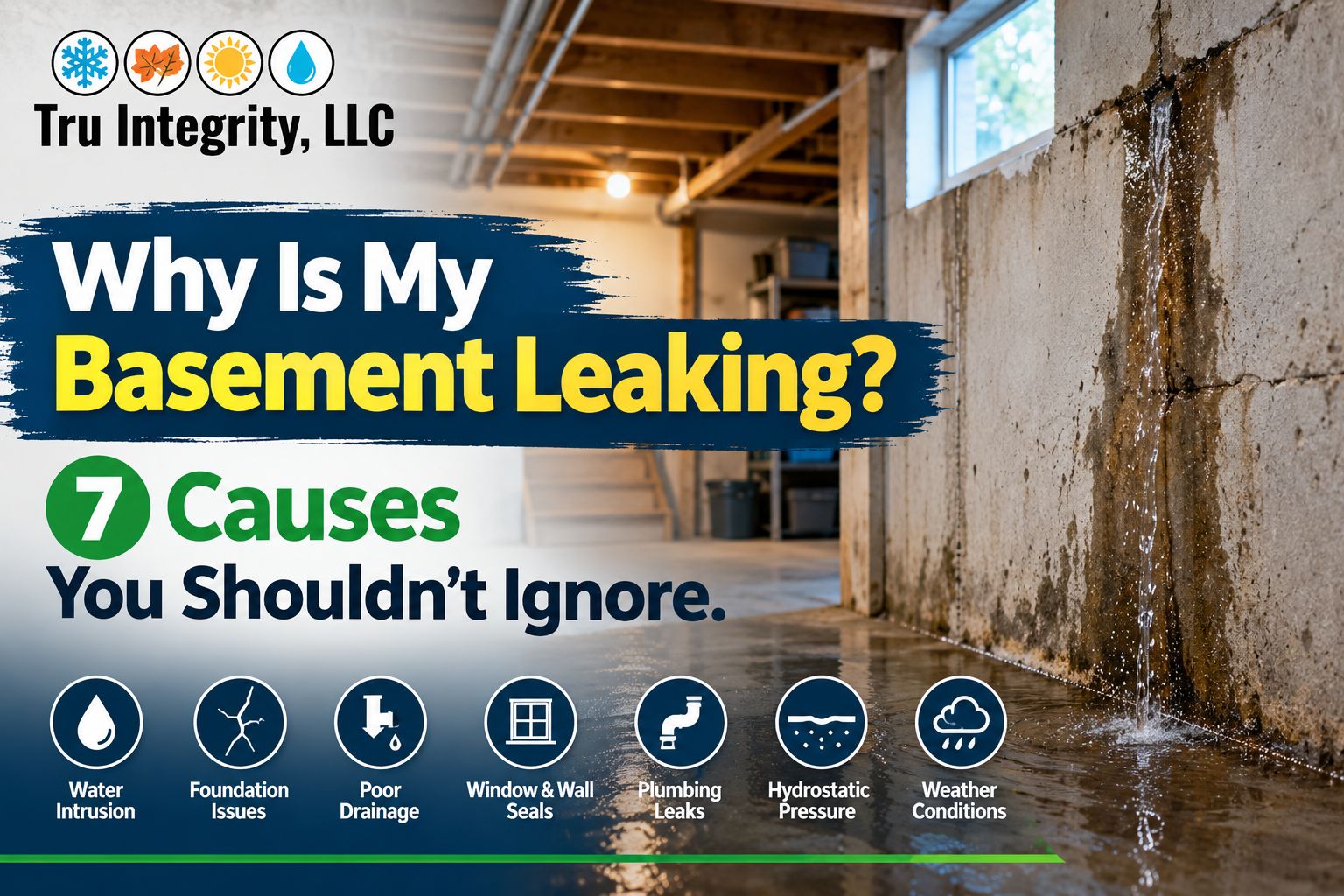
A basement leak can start as a small damp spot and quickly become a bigger headache. Water may enter through your foundation, windows, plumbing, or poor drainage. Finding the source early can help prevent damage, mold, and repeated repairs. Basement leak repair is much easier to plan when you know why the water is getting inside in the first place.
Begin by Tracking the Water
Before reaching for a sealant or calling for repairs, take some time to observe the leak. The location and timing of the water can provide useful clues.
A leak that appears after heavy rain may have a different cause than water that shows up during dry weather. Likewise, water coming through a wall may require a different solution than water collecting around a basement window.
Try answering these questions:
- Where does the water first appear?
- Does it happen after rainfall?
- Is the same area affected each time?
- Are there cracks, stains, or peeling paint nearby?
- Is water collecting outside near the foundation?
At Tru Integrity, identifying the source is an important first step before deciding how to address a basement moisture problem.
-
Check Your Foundation for Cracks
Foundation cracks are a common way for water to enter a basement. Concrete can develop cracks as a home settles or as the surrounding soil changes.
Some small cracks may not indicate a serious structural problem. However, they can still provide a pathway for groundwater to enter, particularly when the soil around the foundation becomes saturated.
Signs to watch for:
- New or widening cracks
- Damp marks around cracks
- Water dripping through foundation walls
- Cracks that appear after heavy rainfall
- Similar cracks in nearby areas
Do not automatically assume every crack needs major structural work. However, cracks that change over time or allow repeated water entry should be professionally evaluated.
-
Look at the Exterior Waterproofing
Your foundation is constantly exposed to moisture in the surrounding soil. If the exterior waterproofing is damaged, missing, or improperly installed, water may eventually find its way inside.
This is where Integrity Waterproofing can play a role in protecting vulnerable foundation areas. A proper system is designed around the property’s specific moisture conditions rather than simply covering visible signs of water.
Good waterproofing basement work may involve several areas, including foundation walls, drainage, grading, and other potential entry points.
Walk around your home and check for:
Standing water: Look for puddles close to foundation walls.
Damaged areas: Check for visible deterioration around exposed foundation surfaces.
Poor drainage: Notice whether rainwater stays close to the house.
Downspout problems: Make sure water is not being released directly beside the foundation.
Fixing exterior water problems can help reduce the amount of moisture reaching the foundation in the first place.
-
Clean Those Gutters and Downspouts
Gutters may seem unrelated to basement leaks, but they play a major role in keeping rainwater away from your foundation.
When gutters become clogged, water can overflow over the sides. Instead of being directed away, it may fall directly beside your foundation.
Downspouts can cause a similar problem when they are disconnected, damaged, or positioned too close to the house.
Make gutter maintenance part of your routine
Clean: Remove leaves, dirt, and other debris from the gutters.
Inspect: Look for holes, cracks, or loose sections.
Check downspouts: Make sure they are securely connected.
Watch during rain: See where water actually flows when it leaves the downspouts.
A simple gutter problem can create repeated moisture around the foundation if it is ignored.
-
Fix Yard Grading That Sends Water Toward the House
Look at the ground around your home after a heavy rainfall. Does water naturally move away from the foundation, or does it collect beside the house?
When soil slopes toward the foundation, rainwater can move toward your basement instead of away from it. Over time, repeated exposure can increase moisture around the foundation walls.
This problem is not always obvious during dry weather. A storm can reveal areas where water collects or flows in the wrong direction.
A quick outdoor check
Walk around your property after rainfall and look for:
- Puddles close to the foundation
- Soil that slopes toward the house
- Water flowing toward basement windows
- Areas where the ground stays wet for long periods
Correcting grading can improve surface drainage, but changes should be planned carefully so water is not simply redirected toward another part of the property.
-
Understand the Pressure Beneath Your Basement
Water in the soil around your foundation creates pressure against the basement walls and floor. This is called hydrostatic pressure.
When groundwater levels rise, that pressure can push water through small cracks, joints, or other weak areas.
One common sign is water appearing where the basement floor meets the wall. You may notice it mainly after prolonged rainfall or during periods when the ground is especially wet.
Why this matters
Hydrostatic pressure does not always mean foundation failure, but it can force water through cracks or weak points. Improving drainage or managing groundwater may help, depending on where the water enters.
-
Rule Out Plumbing Problems
Sometimes the source of a basement leak is inside the home rather than outside it.
A leaking pipe, water heater, washing machine connection, or drain can create puddles and damp areas that look similar to groundwater seepage.
Start by checking plumbing fixtures and nearby connections. Look for dripping pipes, wet insulation, water stains, or moisture that appears even when there has been no rain.
In other situations, homeowners may assume they need foundation leak repair when the actual source is a damaged pipe or plumbing connection. Identifying the source first can save time and unnecessary work.
-
Inspect Basement Windows and Window Wells
Basement windows are another potential entry point for water. Old seals, damaged frames, cracks, and poor drainage around window wells can allow rainwater inside.
Window wells are especially important because they can collect water during storms. If that water cannot drain properly, it may eventually reach the window.
Give your window wells a quick inspection
Remove debris: Clear leaves, dirt, and other material.
Check drainage: Make sure water does not remain trapped inside.
Inspect the window: Look for damaged seals or visible gaps.
Look for staining: Water marks around the window can indicate repeated moisture.
Keeping these areas clean and properly drained can help reduce the chance of water entering through basement windows.
Improve the Way Water Moves Around Your Home
Once you identify where the water is coming from, focus on controlling its path.
Some homes may benefit from basement drainage systems that collect and redirect water away from vulnerable areas. Others may need improvements to gutters, grading, downspouts, foundation protection, or window drainage.
There is no single fix for every basement. A solution that works for one property may not address the source of water in another.
If you are comparing waterproofing companies in Rockville MD, look for professionals who inspect the property and explain why water is entering before recommending a specific solution.
Take These Steps Before the Next Storm
- Clean your gutters – Remove leaves and debris so rainwater can flow properly.
- Check your downspouts – Make sure they direct water away from the foundation.
- Inspect the yard – Look for soil that slopes toward your home or areas where water collects.
- Check the basement – Inspect windows, walls, floors, and foundation cracks for moisture or damage.
- Document changes – Take photos of new stains or cracks so you can track them over time.
- Monitor after rain – Note where water appears and how heavy the rainfall was. This can help during a professional inspection.
Address the Cause Before It Becomes a Bigger Problem
A basement leak means water is finding a way inside. Identify the source, check drainage, and address the problem instead of hiding the signs. Basement leak repair can help manage recurring water intrusion when professional help is needed.
Regular inspections and basic maintenance can also help. If you notice moisture, cracks, or drainage issues, act early to prevent further water damage.
Key Takeaways:
- Foundation cracks can provide pathways for groundwater.
- Poor exterior waterproofing can allow moisture to reach foundation walls.
- Clogged gutters can send large amounts of water toward the foundation.
- Poor yard grading can direct rainwater toward the basement.
- Hydrostatic pressure can force water through weak points.
- Plumbing leaks can sometimes look like foundation leaks.
- Basement windows and window wells need proper drainage.
- Repeated moisture should be investigated rather than covered up.
FAQs About Basement Leaks:
1. Why does my basement leak only after heavy rain?
Heavy rainfall can saturate the soil around your foundation and increase water pressure. Poor grading, clogged gutters, foundation cracks, and drainage issues can make the problem more noticeable.
2. Can a small foundation crack cause a basement leak?
Yes. Even a small crack can allow water to enter when the surrounding soil becomes saturated. Monitoring the crack can help determine whether the issue is changing over time.
3. How can I prevent basement water problems?
Keep gutters clean, maintain your downspouts, check your yard grading, clear window wells, and monitor foundation walls for new cracks or moisture.
4. Should I seal a basement leak myself?
Simple maintenance tasks can often be handled by homeowners. However, recurring leaks may need professional evaluation because sealing the visible area may not address the actual source.
5. When should I get professional help?
Consider getting professional assistance when water keeps returning, appears through walls or floors, causes visible damage, or continues despite basic drainage and maintenance efforts.