
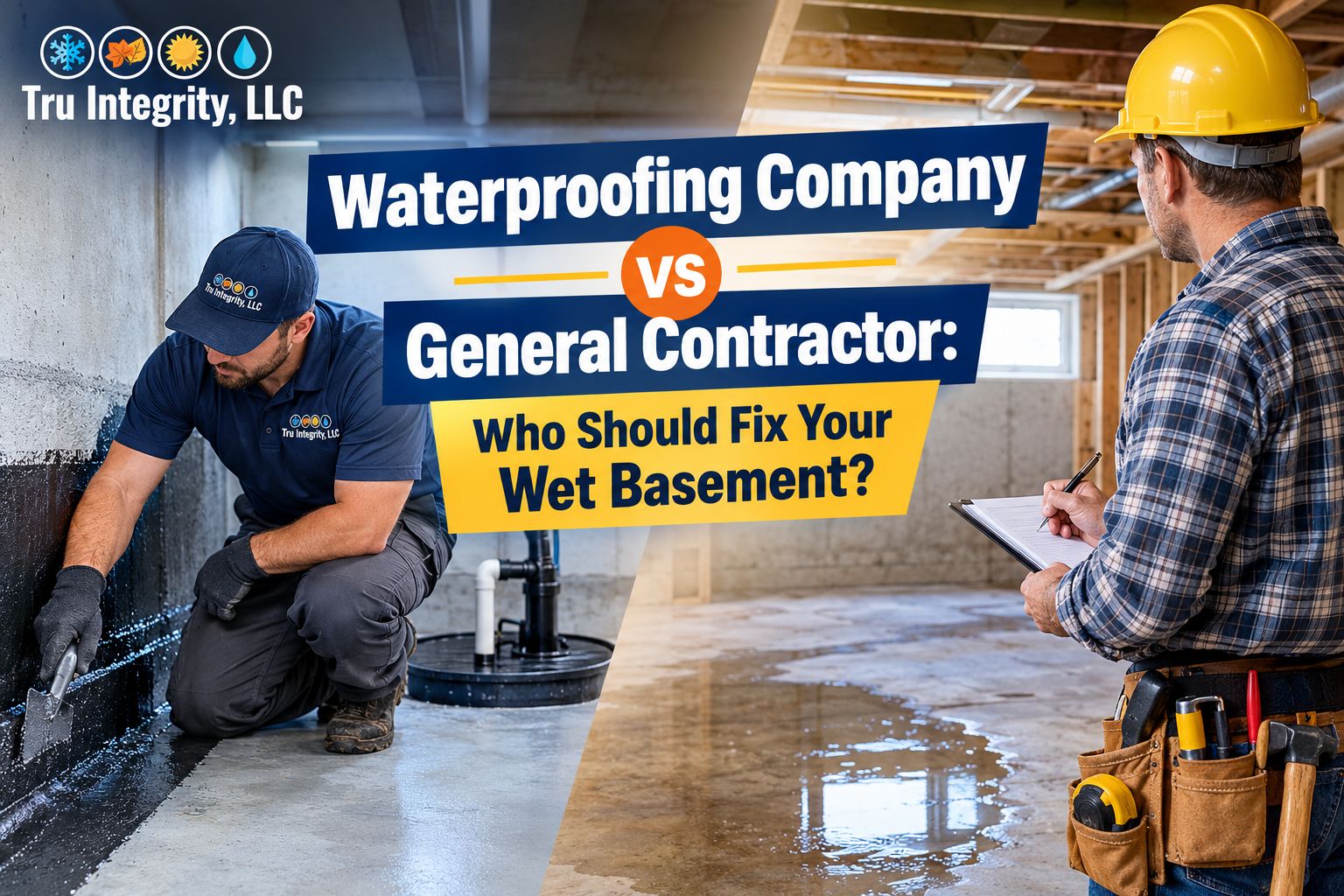
Objective: This blog explains what each professional does, how to identify the right one for your basement, and what to consider before hiring someone.
Introduction:
A wet basement can lead to mold growth, damaged walls, musty odors, and costly repairs. Choosing the best waterproofing company or a general contractor depends on where the water comes from and what is causing the problem.
A waterproofing specialist is often the right choice for ongoing moisture issues, while a general contractor may handle broader structural repairs. Understanding the difference helps you choose the right professional and avoid unnecessary expenses.
What Causes a Wet Basement?
Before hiring a professional, identify how water enters your basement. The source of the problem determines the type of repair needed.
Basement moisture can develop for several reasons. Some problems are related to drainage, while others involve the foundation or plumbing system.
Common causes include:
- Foundation cracks: Water can seep through gaps in concrete walls or floors.
- Poor exterior drainage: Blocked gutters or short downspouts can direct rainwater toward the foundation.
- Hydrostatic pressure: Groundwater can push against basement walls and floors, forcing water through weak points.
- Plumbing leaks: Damaged pipes, leaking fixtures, or faulty connections can introduce water indoors.
- Poor grading: Ground that slopes toward the house allows rainwater to collect near the foundation.
- High indoor humidity: Condensation can form on cool surfaces, making the basement feel damp even without a visible leak.
Look for patterns before deciding on a repair. Water appearing after heavy rain may indicate a drainage issue. Moisture near a pipe could point to a plumbing leak. Persistent dampness across several areas may require a more detailed inspection.
What Does a Waterproofing Company Do?
A waterproofing specialist helps prevent basement leaks and manage moisture around your foundation. A waterproofing services company inspects the affected areas, identifies possible entry points, and recommends suitable repairs.
Depending on the problem, the work may include:
- Sealing foundation cracks.
- Installing interior drainage systems.
- Repairing or installing sump pumps.
- Applying waterproof coatings or membranes.
- Improving exterior drainage.
- Managing water intrusion through basement walls and floors.
A home waterproofing company can also determine whether interior or exterior waterproofing is more suitable. The right solution depends on the source of water, foundation condition, and severity of the problem.
What Does a General Contractor Do?
A general contractor manages a wide range of home improvement and repair projects. They coordinate workers, materials, schedules, and different stages of construction.
Their work may include foundation repairs, drywall replacement, flooring installation, plumbing coordination, and basement remodeling.
A general contractor can be useful when water damage affects several parts of your home. For example, they may coordinate the replacement of damaged flooring after the moisture problem has been corrected.
However, not every general contractor specializes in basement water intrusion. Some may have limited experience with drainage systems, groundwater pressure, or specialized waterproofing methods.
Before hiring one, ask about their experience with wet basements. Confirm whether they can identify the source of water or will need to bring in a specialist.
Waterproofing Company vs General Contractor: Key Differences
Both professionals can contribute to basement repairs, but their primary responsibilities differ.
| Factor | Waterproofing Company | General Contractor |
| Main focus | Preventing and managing water intrusion | Managing broader construction and repairs |
| Moisture assessment | Often specializes in basement water problems | Depends on experience and expertise |
| Drainage systems | May install specialized drainage solutions | May coordinate installation through qualified specialists |
| Foundation cracks | Can address suitable water-entry points | May handle structural repairs within their expertise |
| Water-damaged finishes | May not provide complete restoration | Can coordinate drywall, flooring, and other repairs |
| Best suited for | Persistent leaks, seepage, and basement moisture | Multiple repairs, renovations, and construction work |
The most important factor is the cause of the water problem. Choose a professional with relevant experience rather than assuming that one type of contractor can handle every situation.
When Should You Hire a Waterproofing Specialist?
A waterproofing specialist is the right starting point when basement leaks keep returning, or moisture persists after repairs.
Consider hiring one if you notice:
- Water enters through basement walls or floor joints.
- Damp spots that worsen after rainfall.
- Water pooling near the foundation.
- A frequently running sump pump.
- White deposits on concrete walls.
- Persistent musty odors.
- Recurring leaks after temporary repairs.
A best waterproofing service providing company should identify the underlying problem and recommend suitable solutions.
Request an inspection, a written estimate, and a clear explanation of the proposed repairs. If there are major structural concerns, consult a structural engineer or qualified foundation repair specialist.
How Can You Choose the Right Professional?
Selecting a contractor requires more than comparing estimates. You need someone who understands the problem, explains the proposed repair, and has the experience to complete the work properly.
Use these steps to make a more informed decision.
- Identify the source of water
Note where moisture appears and when it occurs. Photos taken after rainfall can help the professional understand the pattern.
- Check relevant experience
Ask whether the company has handled problems similar to yours. Request examples of completed projects involving comparable basement conditions.
- Review the proposed solution
A reliable professional should explain the cause of the problem, the recommended repair, and any limitations. Be cautious of anyone promising a permanent fix without inspecting the affected areas.
- Compare written estimates
Review the materials, labor, preparation, drainage work, and cleanup included in each estimate. A lower price may not cover the work your basement needs.
- Ask about warranties
Understand what the warranty covers, how long it lasts, and whether it includes labor and materials. Ask about exclusions and maintenance requirements.
- Verify credentials and insurance
Check applicable licenses, insurance coverage, references, and local requirements. Confirm that the company is qualified for the specific work being proposed.
If you are searching for basement waterproofing services near me, compare local providers based on their experience, inspection process, and written proposals rather than location alone.
What Should You Expect During a Basement Waterproofing Inspection?
A professional inspection helps identify whether water comes from groundwater, poor drainage, plumbing leaks, condensation, or foundation damage.
The specialist may check foundation walls, floor joints, sump pumps, gutters, and the ground slope around your home. A home waterproofing company should explain its findings and recommend suitable repairs.
Solutions may include sealing cracks, improving drainage, or installing a sump pump. Ask why each repair is needed and how it will help prevent future water intrusion.
How Does Tru Integrity Help You Make a Better Repair Decision?
Fixing a wet basement starts with identifying the source of moisture and choosing the right professional. Compare your options, review estimates, and ensure the repair addresses the underlying problem.
The best waterproofing company will explain the recommended solution clearly. Contact Tru Integrity to make informed repair decisions and protect your home from recurring moisture issues.
Key Takeaways:
- A waterproofing specialist focuses on controlling basement moisture and water intrusion.
- A general contractor manages broader construction and restoration projects.
- Repeated leaks usually require identifying and addressing the source of water first.
- Foundation damage may require a structural engineer or qualified repair specialist.
- Compare written estimates, relevant experience, insurance, and warranty terms.
- Repair damaged finishes only after the moisture problem has been properly addressed.
- Choose a solution based on the cause of the problem, not the lowest estimate alone.
Frequently Asked Questions:
1. Is a waterproofing company better than a general contractor for a wet basement?
A waterproofing company specializes in leaks and moisture problems, while a general contractor handles broader repairs and renovations.
2. Can a general contractor waterproof a basement?
Yes, if they have the right experience and qualifications. Some contractors also work with waterproofing specialists.
3. How do I know if my basement needs waterproofing?
Recurring leaks, damp walls, standing water, and musty odors may indicate a waterproofing problem.
4. Should I repair foundation cracks before waterproofing my basement?
It depends on the crack. Structural cracks may require professional evaluation before waterproofing work begins.
5. How can I avoid paying for the wrong basement repair?
Get a professional inspection, compare written estimates, and choose a solution that addresses the source of the water.