
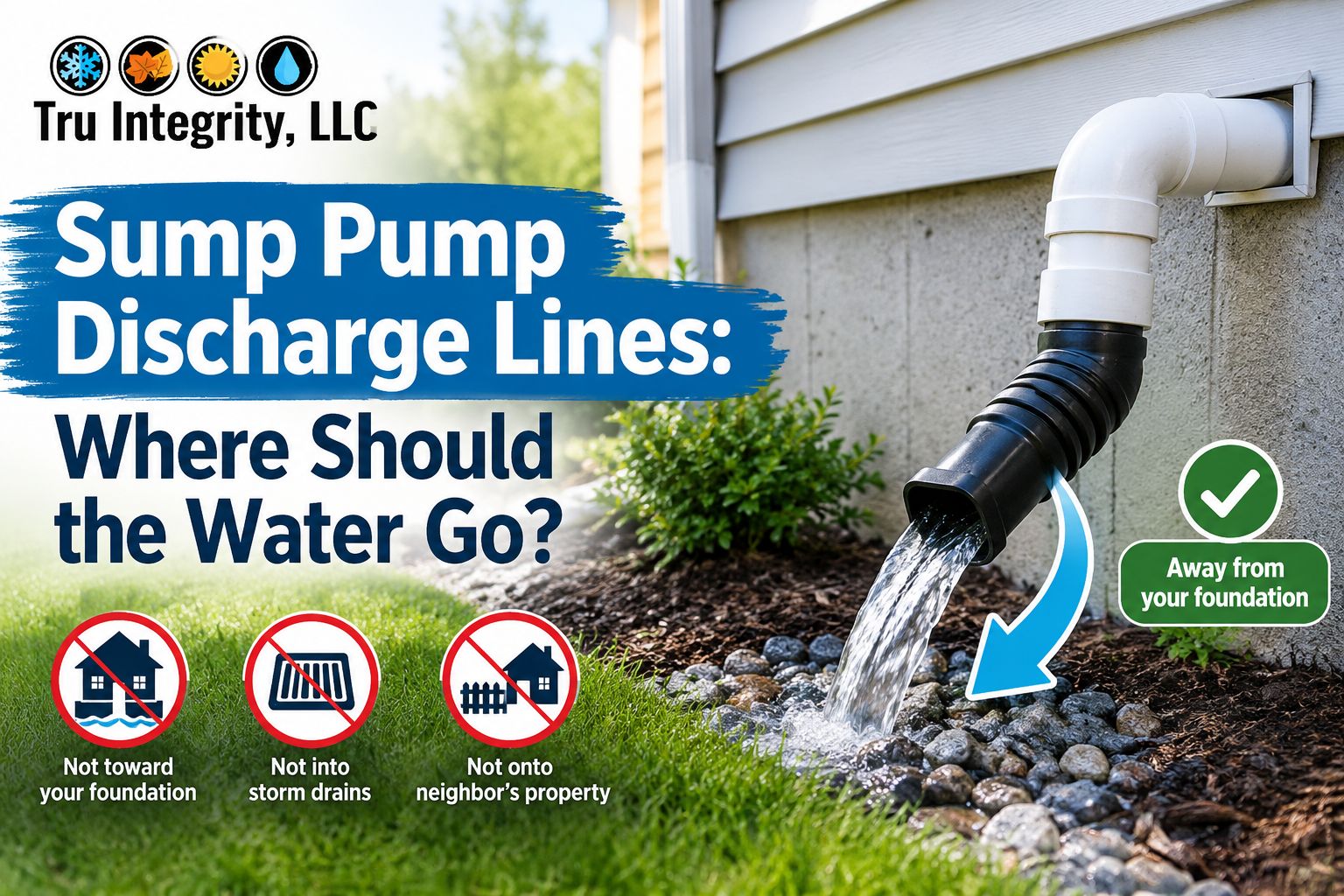
A sump pump protects your basement by collecting groundwater and moving it away from your home. However, its job is not complete until the discharged water reaches a safe location.
If the discharge line sends water too close to your foundation, it can seep back into the basement and create recurring moisture problems.
Knowing where the water should go helps homeowners protect their foundations, yards, and drainage systems. If the line is blocked or damaged, emergency sump pump service can help restore proper water removal before the problem worsens.
Where Should a Sump Pump Discharge Line Direct Water?
A sump pump discharge line should carry water far enough from the house that it cannot easily flow back toward the foundation. The best location depends on the property’s slope, soil type, drainage layout, and local regulations.
In many homes, the line directs water toward a suitable area of the yard where it can disperse safely. The outlet should not create standing water, wash away soil, or send runoff toward neighboring properties.
Homeowners should also check the location of nearby sidewalks, driveways, retaining walls, and outdoor living areas. Discharging water onto these surfaces can create slippery conditions, erosion, or unwanted puddles.
How Far Should Water Travel From the Foundation?
There is no fixed distance for every property. The goal is to direct water far enough from the foundation to prevent it from flowing back toward the basement. When space allows, extending the discharge line around 10 feet or more may help, depending on the soil and yard slope.
If the ground slopes toward the house, water may still collect near the foundation. Proper grading, suitable drainage solutions, and professional foundation crack repair can help reduce moisture problems and protect the basement from water intrusion.
What Are the Best Locations for a Sump Pump Outlet?
Choosing the right outlet location helps prevent water damage and reduces the need for repeated maintenance. Review these common options before deciding where to direct the discharge line.
- A lower section of the yard: A suitable downhill area can allow water to move away naturally, provided it does not cause erosion or flooding.
- A designated drainage area: Some properties have approved areas that can safely receive groundwater without affecting nearby structures.
- A properly designed underground outlet: A buried discharge line may carry water to a suitable location, but it must be designed to prevent blockages and freezing.
- An approved stormwater system: Some municipalities permit connections under specific conditions. Confirm local requirements before connecting the line.
Avoid directing water toward a neighbor’s property, a public sidewalk, a septic system, or an area where it could damage landscaping. If the yard regularly floods, carefully planned backyard drainage solutions may be needed to manage runoff alongside sump pump discharge.
How Should You Install a Sump Pump Discharge Line?
A discharge line must handle the pump’s output without unnecessary restrictions or leaks. Correct installation also helps prevent water from flowing back toward the house.
Follow these basic installation considerations:
- Choose the correct pipe size. Match the discharge piping to the pump manufacturer’s specifications to maintain proper flow.
- Route the pipe away from the foundation. Avoid outlets that allow water to collect beside basement walls.
- Secure outdoor piping. Support exposed sections so they do not sag, shift, or become damaged.
- Prevent backflow where needed. Use a compatible check valve as specified by the pump manufacturer and confirm that it operates correctly.
- Protect the outlet. Keep the opening clear of leaves, dirt, and other debris that could restrict water flow.
Underground installations require extra care. The pipe must be suitable for burial, and the route should account for soil movement, freezing conditions, and access for future maintenance. A qualified contractor can determine whether the proposed layout suits the property.
What Problems Can Occur When Discharge Water Goes to the Wrong Place?
An incorrectly positioned discharge line can cause more than a wet lawn. Water that repeatedly collects near the foundation may increase hydrostatic pressure against basement walls and contribute to moisture intrusion.
Other problems include soil erosion, damaged plants, flooded walkways, and water entering a neighboring property. In winter, exposed discharge water can freeze and create slippery surfaces or ice blockages.
Watch for these warning signs:
- Water pooling near the foundation after the pump runs.
- Soil washing away around the discharge outlet.
- Damp basement walls or recurring moisture near floor joints.
- Water flowing back toward the house during heavy rain.
- Reduced pump performance caused by a blocked or frozen line.
If cracks appear alongside recurring leaks, have the foundation evaluated to determine whether foundation crack repair or additional water management measures are appropriate. Correcting the discharge route is important, but it may not resolve every source of basement moisture.
How Can You Maintain the Discharge Line Throughout the Year?
Regular inspections help keep the system working when groundwater levels rise. Check the discharge outlet several times a year and after heavy rainfall, particularly if your property has experienced drainage problems before.
Use this seasonal maintenance checklist:
- Spring: Remove debris and check for damage caused by winter weather.
- Summer: Look for erosion, pooling, and changes in the yard’s drainage pattern.
- Fall: Clear leaves and confirm that the outlet remains unobstructed.
- Winter: Check for ice buildup and ensure water can leave the line safely.
Test the sump pump according to the manufacturer’s instructions. Listen for unusual noises, check for leaks, and confirm that water exits the discharge line when the pump operates.
Properties with frequent power interruptions may benefit from a battery backup sump pump. It can provide additional protection during outages, but homeowners should also verify that the backup system uses a properly routed discharge line.
When Should You Call a Professional for Discharge Line Problems?
Call a professional if the discharge line freezes repeatedly, water flows toward the foundation, or the pump runs continuously. A contractor can inspect the pipe, pump capacity, outlet location, and yard grading to identify the problem.
Tru Integrity can help assess recurring basement moisture issues. If the pump fails during heavy rain or water enters your basement, seek emergency sump pump service promptly to reduce the risk of further water damage.
Protect Your Basement With Proper Water Discharge
A sump pump can only protect your basement effectively when its discharge line carries water to a safe location. Keep the outlet away from the foundation, follow local drainage requirements, and inspect the system regularly for blockages, freezing, and pooling.
If water continues returning toward your home, professional emergency sump pump service can help identify the cause and restore reliable drainage before moisture problems become more serious.
Key Takeaways:
- Direct sump pump discharge away from the foundation to prevent water from returning to the basement.
- Check local codes before connecting discharge lines to storm drains or other drainage systems.
- Use suitable piping and maintain a consistent slope where gravity drainage is possible.
- Inspect discharge outlets for ice, debris, clogs, and signs of water pooling.
- Consider soil conditions, yard grading, and seasonal weather when selecting an outlet location.
Frequently Asked Questions:
1. Can a sump pump discharge onto my lawn?
Yes, if local regulations allow it and the area can absorb or safely carry the water away. The outlet should not create standing water, erosion, or runoff toward neighboring properties.
2. Can I connect my sump pump to a storm drain?
That depends on local regulations. Some municipalities prohibit these connections, while others allow them under specific conditions. Contact your local building or stormwater authority before making a connection.
3. Why does water come back toward my foundation?
Poor grading, a short discharge line, or an unsuitable outlet location can cause water to flow back toward the house. Extending the line or correcting the yard’s slope may help, depending on the conditions.
4. How do I prevent my sump pump discharge line from freezing?
Use an appropriate pipe layout, keep the outlet clear, and follow local recommendations for cold-weather installation. A contractor can assess recurring freeze-ups and recommend suitable modifications.
5. Who should I contact if my discharge line keeps causing basement leaks?
Contact a qualified basement waterproofing professional to assess the discharge route, pump operation, and surrounding drainage. Tru Integrity can help homeowners evaluate basement water concerns and determine appropriate next steps.