
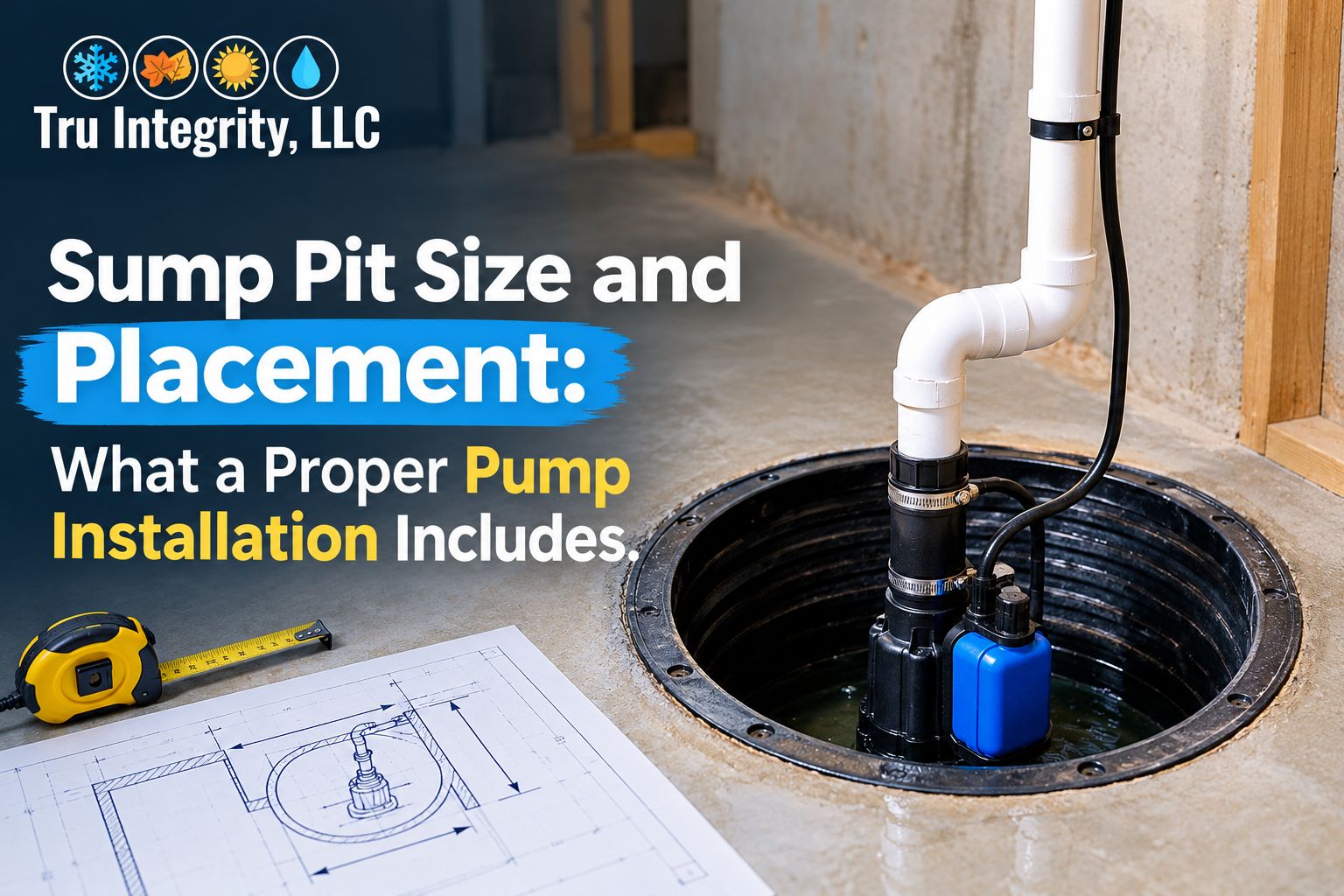
Basement flooding can damage your flooring, belongings, and foundation if water is not managed properly. A sump pump helps collect groundwater and move it safely away from your home, but its performance depends on correct installation.
The sump pit must be properly sized, strategically placed, and connected to a reliable drainage system. Whether you are planning a new installation or need a sump pump replacement service, understanding these factors can help you reduce water problems and keep your basement protected.
What Determines the Right Sump Pit Size?
The sump pit, also called a sump basin, collects water before the pump moves it outside. Its size affects how often the pump runs and how well it handles incoming water.
A pit that is too small may fill quickly, causing frequent cycling that increases wear on the motor and float switch. The right size depends on groundwater volume, pump specifications, drainage systems, soil type, foundation design, and seasonal water levels.
Many residential basins measure 18 to 24 inches in diameter, but the ideal dimensions depend on the property’s drainage needs and the manufacturer’s recommendations.
Where Should a Sump Pit Be Installed?
The sump pit should be positioned where water can reach it efficiently without interfering with the foundation or other essential systems. Installers typically evaluate the basement’s low points, groundwater entry areas, and existing drainage paths before selecting a location.
A suitable location should offer:
- Access to incoming drainage lines, where applicable.
- Enough clearance for pump installation, inspection, and maintenance.
- A practical route for the discharge pipe.
- Safe separation from utilities and other underground services.
- A position that supports the overall waterproofing solution for basement needs.
The pit is often installed near a basement perimeter or another suitable collection point. However, the lowest visible floor area is not always the best location. Water may collect elsewhere depending on the foundation layout and drainage system.
Professional planning also considers whether excavation could affect the footing or foundation slab. Cutting or digging without understanding the foundation structure can create avoidable problems.
What Does Proper Sump Pump Installation Include?
A reliable installation involves several connected components. Each one must work correctly for the system to manage incoming water.
- Sump basin preparation: The installer excavates an appropriately sized opening and prepares a stable base. The basin must sit securely and allow water to enter without obstruction.
- Pump positioning: The pump is placed upright on a stable surface, following the manufacturer’s installation instructions. It should not sit directly in loose sediment that could enter the intake.
- Float switch clearance: The float must move freely as the water level rises and falls. Contact with the basin wall, pipes, or cords can prevent the pump from activating properly.
- Drainage connections: Where an interior drainage system is installed, its lines should direct water toward the basin without unnecessary restrictions.
- Discharge piping: The outlet pipe carries pumped water outside. Proper pipe sizing, secure connections, and an appropriate discharge location help prevent leaks and unnecessary back pressure.
- Electrical connection: The pump requires a suitable power supply and a properly protected electrical connection. Electrical work should follow applicable codes and be completed by a qualified professional when required.
How Much Pump Capacity Does Your Basement Need?
Pump capacity should match the amount of water entering the pit and the height and distance the water must travel. Choosing a pump based only on horsepower can lead to poor results.
Two specifications are particularly important:
- Flow rate: Measured in gallons per minute (GPM), this indicates how much water the pump can move under specific conditions.
- Total dynamic head: This accounts for the vertical lift and resistance created by the discharge piping and fittings.
A pump’s flow rate usually decreases as the required pumping height increases. Therefore, installers should review the manufacturer’s performance curve rather than relying on the maximum advertised capacity.
For example, a basement with frequent groundwater intrusion may need a higher-capacity pump than one that receives only occasional water. The right selection should also account for expected peak inflow without causing excessive cycling during normal conditions.
If water enters faster than the pump can remove it, the pit may overflow. Proper sizing reduces this risk, although no pump can guarantee protection against every flooding event.
Why Does the Discharge Line Matter?
Even a correctly sized pump can struggle if the discharge system is poorly designed. The line must carry water away from the home without leaking, freezing, or sending water back toward the foundation.
The discharge outlet should direct water to a suitable location that complies with local requirements. Water should not drain onto neighboring property, public walkways, or areas where it could create an ice hazard.
Installers should also consider:
- Pipe diameter and the pump’s outlet specifications.
- Secure joints that prevent water leakage.
- Backflow prevention where appropriate for the system design.
- Freeze protection in areas with cold winters.
- A discharge route that avoids creating a cycle in which pumped water returns to the basement.
The outlet should be checked during testing to confirm that water flows freely. Local codes may restrict connections to sanitary sewers or storm drains, so homeowners should verify the permitted discharge method.
Which Additional Features Improve Reliability?
A properly installed sump pump helps manage groundwater, but extra features can reduce water damage risks. A battery backup sump pump can keep the system running during power outages or primary pump failures. Homeowners should test the backup and check battery condition regularly.
High-water alarms and secondary pumps may offer added protection. Sealing entry points, improving exterior grading, and correcting drainage issues can support a waterproofing solution for basement needs, depending on the source of moisture.
How Can You Tell If the Installation Is Working Properly?
Before completing the installation, the installer should test the pump and check its operation.
Use this checklist during the final inspection:
- Ensure the basin is secure and clean.
- Test whether the pump activates when water rises.
- Check that the float switch moves freely.
- Listen for unusual noises or vibrations.
- Inspect discharge connections for leaks.
- Confirm the pump shuts off properly.
- Test the alarm and backup system, if installed.
Regularly remove debris, inspect the discharge outlet, and test the pump, especially before heavy rain or snowmelt.
Persistent dampness may indicate cracks, seepage, or drainage problems. Waterproofing basement floor work may help, depending on the moisture source
Protect Your Basement With a Properly Planned Installation
A reliable sump pump installation starts with the right pit size, a suitable location, and components that work together. Correct pump capacity, dependable discharge piping, and regular testing also help reduce the risk of basement flooding.
If your current system struggles to control water or needs replacement, contact Tru Integrity to discuss your basement’s drainage needs and identify a practical approach to protecting your foundation and finished space.
Key Takeaways:
- Choose a sump pit size based on water volume, drainage needs, and pump specifications.
- Place the pit where groundwater naturally collects or where drainage systems direct water.
- Install the pump on a stable, level base to support reliable operation.
- Ensure the discharge line carries water safely away from the foundation.
- Consider backup power and regular maintenance to improve reliability.
Frequently Asked Questions:
1. How deep should a sump pit be?
The required depth depends on the basin design, pump dimensions, incoming drainage lines, and groundwater conditions. The pit should provide sufficient water storage and allow the pump and float switch to operate correctly.
2. Can a sump pit be installed anywhere in the basement?
No. The location should support effective water collection, safe excavation, convenient maintenance, and a suitable discharge route. Foundation structure and existing utilities must also be considered.
3. How often should a sump pump run?
There is no universal operating frequency. Pump activity depends on rainfall, groundwater levels, soil conditions, and drainage design. Frequent cycling during dry weather may indicate a problem that needs inspection.
4. Does every basement need a backup sump pump?
Not every basement requires one, but backup protection can be valuable where flooding could cause significant damage or power outages are a concern. The decision should consider local risks and the reliability of the primary system.
5. When should homeowners contact Tru Integrity for sump pump service?
Homeowners should seek professional help if the pump fails to start, runs continuously, makes unusual noises, or cannot keep water levels under control. Tru Integrity can help assess basement water concerns and determine whether repair, installation improvements, or a sump pump replacement service is appropriate.