
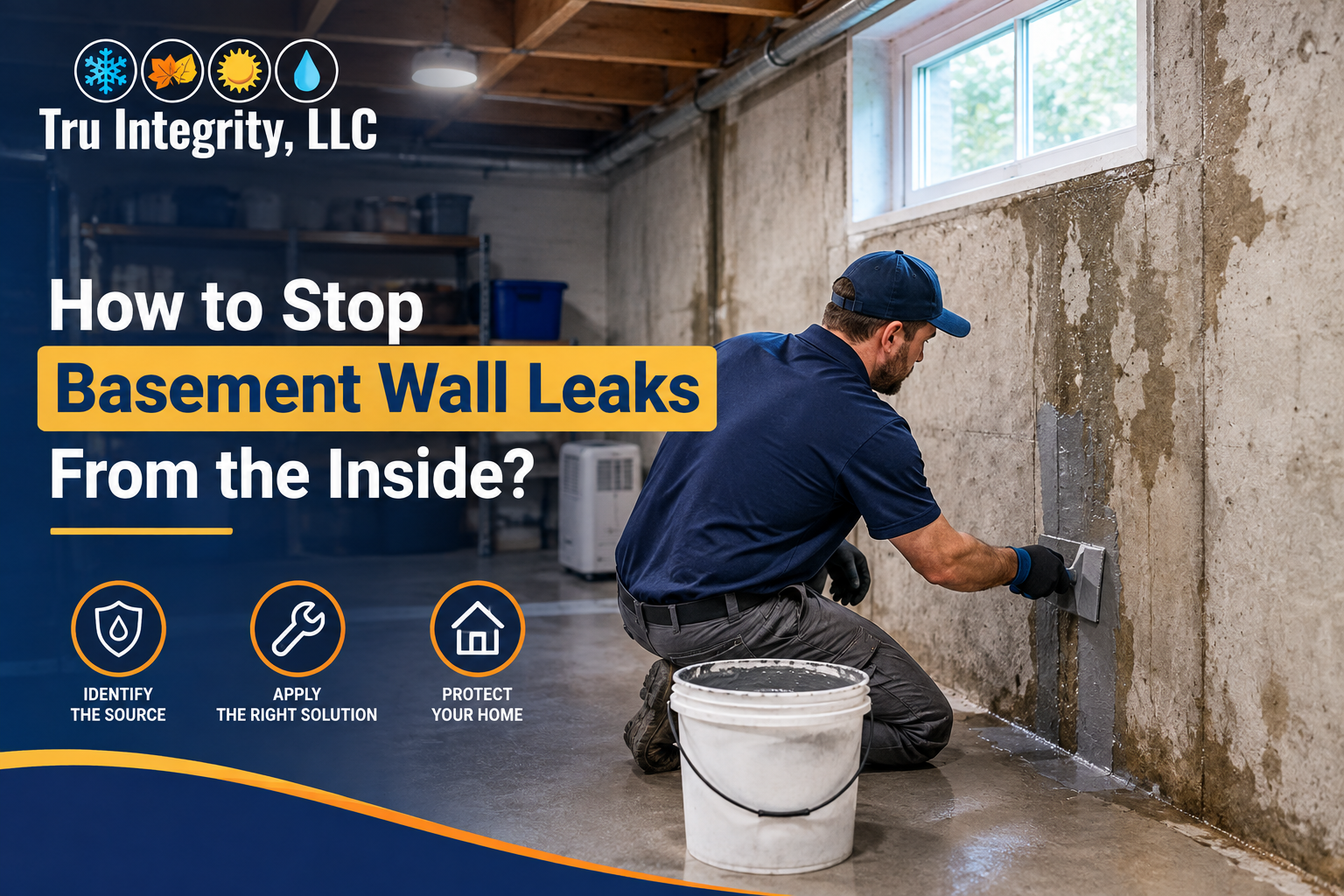
Yes, you can stop many leaks in basement walls from the inside. Small cracks can often be sealed, while recurring water may need an interior drainage system that collects and redirects it. The right fix depends on where the water enters and how much pressure is behind the wall.
The key is to treat the entry point instead of simply covering the stain. Once you know how water is getting through, you can choose an interior repair that addresses the problem effectively.
Can You Stop a Basement Wall Leak From the Inside?
Interior repairs can work when the leak is coming through a manageable crack, joint, or porous section of the foundation. They can also be useful when exterior excavation is difficult or not practical.
However, not every leak can be solved with a coating or sealant. If groundwater is continuously pushing against the foundation, the better solution may be to collect that water and move it away through an interior drainage system.
For this reason, start by identifying the type of leak before choosing a repair. This helps you select a suitable basement waterproofing method instead of repeatedly treating the visible water stain.
What Is Causing Water to Come Through the Wall?
Water can enter a basement through several points. A visible crack is one of the most common, but it is not the only possibility.
Check for water around:
- Cracks in poured concrete
- Mortar joints in masonry
- The wall-floor joint
- Pipe or utility openings
- Porous or deteriorated sections
Pay attention to when the leak appears. Water that shows up after heavy rain may behave differently from moisture that remains present throughout the year.
This first check helps determine whether you need a simple repair or a more complete waterproofing basement walls solution.
How Do You Seal a Crack That Is Letting Water In?
Small, stable cracks can sometimes be repaired from inside with a suitable waterproof repair material. Start by cleaning the crack and removing loose concrete, dust, or old material.
The repair compound should be applied according to the manufacturer’s instructions. It needs to bond properly with the surrounding surface to create an effective seal.
Do not simply spread material over a dirty or damaged area. Poor surface preparation can cause the repair to fail and allow water to return.
If a crack is widening, unusually large, or associated with other foundation movement, have it evaluated before sealing it.
What Should You Do When Water Enters at the Wall-Floor Joint?
Water at the cove joint (where wall meets floor) is one of the most common basement leak points—and surface sealants alone often fail here because groundwater pressure is involved.basementmoisturelab+1
Two Possible Causes → Two Different Fixes
| Cause | Symptoms | Recommended Fix |
| Shrinkage gap (construction seam) | Occasional seepage only during/after heavy rain; no standing water | Hydraulic cement packed into a grooved joint, followed by a waterproof membrane coat fixupfirst+1 |
| Hydrostatic pressure | Persistent or recurring water, especially after soil saturation | Interior perimeter drainage system (French drain) tied to a sump pump basementmoisturelab+2 |
Choosing the right basement waterproofing method starts with understanding why water is entering the joint in the first place.
Quick Fix for Minor, Rain-Only Leaks
- Chip a 1″ wide × 1″ deep groove along the joint.
- Pack tightly with hydraulic cement; hold pressure 3–5 minutes.fixupfirst+1
- After 24 hours of curing, apply a waterproofing membrane (e.g., Drylok) 6″ up the wall.
Long-Term Solution for Recurring Leaks
Install an interior drainage channel along the footing:
- Cut a narrow trench in the floor perimeter.
- Lay perforated pipe in gravel.
- Route to a sump pump for discharge away from the foundation.ejsenvironmental+2
This intercepts water before it reaches the floor, giving it a controlled exit path.
When Is Interior Drainage a Better Option?
If water keeps entering even after cracks or joints have been sealed, the problem may involve ongoing hydrostatic pressure.
In this situation, trying to keep adding sealant to the wall may not provide a lasting answer. An interior drainage system can intercept water and move it toward a sump pump or suitable discharge point.
This type of system is designed to manage water rather than simply block it at the surface.
It can be especially useful when groundwater is a recurring problem and exterior access is limited.
Can Waterproof Coatings Handle an Active Leak?
Waterproof coatings can help manage minor moisture on sound concrete or masonry walls, but they may not stop an active leak. When water pushes through cracks or joints under pressure, the coating can blister, peel, or fail over time.
The surface must also be clean and properly prepared before application. For older masonry, waterproofing cellar walls requires materials that work well with brick, stone, or other porous surfaces.
What If the Basement Wall Still Feels Damp?
A wall can feel damp without having an obvious leak. Moisture may be moving through porous masonry, or condensation may be forming on a cool basement surface.
In these situations, sealing one spot may not solve the entire problem.
Useful basement dampness solutions depend on why the wall stays wet. You may need to address moisture entering through the foundation, improve interior water management, or reduce excessive humidity.
The important step is to identify whether you are dealing with active water entry or general moisture.
Which Interior Repair Is Right for Your Basement?
The repair should match the way water is entering.
For a small foundation crack:
Use an appropriate crack repair material after properly preparing the surface.
For a leaking wall-floor joint:
Seal the area if the leak is minor. Repeated water entry may require interior drainage.
For moisture through porous masonry:
A compatible waterproofing treatment may help when there is no significant water pressure.
For recurring groundwater:
Consider an interior drainage system that collects and redirects water.
When Is an Interior Repair Not Enough?
Some warning signs suggest that a leak needs more than a basic interior repair.
Get the foundation professionally assessed if you notice:
- A crack that continues to grow
- A visibly bowed or leaning wall
- Heavy water entry during storms
- Repeated leaks after repairs
- Signs of foundation movement
- Significant deterioration around the leak
These conditions may indicate structural movement or substantial water pressure. Covering the affected area will not address the underlying problem.
Get the Right Fix Before Finishing the Basement
Do not cover an active basement leak with drywall or other finishes. Fix the water entry first and make sure the repair holds before finishing the space. If you are unsure whether the problem needs crack sealing or drainage, Tru Integrity can assess the issue and recommend the right solution. Get professional help to protect your basement walls from inside and keep your basement dry.
Key Takeaways:
- Many basement leaks can be addressed from inside.
- Find the exact water entry point before choosing a repair.
- Small, stable cracks may be sealed with suitable materials.
- Repeated wall-floor leaks may require interior drainage.
- Waterproof coatings are not suitable for every active leak.
- Persistent moisture needs to be traced to its actual source.
- Growing cracks or foundation movement require professional evaluation.
Frequently Asked Questions:
1. What is the fastest way to stop a basement wall leak?
The fastest solution depends on the source. A small crack may be sealed, while continuous groundwater may need an interior drainage system.
2. Can I seal a leaking basement wall myself?
Minor, stable cracks may be suitable for DIY repair. Persistent water, large cracks, or signs of movement should be evaluated by a professional.
3. Will hydraulic cement stop water coming through a basement wall?
It can help seal certain cracks and openings, but it may not solve leaks caused by ongoing water pressure or structural movement.
4. Should I waterproof a basement wall from the inside or outside?
It depends on the cause and condition of the foundation. Interior solutions can be effective, especially when exterior excavation is impractical, but some problems require exterior correction.
5. How long does an interior basement waterproofing repair last?
Its durability depends on the cause of the leak, the repair method, the materials used, and the condition of the foundation. A repair that addresses the actual source is more likely to provide lasting results.