
A cracked foundation can be stressful for any homeowner, but the good news is that most cracks can be repaired when identified early.
Did you know that up to 25% of homes may suffer structural foundation issues during their lifetime due to soil movement, moisture changes, or natural settling?
The first step in keeping your home safe is to know what causes cracks and how to repair a cracked foundation. At Tru Integrity LLC, we help homeowners feel confident and clear about the choices they make for fixing their foundations.
This guide has all the information you need about repair options, costs, and how to do them.
Before we begin, it helps to understand that how to repair foundation cracks depends on the type and severity of the crack. Not all cracks need the same fix.
Key Takeaways
- Cracks in the foundation are common and can often be fixed if they are found and addressed early.
- The right way to fix a crack depends on what kind it is and how bad it is.
- The cost of repairs varies a lot depending on the materials and the structure that needs to be fixed.
- You can only fix minor cosmetic problems with DIY crack repair.
- A professional evaluation makes sure that the foundation stays stable for a long time.
Objective:
The aim of this blog is assist homeowners with detailed instructions, estimated expenses, and expert advice from Tru Integrity LLC that features the repairing, preventing, and identifying of foundation cracks for a stable living that lasts.
Step 1: Find Out the Type and Severity of the Crack
Not every crack is the same. It’s normal for hairline cracks to happen. But if you see any of the following, you need to do something right away:
- Cracks wider than 1/8 inch
- Water seepage or damp basement walls
- Horizontal cracks (often more serious)
- Doors and windows that stick
- Interior drywall cracks above doors
- Uneven floors
- Bowing or leaning walls
When these signs show up, the next step is to think about your options for foundation crack repair before the problem gets worse.
Step 2: Assess the Causes of Foundation Cracks
Shifting soil, too much water pressure, inadequate drainage, unstable backfill, or the natural settling of a home can all cause foundation cracks. Some cracks are not dangerous, but others may mean that the structure is moving.
Common reasons include:
- Clay soil that expands and contracts
- Water buildup caused hydrostatic pressure
- Bad grading or drainage
- Changes in temperature
- Settling of the concrete over time
Homeowners who put off repairs often have to pay more to fix foundation crack repair costs, especially when cracks widen or begin to leak.Check out our page on Foundation Crack Repair to find out more about how experts look at these problems.
Step 3: Decide If You Can DIY or Need a Professional
Some homeowners try DIY kits, but they usually only work for small cracks that don’t affect the structure. You need an expert to look at problems with water pressure, walls that are bowing, or structural movement.
- DIY kits are only suitable for minor cracks
- Cracks with water infiltration, structural movement, or wall bowing require expert assessment
- DIY fixes do not stop structural shifting and often fail over time
It is always best to get professional help for safety and long-term stability. Visit our Foundation Repair Service Page to find out more.
With experts like Tru Integrity LLC, you get solutions that address both the crack and its root cause.
Step 4: Choose the Right Professional Repair Methods
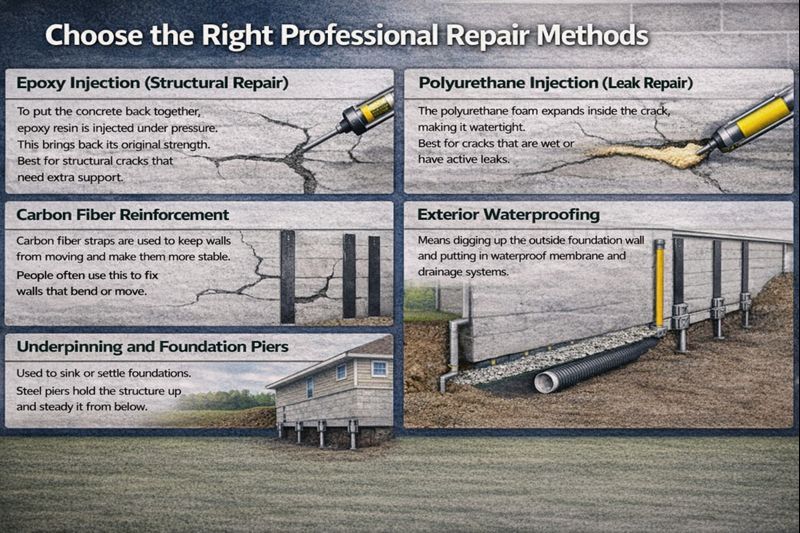
The correct repair method depends on the crack type. Many homeowners search online for guidance on how to repair a crack in the foundation, but DIY solutions only work for very minor surface cracks.
Professionals use the following proven techniques:
1. Epoxy Injection (Structural Repair)
To put the concrete back together, epoxy resin is injected under pressure. This brings back its original strength. Best for structural cracks that need extra support.
2. Polyurethane Injection (Leak Repair)
The polyurethane foam expands inside the crack, making it watertight. Best for cracks that are wet or have active leaks.
3. Carbon Fiber Reinforcement
Carbon fiber straps are used to keep walls from moving and make them more stable. People often use this to make walls bend or move.
4. Exterior Waterproofing
This means digging up the outside foundation wall and putting in waterproof membranes and drainage systems.
5. Underpinning and Foundation Piers
Used to sink or settle foundations. Steel piers hold the structure up and steady it from below.
Homeowners who want a full solution can call our experts at Tru Integrity, LLC to find out how to repair a cracked foundation with long-term solutions, not temporary fixes.
Step 5: Estimate the Costs to fix a crack in the foundation
One of the biggest questions homeowners ask is: How much does it cost to repair a cracked foundation?
Here’s a realistic cost range based on nationwide averages:
- Minor crack sealing: $200–$600
- Epoxy/polyurethane injections: $400–$1,000
- Carbon fiber straps: $350–$1,000 per strap
- Interior drainage/waterproofing: $2,000–$7,000
- Underpinning/foundation piers: $5,000–$20,000+
Your total cost depends on crack width, depth, water presence, structural movement, required reinforcement, and soil conditions.
Knowing how to repair foundation cracks correctly and a good evaluation make sure you don’t overspend or pick the wrong method.
Take Action Today To Protect Your Home’s Structural Safety
The building doesn’t have to be in big trouble if the foundation is cracked. If you hire a trustworthy professional and use the right method, you can fix your foundation and keep it from getting worse. At Tru Integrity LLC, we focus on repairs that are reliable and last a long time. These repairs give homeowners peace of mind and protect the value of their property.
Now is the best time to act if you see cracks, water problems, or walls that are moving.
Frequently Asked Questions
What is the best way to repair a cracked foundation?
The best way to fix a crack depends on what kind it is. For structural repairs, epoxy injection is best, and for sealing leaks, polyurethane is best.
Can foundation cracks get worse over time?
Yes. If you don’t fix cracks that are exposed to water, soil pressure, or changes in temperature, they will often get bigger and deeper.
How do I know if a crack needs professional repair?
If the crack leaks, gets bigger, or makes doors or windows not line up right, you need to have a professional look at it.
Are foundation crack repairs expensive?
The cost of repairs depends on how bad they are. Minor repairs are cheap, but major structural repairs are more expensive.
Can I prevent future foundation cracks?
Yes, fixing gutter problems, keeping the right amount of moisture, and making sure the drainage works properly can all help keep new cracks from forming.