
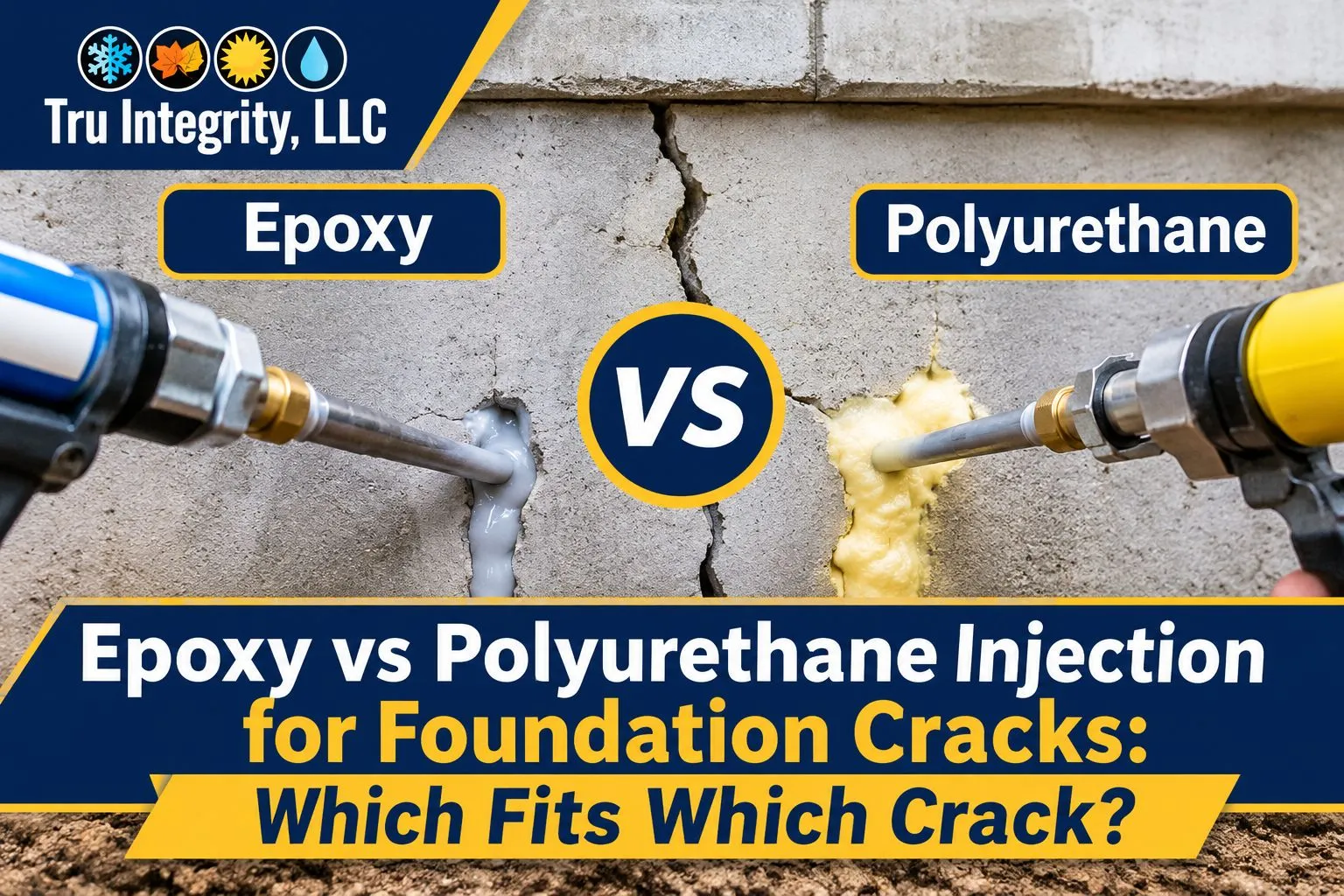
A foundation crack may look like a small problem, but choosing the wrong repair method can lead to recurring damage. Epoxy and polyurethane injections are two common options for foundation crack repair, but they work differently.
Epoxy helps restore concrete strength, while polyurethane seals water leaks and allows minor movement. Understanding these differences can help you choose the right solution based on the crack’s condition, moisture levels, and structural impact.
What Is the Difference Between Epoxy and Polyurethane Injection?
Epoxy and polyurethane both repair concrete cracks but serve different purposes. Epoxy foundation crack repair restores structural strength, while polyurethane injection helps stop water leaks.
The right choice depends on the crack’s condition and repair needs. Professional foundation crack repair services can help identify the suitable material.
Here is a quick comparison:
| Feature | Epoxy Injection | Polyurethane Injection |
| Main purpose | Restore structural strength | Stop water leakage |
| Flexibility | Rigid after curing | Flexible after curing |
| Water resistance | Seals cracks | Expands to block water |
| Best suited for | Stable, non-moving cracks | Wet or leaking cracks |
| Movement tolerance | Limited | Better tolerance for minor movement |
When Is Epoxy Injection the Better Choice?
Epoxy injection is suitable when a foundation crack affects the structural integrity of the concrete. It creates a strong bond between separated concrete surfaces and helps restore their connection.
This method is commonly used for:
- Stable structural cracks: Cracks that are no longer moving but need strength restored.
- Load-bearing concrete walls: Damage that affects the strength of foundation walls or structural elements.
- Non-leaking cracks: Dry cracks where water intrusion is not the primary concern.
- Concrete separation: Areas where the concrete has split but remains suitable for bonding.
Before injection, the crack must be properly prepared. Technicians typically seal the surface, install injection ports, and introduce epoxy under controlled pressure. The material then cures and bonds the concrete together.
However, epoxy is rigid after curing. If the crack continues to move because of soil pressure or foundation settlement, the repair may fail, or the concrete may crack again.
When Should You Choose Polyurethane Injection?
Polyurethane injection is generally preferred when water is entering through a foundation crack. The material reacts with moisture and expands inside the crack, filling gaps and creating a flexible seal.
It is particularly useful in these situations:
- Active water leakage
When water seeps through a basement wall, expanding polyurethane can fill the opening and block the flow.
- Damp foundation cracks
Moisture-reactive polyurethane can seal cracks where traditional rigid materials may be less suitable.
- Minor foundation movement
Its flexibility allows it to accommodate some movement without immediately losing its seal.
- Irregular crack openings
The expanding material can fill small spaces and gaps that may be difficult to seal with rigid products.
Polyurethane is often used as a waterproofing solution for basement walls because it helps prevent water from entering through existing cracks.
However, it does not restore the original structural strength of damaged concrete. If a crack indicates significant settlement or structural movement, additional repairs may be necessary.
How Do Crack Size, Movement, and Moisture Affect Your Choice?
The appearance of a foundation crack can provide useful clues, but its width alone cannot determine the right injection material. You also need to consider whether the crack is stable, leaking, or becoming wider.
| Crack Condition | Suitable Approach | Why It Matters |
| Stable and dry | Epoxy | Bonds separated concrete surfaces |
| Actively leaking | Polyurethane | Expands and blocks water pathways |
| Minor movement with moisture | Polyurethane | Provides a flexible seal |
| Structural damage | Professional assessment | May require additional stabilization |
For example, a dry vertical crack that has stopped changing may be suitable for epoxy injection. In contrast, a leaking basement wall crack may need polyurethane to control water entry.
Cracks caused by ongoing foundation settlement require more attention. Simply filling the opening will not correct the underlying movement.
Can You Use Epoxy and Polyurethane Together?
Yes, both materials can sometimes be used on the same foundation, but they serve different purposes. The decision depends on the crack’s condition and the repair requirements.
For example, a foundation may have one stable structural crack and another crack allowing water to enter. Epoxy may be appropriate for the first, while polyurethane may be used for the second.
In some cases, technicians may also use different materials in stages. However, they must evaluate the concrete, moisture levels, and movement before selecting a repair sequence.
This is where professional foundation crack repair services become valuable. Experienced technicians can identify the source of the damage and recommend a suitable repair instead of applying the same material to every crack.
What Should You Check Before Choosing a Crack Injection Method?
Before approving any repair, make sure the contractor evaluates the complete condition of your foundation.
Consider these five important factors:
- Crack movement: Check whether the opening is stable or continues to widen.
- Water intrusion: Identify whether moisture or active leakage is present.
- Structural condition: Look for displacement, uneven surfaces, or other signs of foundation damage.
- Soil conditions: Consider whether drainage problems or soil pressure contribute to the cracking.
- Long-term requirements: Choose a repair that addresses the actual cause rather than only covering the visible damage.
Also, ask whether the proposed repair includes checking surrounding areas. A sealed crack may not solve the problem if poor drainage or ongoing soil movement continues to affect the foundation.
How Does Tru Integrity Help You Choose the Right Repair?
Every foundation crack requires an appropriate repair based on its condition. At Tru Integrity, the focus is on understanding the source of damage before recommending a solution.
With more than eight years of experience and a team of over 80 technical professionals, Tru Integrity handles foundation and waterproofing projects with attention to site conditions and repair requirements.
The team evaluates factors such as crack movement, moisture intrusion, and structural concerns to help determine the appropriate repair approach. This helps property owners make informed decisions about protecting their foundations.
Choose the Right Injection Method to Protect Your Foundation
Choosing between epoxy and polyurethane depends on the crack’s stability, moisture, and structural condition. The right material can help prevent recurring leaks and protect your foundation from further damage.
For reliable foundation crack repair, contact Tru Integrity. Their experienced team can assess your foundation, identify the cause, and recommend a suitable repair solution for long-term protection.
Key Takeaways:
- Epoxy injection helps restore the structural strength of stable foundation cracks.
- Polyurethane injection is suitable for sealing leaking cracks and blocking water entry.
- Epoxy forms a rigid bond, while polyurethane remains flexible after curing.
- Crack movement, moisture, and structural damage determine the right repair method.
- Combining both materials may be appropriate when different cracks require different treatments.
- A professional inspection helps identify the cause and prevent recurring foundation problems.
Frequently Asked Questions:
- Is epoxy stronger than polyurethane for foundation cracks?
Epoxy provides a stronger structural bond, while polyurethane offers flexibility and water resistance. The better option depends on the crack’s condition.
- Can polyurethane stop an active foundation leak?
Yes. Expanding polyurethane can fill leaking cracks and block water entry, depending on the crack conditions and product used.
- Does epoxy injection prevent future foundation cracks?
No. Epoxy repairs existing stable cracks but cannot prevent new cracks caused by settlement, soil movement, or other structural issues.
- Can foundation cracks be repaired from inside the basement?
Yes. Many cracks can be injected from the interior, depending on their location, accessibility, and the source of the damage.
- How do I know which injection method my foundation needs?
Tru Integrity can help evaluate the crack’s stability, moisture conditions, and structural impact before recommending a suitable repair method.