
Water drainage problems can affect more than the appearance of your property. Standing water, soggy lawns, soil erosion, and water collecting near foundations can lead to costly damage if left untreated.
Choosing the right drainage solutions starts with understanding where the water comes from and how it moves across or beneath the ground. French drains, surface drains, and trench drains each serve a different purpose.
Knowing how they work can help property owners select a system that manages water effectively and protects their outdoor spaces.
French Drain: When Water Builds Up Below the Ground
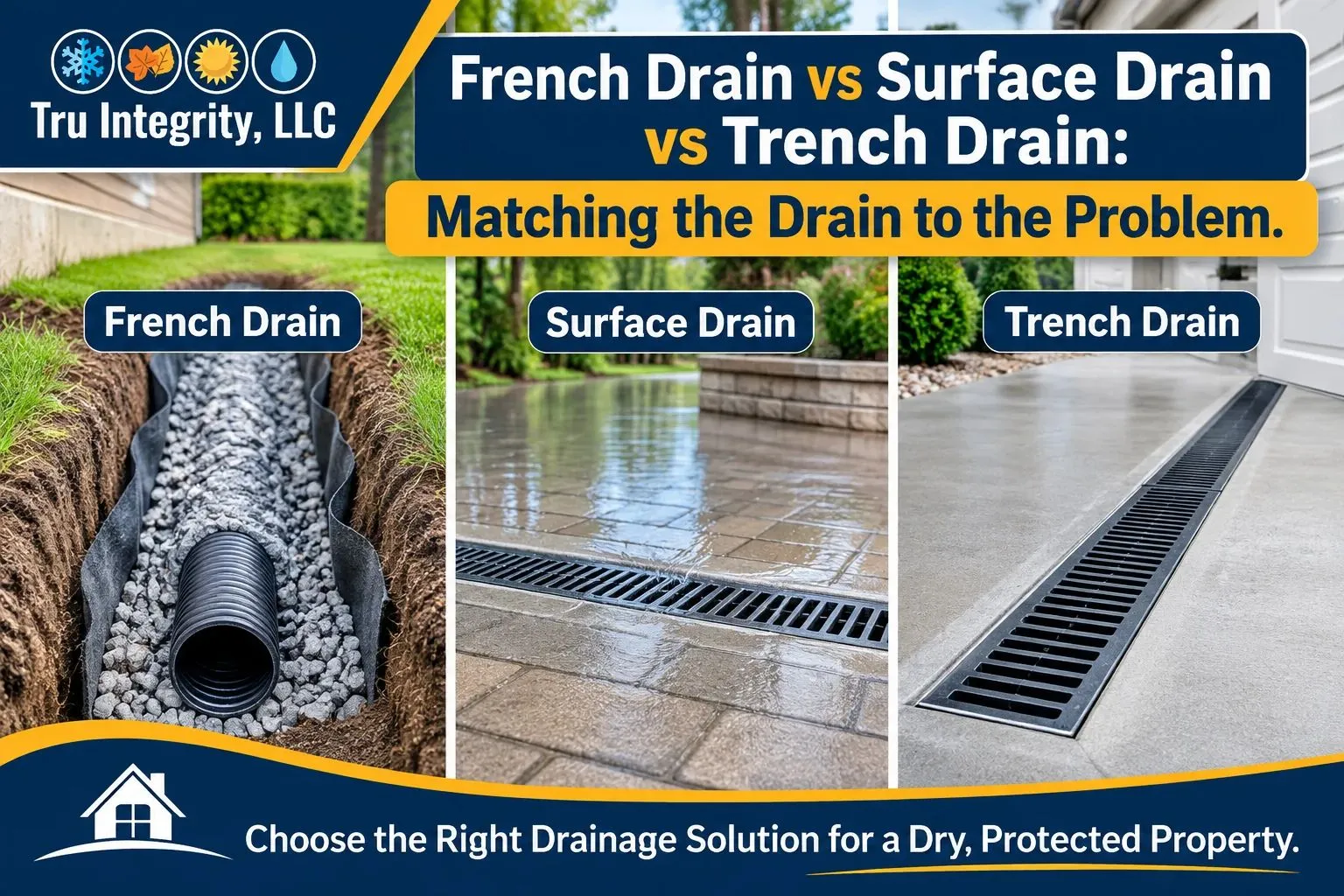
A French drain is designed to collect groundwater and move it away from areas where moisture builds up. It usually consists of a perforated pipe placed inside a gravel-filled trench. A filter fabric may also be used to prevent soil and debris from entering the system.
Water enters through the gravel and perforations before flowing through the pipe toward a suitable discharge point.
When should you choose a French drain?
This system is useful when:
- Your lawn remains soggy even after rainfall stops.
- Water collects around the foundation.
- Underground moisture affects garden beds or landscaped areas.
- Sloped properties experience water movement beneath the soil.
For homeowners exploring backyard drainage solutions, a French drain can help manage excess groundwater without significantly affecting the appearance of the yard.
However, the system needs a suitable outlet and proper grading. Without these, water may collect inside the pipe instead of draining away.
Surface Drain: When Water Collects Above the Ground
Surface drains remove water that collects on the ground after rain or irrigation. They commonly include a grated inlet connected to an underground drainage pipe. Water enters through the grate and moves toward a designated outlet.
Unlike French drains, surface drains do not primarily target groundwater. They collect visible runoff before it causes further problems.
Where do surface drains work best?
Consider this option for:
- Low spots in lawns where rainwater collects.
- Patios and outdoor seating areas.
- Driveways with poor water runoff.
- Garden areas where water cannot flow away naturally.
Effective landscape and drainage solutions often include surface drains to protect lawns, planting areas, and outdoor living spaces from repeated water accumulation.
The drain must be positioned at the lowest collection points. Proper grading is equally important because water needs to flow toward the inlet. Leaves, dirt, and other debris should also be removed regularly to prevent blockages.
Trench Drain: When Water Runs Across Hard Surfaces
A trench drain, also called a channel drain, is a long, narrow drainage system installed into the ground. It usually has a grated top and a channel underneath that collects and carries away surface runoff.
Its linear design makes it suitable for areas where water moves across wide or paved surfaces.
Common applications include:
- Driveways and garage entrances.
- Walkways and paved patios.
- Commercial parking areas.
- Pool decks and outdoor recreational spaces.
A trench drain is particularly useful when water flows across a driveway toward a garage or building entrance. It intercepts runoff before it reaches areas where it could cause damage.
The channel must have the correct depth, capacity, and slope. The grate should also support the expected foot or vehicle traffic. Choosing an unsuitable load rating can lead to damage over time.
French Drain vs Surface Drain vs Trench Drain: What Is the Difference?
Although all three systems manage excess water, they are designed for different drainage conditions.
| Feature | French Drain | Surface Drain | Trench Drain |
| Main purpose | Collect groundwater | Collect standing surface water | Capture flowing surface water |
| Design | Gravel trench with perforated pipe | Grated inlet and pipe | Long channel with grate |
| Best location | Lawns and foundation areas | Low-lying outdoor spaces | Driveways and paved surfaces |
| Water collection | Below ground | At specific collection points | Along a continuous line |
| Maintenance | Check outlets and pipe condition | Remove debris from grates | Clean channel and outlet |
The main difference is where each system collects water. French drains address underground moisture, while surface and trench drains manage water above the ground.
How Do You Choose the Right Drainage System?
Start by identifying where water collects and how it moves. Installing a drain without understanding the underlying problem may only provide temporary relief.
Consider these factors before making a decision:
1. Water source: Determine whether the problem comes from groundwater, rainfall runoff, or water flowing from nearby properties.
2. Property layout: Check the slope, soil type, paved areas, and available drainage outlets. These conditions affect which system will work best.
3. Drainage capacity: Consider how much water the system needs to handle during heavy rainfall. An undersized drain may overflow when it is needed most.
4. Installation requirements: Some systems require deeper excavation, while others need precise grading and channel placement.
Professional landscape and drainage solutions can help address different water problems through suitable drain placement, grading, and water management methods.
In some properties, more than one drainage system may be necessary. For example, a French drain can manage groundwater while a trench drain collects runoff from a driveway.
What Other Factors Can Affect Drainage Performance?
Even a properly selected drainage system may not work as expected if the surrounding conditions are ignored.
Here are a few important considerations:
- Soil condition: Clay-heavy soil drains slowly and may require a different approach than sandy soil.
- Water outlet: Every drainage system needs a safe discharge point that does not create problems elsewhere.
- Erosion risk: Fast-moving runoff can wash away soil, damage plants, and weaken surrounding surfaces. Proper grading and suitable drainage and erosion solutions can help control this movement.
- Water accumulation: Properties with persistent water problems may also need additional measures, such as sump pump installation, to move collected water away from basements or other low-lying areas.
Regular inspections are also important. Check grates, outlets, and visible drainage channels for debris or signs of damage.
Get Professional Help to Match the Drain to Your Property
Choosing between French, surface, and trench drains depends on the actual water problem, not simply the available installation options. The right system should collect water at the source and direct it toward a suitable outlet.
Tru Integrity provides professional waterproofing and drainage support to help property owners address water-related concerns. Contact Tru Integrity to explore suitable drainage solutions and protect your property from recurring moisture and runoff problems.
Frequently Asked Questions:
-
Can a French drain and surface drain be installed together?
Yes. A French drain can manage groundwater while a surface drain collects rainwater from low-lying areas.
-
Which drain is best for a driveway?
A trench drain is generally suitable because it captures water flowing across paved surfaces before it reaches the garage or building.
-
Do French drains need regular maintenance?
Yes. Inspect the outlet, check for blockages, and ensure water continues to flow properly.
-
Are trench drains suitable for residential properties?
Yes. They work well around driveways, patios, garages, and pool decks when properly sized and installed.
-
Can Tru Integrity help choose the right drainage system?
Yes. Tru Integrity can help assess water-related concerns and identify suitable drainage and waterproofing approaches for your property.