
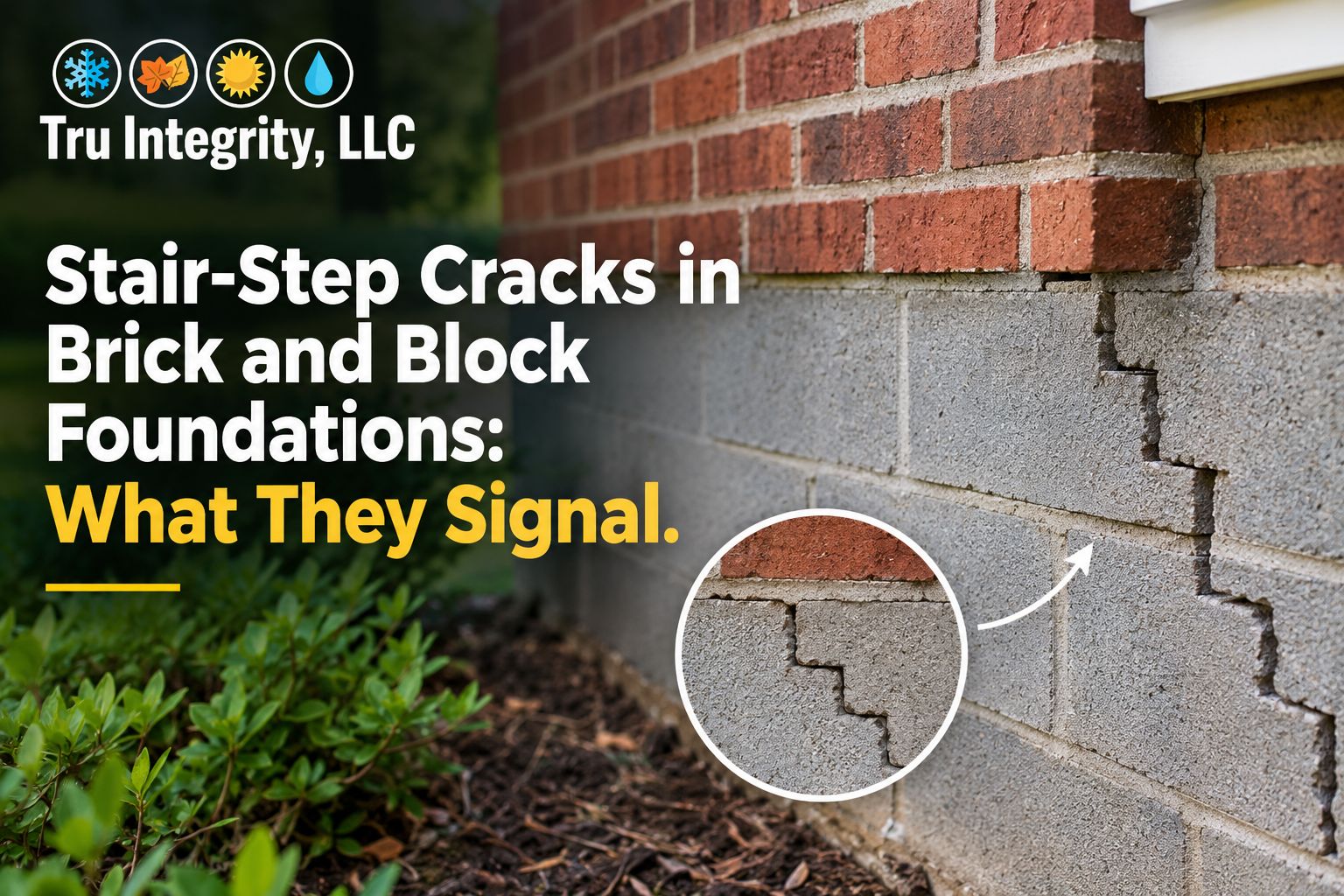
Stair-step cracks in brick and block foundations can indicate anything from minor mortar deterioration to foundation movement. These cracks follow the horizontal and vertical mortar joints, creating a pattern that resembles a staircase.
While some cracks develop from normal settling, others may signal soil pressure, drainage problems, or structural changes. Understanding the cause helps homeowners decide when to seek professional foundation crack repair and prevent minor concerns from becoming more serious.
What Are Stair-Step Cracks in a Foundation?
Stair-step cracks develop along the mortar joints between bricks or concrete blocks, creating a diagonal pattern across the foundation wall. Small, stable cracks may result from minor settling or aging mortar.
However, widening gaps, displaced blocks, or cracks that continue to grow may indicate foundation movement. Concrete foundation crack repair may be necessary, depending on the cause.
Identifying the underlying problem before repairing the visible damage helps prevent recurring cracks and supports long-term foundation stability.
What Do Stair-Step Cracks Signal?
The direction, width, and location of a crack can help identify potential foundation concerns. However, no single crack pattern confirms a specific cause without further inspection.
| Crack pattern or condition | What it may indicate |
| Thin cracks along mortar joints | Minor settling, mortar shrinkage, or aging masonry |
| Wider stair-step cracks | Possible differential settlement or foundation movement |
| Cracks with displaced bricks or blocks | Movement that may require structural evaluation |
| Cracks near foundation corners | Localized movement or concentrated stress |
| Cracks that grow after heavy rain | Potential soil expansion, drainage issues, or changing ground conditions |
| Cracks accompanied by sticking doors | Possible foundation movement affecting the structure |
A professional assessment helps determine whether crack in foundation repair should focus on sealing, masonry repairs, drainage improvements, or structural stabilization.
Why Do Stair-Step Cracks Develop?
Several conditions can place stress on brick and block foundations. Identifying the source is essential because repairing the visible crack alone may not address the problem.
- Uneven foundation settlement
Foundations can settle as the soil beneath them compresses. When different sections settle at different rates, stress develops along masonry joints. This uneven movement can create diagonal cracks that gradually extend across the wall.
- Poor drainage around the house
Water that collects near foundation walls can soften certain soils, increase pressure, or contribute to erosion beneath the footing. Repeated wet and dry conditions may also cause soil movement.
- Expansive clay soil
Clay-rich soil can swell when it absorbs moisture and shrink during dry periods. These changes can place repeated pressure on the foundation, potentially leading to cracks and uneven movement.
- Hydrostatic pressure
When groundwater accumulates around a basement, it can exert pressure against foundation walls. In some cases, this pressure contributes to cracking, bowing, or water intrusion.
- Aging mortar and masonry
Older foundations may develop cracks as mortar deteriorates over time. However, homeowners should not automatically assume that stair-step cracks are cosmetic, especially when the gaps are widening or masonry units are shifting.
When Should Homeowners Be Concerned?
Not every stair-step crack indicates a serious structural problem. The key is to look for changes in the crack and other signs of movement.
Pay attention to these warning signs:
- Increasing crack width: A crack that continues to widen may indicate ongoing movement.
- Displaced masonry: Bricks or blocks that no longer sit evenly may suggest structural stress.
- Bowing foundation walls: Walls that curve inward need prompt professional evaluation.
- Water entering the basement: Moisture around cracks may point to drainage or waterproofing concerns.
- Interior changes: New drywall cracks, uneven floors, or doors that suddenly stick may accompany foundation movement.
If a wall is visibly bowing, blocks are shifting, or movement appears to be progressing quickly, arrange a prompt professional inspection. Do not rely on patching alone to address potentially serious structural changes.
How Can You Monitor Stair-Step Cracks?
Homeowners can document crack development while arranging an inspection when needed. Monitoring is useful for understanding changes, but it cannot replace a structural assessment.
Follow these practical steps:
- Take clear photographs
Photograph the entire crack and a close-up so you can compare its appearance later.
- Record the location
Note whether the crack is near a corner, window, basement wall, or foundation joint.
- Measure the width
Use a ruler or crack gauge to record the gap without disturbing the masonry.
- Check for related changes.
Look for water seepage, displaced blocks, or new cracks inside the home.
- Document after heavy rain
Note whether water collects near the foundation or moisture appears indoors.
Avoid repeatedly filling a developing crack before its cause has been evaluated. Doing so can hide changes that would otherwise help a professional understand the problem.
How Are Stair-Step Foundation Cracks Repaired?
The right repair depends on whether cracks result from damaged mortar, water intrusion, or foundation movement. A professional should inspect the wall, soil, and drainage before recommending a solution.
Minor cracks may need mortar replacement, while moisture problems may require drainage improvements.
Exterior foundation crack repair can address accessible cracks when appropriate. If ongoing settlement is responsible, foundation stabilization or underpinning may be necessary. Sealing cracks alone will not stop structural movement.
Can Waterproofing Prevent Stair-Step Cracks?
Waterproofing can help manage moisture around a foundation, but it cannot prevent every type of crack. Soil settlement, expansive clay, construction issues, and other structural factors may still cause movement.
Homeowners should start by checking the slope around the property. Soil should generally direct surface water away from the foundation rather than allowing it to pool beside the walls.
Keep gutters clean and extend downspouts to discharge water away from the house. Address standing water and investigate recurring basement leaks instead of relying on interior patches alone.
Professional waterproofing of basement walls may help reduce moisture intrusion when selected for the property’s conditions. Exterior drainage improvements, appropriate waterproofing systems, and foundation repairs may be needed together when several issues contribute to the damage.
How Can Tru Integrity Help With Foundation Cracks?
Tru Integrity helps homeowners understand foundation and basement concerns and identify suitable next steps. A professional evaluation can help distinguish between surface-level masonry damage, moisture-related issues, and signs that may require structural attention.
The goal is to address the cause rather than simply cover the visible crack. Depending on the findings, recommendations may include masonry repairs, drainage improvements, moisture management, or further structural assessment.
Homeowners should ask what is causing the damage, how the proposed repair addresses it, and whether additional work is needed to prevent recurring problems. Clear answers make it easier to choose an appropriate solution.
Protect Your Foundation Before Cracks Worsen
Stair-step cracks can reveal important changes in your foundation, especially when they widen, spread, or appear with moisture problems. Understanding their cause helps you choose the right solution and protect your home’s long-term stability.
If you notice developing cracks or recurring basement leaks, Tru Integrity can help you explore suitable repair options. Professional foundation crack repair can address the damage and help prevent related problems from being overlooked.
Key Takeaways:
- Stair-step cracks follow mortar joints in brick and concrete block foundations.
- Wider or growing cracks may indicate settlement or other foundation movement.
- Water accumulation and changing soil conditions can contribute to cracking.
- Bowing walls, displaced blocks, and recurring leaks warrant professional attention.
- Effective repairs address the underlying cause, not just the visible gap.
Frequently Asked Questions:
1. Are stair-step cracks in brick foundations serious?
Some are minor, but others indicate uneven settlement or foundation movement. Cracks that widen, displace masonry, or appear alongside bowing walls should be evaluated by a qualified professional.
2. Do stair-step cracks always mean the foundation is settling?
No. They can also result from deteriorating mortar, moisture changes, soil pressure, or other stresses. An inspection helps determine the most likely cause.
3. Can I repair stair-step cracks myself?
Minor cracks in stable mortar may be suitable for basic masonry maintenance. However, widening cracks, displaced blocks, and recurring water intrusion should be assessed before attempting repairs.
4. Can basement water cause stair-step cracks?
Water can contribute to foundation problems by changing soil conditions, increasing pressure, or causing erosion. Improving drainage and controlling moisture may help, but existing structural damage may require separate repairs.
5. When should I contact Tru Integrity for foundation crack repair?
Contact Tru Integrity if cracks are widening, masonry units are shifting, or water is entering your basement. Early evaluation can help identify the cause and determine whether foundation crack repair or additional drainage and structural work is needed.