
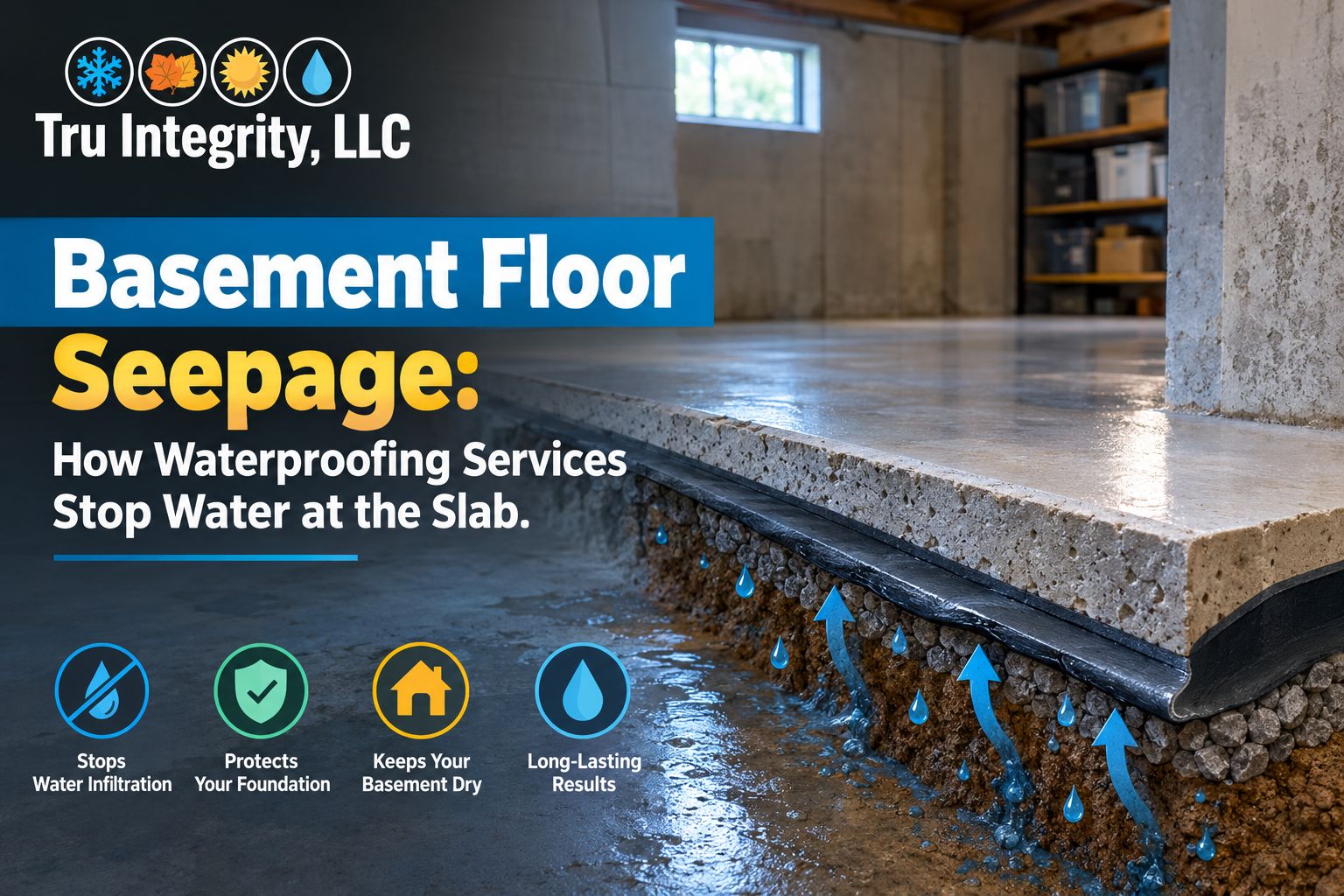
Water seeping through a basement floor can lead to damp surfaces, musty odors, damaged flooring, and recurring moisture problems. The issue often becomes noticeable after heavy rain or when groundwater levels rise.
Proper waterproofing basement floor solutions help control water entry, protect the concrete slab, and reduce the risk of further damage.
Understanding where the water comes from and how professionals address it can help homeowners choose the right repair instead of relying on temporary fixes.
What Causes Water to Seep Through a Basement Slab?
Basement floors are usually made from concrete, but concrete is not completely waterproof. Water can move through small pores, cracks, and weak joints when conditions allow it.
Several factors can contribute to seepage:
- Hydrostatic pressure: When groundwater builds up beneath the slab, it pushes against the concrete and forces moisture through weak points.
- Cracks in the floor: Shrinkage, settlement, or structural movement can create openings that allow water to enter.
- Wall-floor joint gaps: The connection between the foundation wall and the slab can become a common entry point for groundwater.
- Poor exterior drainage: Blocked gutters, short downspouts, or ground that slopes toward the house can increase water around the foundation.
Moisture may also enter through basement walls and travel toward the floor. In these cases, waterproofing basement walls may be necessary alongside slab repairs. The correct approach depends on the source, severity, and pattern of seepage.
How Do Professionals Identify the Source of Seepage?
Before starting repairs, waterproofing professionals inspect the basement to understand how and where water enters. Treating visible moisture without identifying its cause may lead to recurring problems.
A typical inspection includes:
- Checking the floor: Technicians look for cracks, damp patches, water stains, and areas where water collects.
- Examining wall-floor joints: They inspect the edges of the slab for gaps and signs of water intrusion.
- Reviewing drainage conditions: Gutters, downspouts, exterior grading, and nearby drainage systems are checked for possible problems.
- Assessing water patterns: The timing of seepage helps identify whether rainfall, groundwater, or plumbing leaks may be involved.
- Evaluating the foundation: Visible movement, widening cracks, or uneven surfaces may require further structural assessment.
Homeowners should share when the problem started and whether it worsens after rain. These details help professionals narrow down the likely cause and recommend an appropriate solution.
Which Waterproofing Methods Stop Water at the Slab?
The right treatment depends on how water reaches the basement and whether it enters through the concrete itself or through surrounding joints.
| Waterproofing method | How it helps |
| Crack repair | Seals suitable cracks to reduce water entry through the concrete. |
| Joint sealing | Treats vulnerable connections between the slab and foundation walls. |
| Interior drainage system | Collects incoming groundwater and directs it toward a sump basin. |
| Sump pump installation | Pumps collected water away from the foundation. |
| Exterior drainage improvements | Reduces water buildup around the foundation and help limit pressure against basement surfaces. |
In some homes, waterproofing inside basement areas is necessary because exterior excavation is difficult or groundwater still reaches the foundation. Interior drainage systems manage incoming water rather than making the slab itself completely impermeable.
These methods may be combined when a single repair cannot address the entire problem. If seepage occurs alongside persistent wall moisture, additional foundation protection may also be needed.
How Are Cracks and Wall-Floor Joints Repaired?
Cracks and gaps need different treatments depending on their size, location, and whether they are actively leaking. A professional may use an appropriate injection material to seal a crack and reduce water penetration. Moving or structurally significant cracks need further evaluation before repair.
Wall-floor joints often require special attention because groundwater can collect around the foundation and enter through the connection. Technicians may seal suitable joints or install an interior drainage channel along the perimeter of the basement.
When wall moisture is also present, waterproofing basement walls can form part of the wider repair plan. The aim is to address the actual entry points and manage water pressure instead of covering damp surfaces with paint or flooring.
Homeowners should ask whether the proposed repair addresses the water source, how the materials are suited to the conditions, and what maintenance may be required.
Can Waterproof Coatings or Epoxy Flooring Prevent Seepage?
Waterproof coatings and epoxy finishes can protect suitable concrete surfaces, but they are not a universal solution for active groundwater pressure.
A coating may help resist surface moisture when the concrete is properly prepared, and the product is designed for the conditions. However, water pressure beneath a slab can cause some coatings to blister, peel, or fail if the underlying issue remains unresolved.
A basement epoxy floor may provide a durable, easy-to-clean finish in an appropriate space. Before installation, professionals should check the concrete for moisture and confirm that the selected system is suitable for the slab.
Some projects may benefit from epoxy waterproofing flooring services, but the product specification matters. An epoxy finish should not be treated as a substitute for drainage, crack repair, or pressure management when those measures are needed.
What Should Homeowners Do Before and After Waterproofing?
Homeowners can take practical steps to help prevent recurring seepage and protect completed repairs.
Before the work:
- Move stored items away from damp areas.
- Photograph visible cracks and water stains.
- Check for plumbing leaks that could be mistaken for groundwater.
- Ask for a written scope of work, including drainage changes and repair details.
After the work:
- Keep gutters and downspouts clear.
- Direct roof runoff away from the foundation.
- Maintain a suitable slope away from the house.
- Test the sump pump according to the manufacturer’s instructions.
- Monitor repaired areas after heavy rain.
Allow repaired concrete and coatings to cure as directed before installing new flooring or storing items against the affected surfaces. If seepage returns, contact the contractor to review the repair and determine whether additional work is needed.
Stop Basement Seepage Before It Causes More Damage
Recurring moisture beneath a concrete slab needs more than a surface-level fix. Identifying the entry point, managing groundwater pressure, and improving drainage can help protect the foundation and basement interior.
The right waterproofing basement floor solution depends on the property’s specific conditions and the severity of the problem.
Contact Tru Integrity to discuss your basement seepage concerns and explore a suitable waterproofing plan for your home.
Key Takeaways:
- Basement floor seepage may result from hydrostatic pressure, cracks, porous concrete, or poor drainage.
- Identifying the water source is essential before selecting a waterproofing method.
- Interior drainage systems can collect water and direct it away from the basement.
- Floor cracks and wall-floor joints need suitable repairs to reduce water entry.
- Professional inspection helps determine whether the slab, foundation, or surrounding drainage needs attention.
Frequently Asked Questions:
1. Why does water seep through a basement floor after rain?
Heavy rainfall can saturate the soil around a foundation and raise groundwater pressure beneath the slab. Water may then enter through cracks, porous concrete, or wall-floor joints.
2. Can sealing basement floor cracks stop seepage permanently?
Crack sealing can reduce water entry through suitable openings. However, if groundwater pressure or poor drainage remains unresolved, water may enter through another weak point.
3. Is an interior drainage system better than exterior waterproofing?
Neither option is best for every property. Interior drainage collects and redirects incoming water, while exterior waterproofing and drainage improvements help limit water reaching the foundation. The choice depends on site conditions and the source of seepage.
4. How long does basement floor waterproofing take?
The timeline depends on the size of the basement, the repair method, the extent of water intrusion, and whether drainage or sump pump installation is required. A contractor can provide a more accurate estimate after inspection.
5. When should I contact a professional about basement seepage?
Contact a professional if water repeatedly enters the basement, cracks are widening, flooring is lifting, or dampness persists despite basic drainage improvements. Prompt assessment can help prevent further moisture damage.