
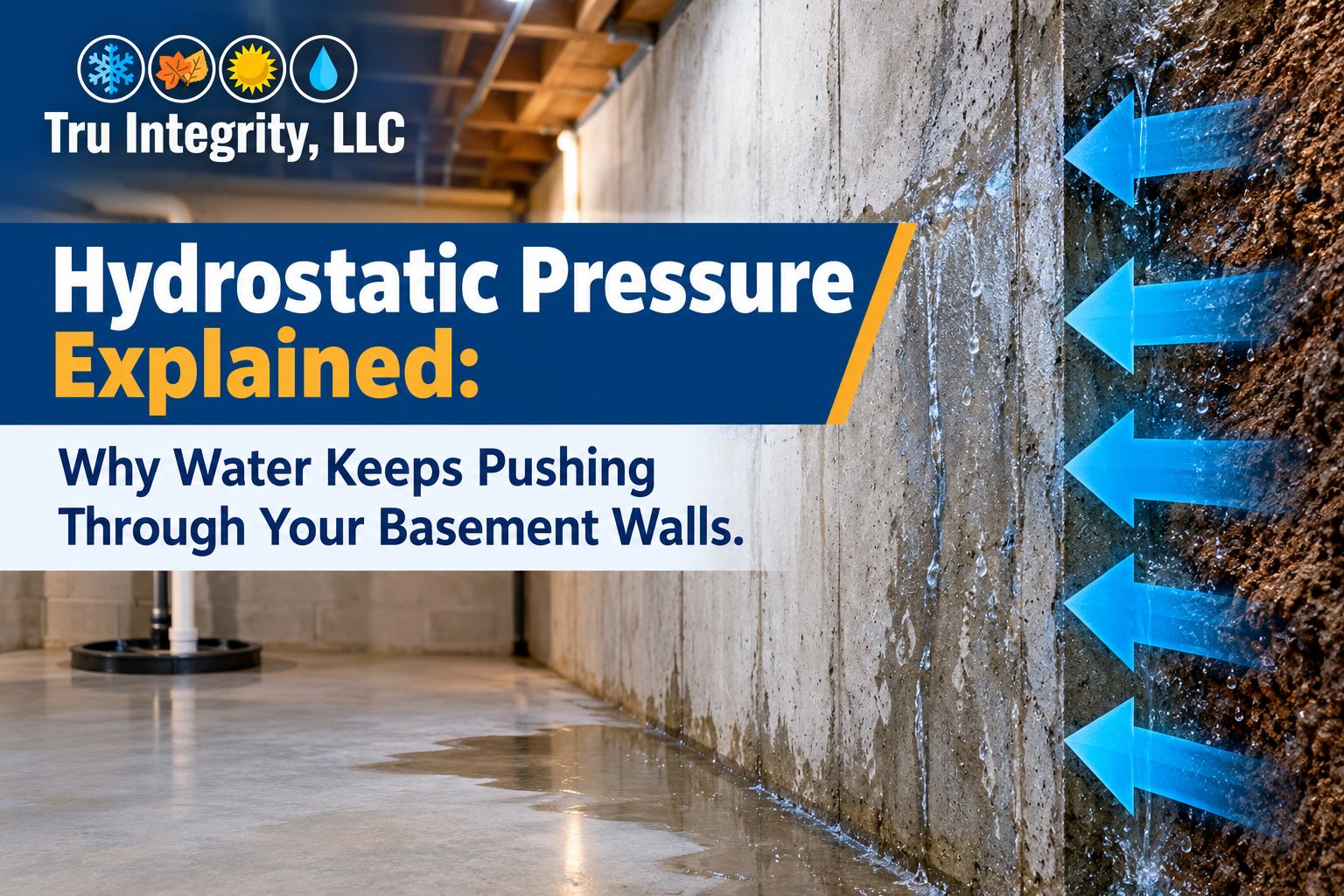
Water in your basement does not always come from a leaking pipe or visible crack. Sometimes, the problem starts in the soil surrounding your foundation. After heavy rain or snowmelt, water can collect underground and push against basement walls. This force is called hydrostatic pressure.
Understanding how it develops helps homeowners identify moisture problems early and choose the right approach to waterproofing basement walls before minor dampness leads to structural damage, mold growth, or costly repairs.
What Is Hydrostatic Pressure in a Basement?
Hydrostatic pressure is the force that still water exerts against a surface. In a basement, this pressure develops when groundwater collects in the soil surrounding the foundation.
Soil contains small spaces that hold air and water. During prolonged rainfall, these spaces can become saturated. As groundwater levels rise, water pushes against basement walls and may collect beneath the floor slab.
The deeper the water, the greater the pressure it creates. When this force exceeds the resistance of the foundation or finds a weak entry point, water can move inside.
For example: A basement may remain dry during ordinary weather but develop damp patches after several days of heavy rain. This can happen because the surrounding soil becomes saturated and places additional pressure on the foundation.
Why Does Water Keep Pushing Through Basement Walls?
Several conditions can cause groundwater pressure to increase around your home.
- Heavy rainfall: When rain falls faster than the soil can absorb or release it, groundwater can build up around the foundation.
- Poor yard grading: If the ground slopes toward your house, rainwater may collect near basement walls instead of flowing away.
- Clogged or damaged gutters: Overflowing gutters can release large amounts of water beside the foundation, increasing soil saturation.
- Ineffective drainage: Blocked foundation drains or inadequate drainage solutions can allow groundwater to remain around basement walls for extended periods.
- Naturally wet soil: Clay-heavy soil drains slowly and can hold water near the foundation, especially after prolonged rainfall.
These conditions can make waterproofing basement walls more challenging because sealing visible cracks alone may not address the pressure causing water intrusion.
How Does Hydrostatic Pressure Damage Your Basement?
Hydrostatic pressure can affect your basement in several ways. The severity depends on the amount of groundwater, the foundation’s condition, and how long the pressure continues.
| Warning sign | What it may indicate |
| Damp patches on walls | Moisture moving through porous concrete or masonry |
| Water entering through cracks | Groundwater finding a weak point in the foundation |
| White, powdery deposits | Mineral salts left behind as moisture evaporates |
| Peeling paint or bubbling coatings | Moisture trapped behind the wall finish |
| Water collecting at floor edges | Seepage through wall-floor joints or nearby openings |
| Bowing or leaning walls | Possible structural movement requiring prompt assessment |
Hydrostatic pressure can also force water through the joint where basement walls meet the floor. In severe cases, persistent groundwater pressure may contribute to foundation movement or damage.
Not every basement crack indicates a serious structural problem. However, widening cracks, displaced walls, or sudden changes should be evaluated by a qualified professional.
What Happens When You Ignore Basement Water Pressure?
Ignoring recurring moisture can turn a manageable problem into an expensive repair.
- Mold growth: Persistent dampness creates conditions that support mold and mildew.
- Damaged belongings: Stored furniture, boxes, clothing, and electronics may become wet or develop odors.
- Interior deterioration: Paint, drywall, flooring, and insulation can deteriorate when exposed to moisture.
- Concrete deterioration: Repeated moisture exposure may contribute to material damage, particularly where other weaknesses are present.
- Structural concerns: Continued pressure can worsen existing foundation weaknesses and may contribute to wall movement.
A dry basement after a few sunny days does not necessarily mean the underlying issue has disappeared. Groundwater pressure may return during the next period of heavy rain.
How Can You Reduce Hydrostatic Pressure Around Your Foundation?
Reducing hydrostatic pressure starts with controlling groundwater and directing it away from your foundation. The right approach depends on drainage conditions and the source of water intrusion.
- Improve exterior drainage: Keep gutters clear, extend downspouts away from the house, and ensure the ground slopes away from the foundation.
- Check foundation drains: Repair blocked or damaged perimeter drains to help groundwater flow away from basement walls.
- Install interior drainage: A drainage system and sump pump can collect and remove groundwater before it spreads across the basement.
- Consider exterior waterproofing: Waterproofing membranes and drainage materials can help limit water contact with foundation walls.
The right waterproofing solution for basement problems should address the source of moisture rather than simply cover visible signs.
Can You Stop Hydrostatic Pressure by Sealing Basement Cracks?
Sealing cracks can help stop water from entering through specific openings, but it does not always remove the pressure behind them.
For example, a professional may use an appropriate injection material to seal a stable foundation crack. However, if groundwater continues to accumulate outside, water may find another opening or enter through the wall-floor joint.
This is why the full basement should be assessed before choosing a repair method. The inspection should consider visible cracks, drainage conditions, moisture patterns, and signs of foundation movement.
Homeowners researching basement waterproofing in Howard County should look for professionals who explain the cause of water intrusion and recommend solutions based on the property’s actual conditions.
When Should You Call a Basement Waterproofing Professional?
You should arrange an inspection if water returns after rain, damp patches continue to spread, or musty odors persist despite basic maintenance.
Professional help is especially important when you notice bowing walls, widening cracks, displaced foundation sections, or water entering rapidly. These signs may require structural assessment or prompt water-management measures.
Before approving work, ask the contractor to explain the source of moisture, the recommended repair, expected maintenance, and warranty coverage. Request a written estimate that separates necessary repairs from optional improvements.
A reliable assessment should explain not only how water will be removed but also how the proposed system will manage future groundwater conditions.
Protect Your Basement From Recurring Water Intrusion
Hydrostatic pressure explains why basement water problems can return even after visible leaks are sealed. The lasting solution is to manage groundwater, improve drainage, and address vulnerable areas of the foundation. Tru Integrity helps homeowners understand their basement moisture concerns and explore suitable repair options.
If you notice recurring seepage, damp walls, or water after rainfall, arrange an inspection to determine whether waterproofing basement walls and improving drainage can help protect your home’s foundation.
Key Takeaways:
- Hydrostatic pressure develops when groundwater builds up around basement walls and beneath the foundation.
- Poor drainage and saturated soil can increase pressure against foundation surfaces.
- Wall cracks, damp spots, and water seepage may indicate pressure-related moisture problems.
- Exterior waterproofing, interior drainage, and sump pumps can help manage water intrusion.
- Early inspections help homeowners address moisture before damage becomes more extensive.
Frequently Asked Questions:
1. Is hydrostatic pressure dangerous for a basement?
It can be. Persistent pressure may force water through cracks and joints, damage interior finishes, and contribute to foundation problems. Bowing walls or widening cracks need prompt professional evaluation.
2. Does hydrostatic pressure only happen after heavy rain?
No. Heavy rain often increases the risk, but high groundwater levels, poor drainage, and naturally wet soil can also maintain pressure around a foundation.
3. Can waterproof paint stop hydrostatic pressure?
Water-resistant coatings may help with certain moisture conditions, but paint alone usually cannot manage significant groundwater pressure. The cause of the moisture should be assessed first.
4. Will a sump pump solve every basement water problem?
No. A sump pump can remove collected groundwater, but its effectiveness depends on proper drainage design, installation, and maintenance. Some basements also need exterior drainage or foundation repairs.
5. How can Tru Integrity help with recurring basement leaks?
Tru Integrity can help homeowners assess basement moisture concerns and understand potential waterproofing options. An inspection can help identify likely entry points and determine which repairs or drainage improvements may be appropriate.