
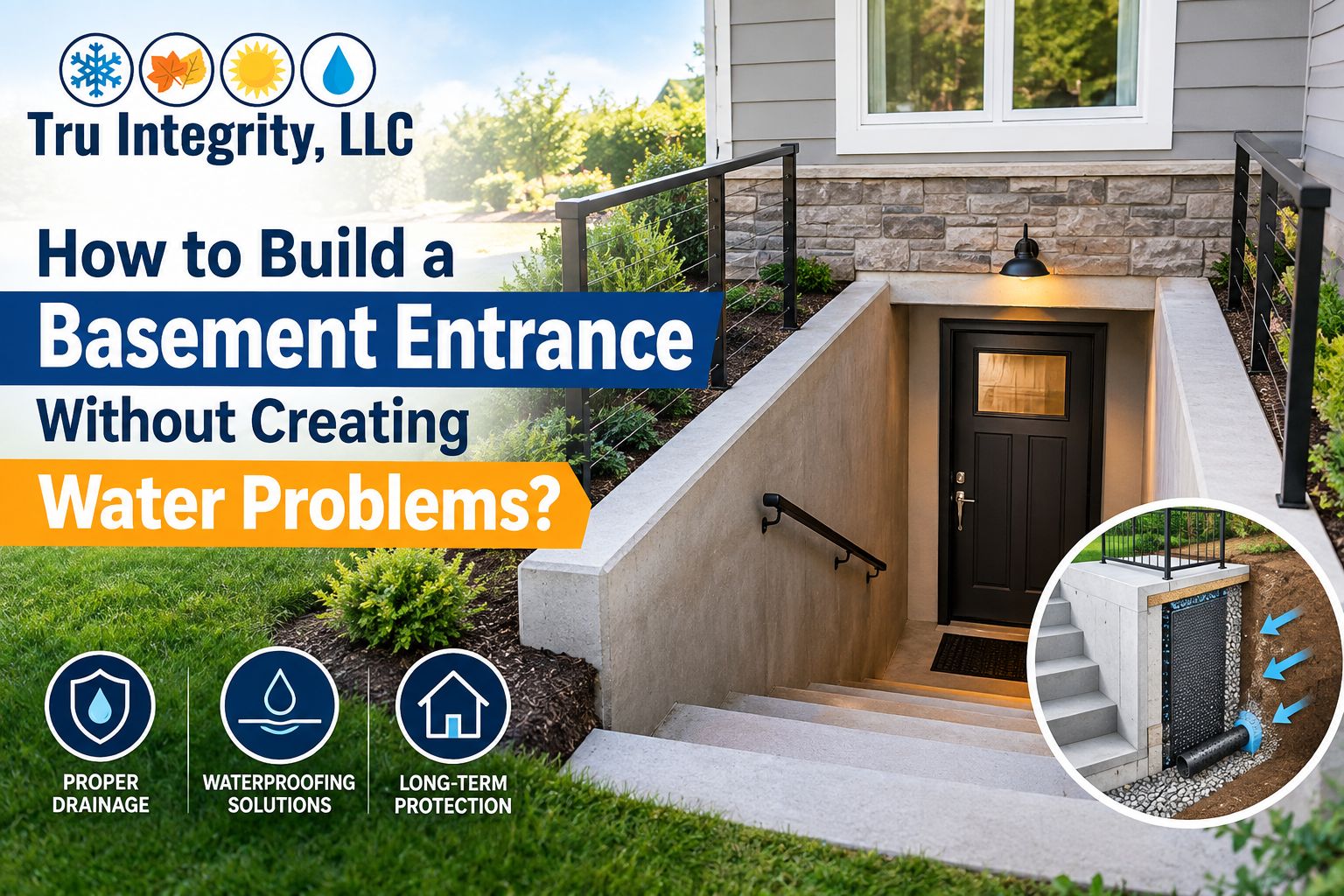
Adding a basement entrance can make your lower level more accessible, brighter, and useful. But without proper planning, an egress walkout basement can also create new water problems. Rainwater, poor grading, groundwater, and drainage issues can all affect the entrance if they are overlooked.
This guide explains how to plan your basement entrance, protect the foundation, manage runoff, and create a drainage system that helps keep your basement dry for years.
Begin With a Water Management Plan
Before choosing the entrance location, check how water moves around your home, especially after rainfall. Different basement egress options may work depending on the foundation, yard slope, soil, and available space.
Check these areas first:
- Yard slope and drainage paths
- Downspout locations
- Foundation condition
- Soil and standing water
- Space for stairs and a landing
This quick review can help you choose a suitable location and avoid drainage problems later.
Inspect the Foundation Before Making Changes
A basement entrance may require cutting into an existing foundation wall, so its condition should be checked first. Look for cracks, old repairs, water stains, or signs of moisture.
Walkout basement construction also changes how the foundation carries loads. The opening should be planned carefully around the existing structure. If you are unsure about its condition, a professional evaluation can help identify concerns before work begins.
Plan Where Rainwater Will Go
One of the most important questions is simple: Where will the water go?
The new entrance should not become the lowest point where rainwater naturally collects. If water flows toward the stairs or landing, a heavy storm can quickly overwhelm the area.
Look at the entire drainage path around the home. Roof water should be carried through downspouts and directed away from the foundation. Surface water should also have a clear route away from the entrance.
A basic drainage plan may look like this:
Roof runoff → Downspout → Ground drainage → Collection point → Safe discharge area
Do not place a downspout where it sends a large volume of water directly toward the basement entrance. A small change in its discharge location can make a noticeable difference during heavy rain.
Design the Stairs and Landing Carefully
The stairwell is often the lowest part of the entrance so that it can collect water quickly. The landing should guide water toward a suitable drain instead of letting it sit near the door. Make sure the drain has a clear path to move water away from the property safely.
Pay attention to four areas:
Stairs: Water should not remain on the steps.
Landing: The lowest point should direct water toward the drainage system.
Walls: The surrounding structure should be protected against moisture.
Door threshold: The transition into the basement should limit opportunities for water to enter.
A drain that becomes clogged with leaves or dirt will not perform well when it is needed most, so access for maintenance matters too.
Protect the Door From Moisture
The basement door needs proper protection from rain, snow, and runoff. During egress construction, make sure the frame, threshold, flashing, seals, and joints are properly installed to prevent water from finding small entry points.
Keep the area clear of leaves, dirt, mud, and snow so drainage is not blocked. After heavy storms, check for standing water around the door or landing and address the issue early.
Consider Groundwater Below the Surface
Basement water does not always come from rain. Groundwater can move through soil and put pressure on foundation walls. If your property has groundwater issues, excavation for a new entrance needs careful planning.
Check existing foundation drains before construction. If the new entrance affects their path, the drainage system may need changes. The right solution depends on the soil, groundwater, foundation, and grading around your home.
Account for Structural Support
Cutting into a foundation wall can affect the structure above it, so the new opening must be properly supported. Basement walkout structural engineering can help determine the right approach based on the home’s existing construction.
Depending on the opening, the project may require a header, reinforced sides, or temporary support. The size and location of the entrance also matter, so the design should be planned for the specific property.
Get the Exterior Grading Right
Even after the entrance is built, the surrounding ground plays a major role in water control.
Soil can settle over time. Landscaping can also change the way water moves. If the ground develops a low spot near the entrance, rainwater may begin collecting there.
During walkout basement construction, grading should be treated as part of the main project. It should not be left as an afterthought once the door is installed.
After construction, check the area during wet weather.
Look for:
- Puddles near the entrance
- Soil erosion
- Settled areas
- Water against the foundation
- Blocked drains
- Changes in the slope
If water repeatedly collects in the same location, the drainage or grading may need to be reviewed.
Prepare for Heavy Rain and Snow
A basement entrance needs to handle more than normal rainfall. Heavy storms can send large amounts of water toward the property in a short time.
Snow creates another challenge. Snow can block drains, collect along the stairs, and produce additional runoff as it melts.
A simple seasonal inspection can help.
Before heavy rain or snow:
- Clear leaves from drains.
- Check nearby downspouts.
- Remove dirt from the landing.
- Inspect door seals.
- Look for new low areas in the soil.
- Confirm that water has a clear discharge route.
These tasks are simple, but they can help identify drainage issues before they turn into larger moisture problems.
Fix Existing Water Issues First
If your basement already has water problems, address them before adding a new entrance. Check for damp walls, water stains, musty odors, standing water, or moisture around foundation cracks. These signs may point to drainage, grading, groundwater, or foundation issues.
After rainfall, check where water collects outside and look for moisture inside the basement. Adding a new entrance will not fix an existing water problem and may change how water reaches the foundation.
At Tru Integrity, professional evaluation can help identify these concerns before major basement work begins.
Build for Access and Long-Term Water Control
A basement entrance can make your lower level more useful, but it needs more than a new door. Proper grading, drainage, foundation support, and water flow should all be considered.
With careful planning, an egress walkout basement can provide easy outdoor access while helping reduce moisture risks. Tru Integrity can help homeowners address foundation and drainage concerns before starting major basement work.
Key Takeaways:
- Study how water moves around the property.
- Inspect the foundation before creating an opening.
- Keep downspouts away from the entrance.
- Give the stairwell a reliable drainage path.
- Protect the door frame and threshold.
- Consider groundwater as well as rain.
- Plan structural support around the opening.
- Maintain proper exterior grading.
- Keep drains clear and accessible.
- Address existing moisture problems first.
5 FAQs About Basement Entrances:
1. Can a basement entrance cause water problems?
Yes. Poor grading, blocked drains, groundwater, and gaps around the door can allow water to enter. Proper drainage planning can reduce these risks.
2. How can I keep rainwater away from my basement door?
Make sure the surrounding ground directs water away from the entrance. A suitable drainage system can also collect water from the stairs and landing.
3. Should I inspect the foundation before adding a basement entrance?
Yes. Creating an opening changes part of the foundation, so its condition and structural requirements should be reviewed before construction begins.
4. Can landscaping affect basement entrance drainage?
Yes. Soil, mulch, plants, and other landscaping can change the direction of surface water. The final grade should support the drainage plan.
5. What should I do if my basement already leaks?
Find the source of the water before adding a new entrance. Existing grading, drainage, groundwater, or foundation problems may need to be addressed first.