
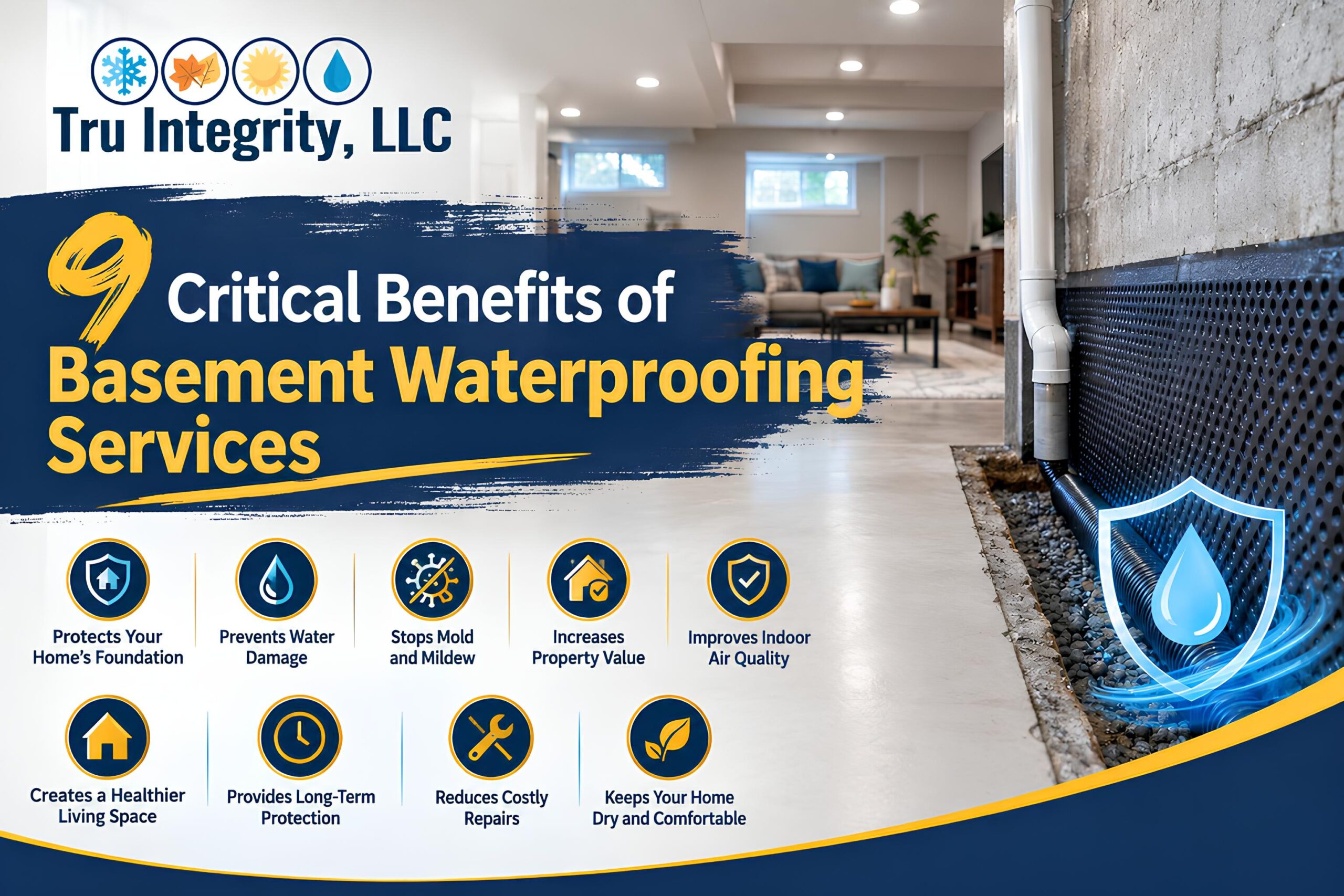
Objective:
Learn nine key benefits of basement waterproofing and how it can help protect your home from moisture problems.
Introduction:
A basement should keep water out, not give you another problem to deal with. Recurring leaks, damp walls, musty odors, and standing water can slowly affect your home’s comfort and condition.
The right basement waterproofing services can help control moisture, protect the foundation, and keep the space more usable. Addressing water early may also help reduce damage and avoid repeated repairs.
Why Is Basement Waterproofing Worth Considering?
Basement water problems rarely disappear on their own. A small leak after heavy rain may seem harmless, but repeated moisture can gradually affect different parts of the basement.
Understanding the benefits of basement waterproofing helps homeowners see why it is important to address the cause instead of repeatedly cleaning up the symptoms.
The benefits of basement waterproofing services can vary depending on the property’s construction, drainage, foundation condition, and source of water. A proper assessment helps identify what is actually needed.
Important: Waterproofing should focus on controlling the source and path of water, not simply covering visible stains.
1. Helps Stop Recurring Water Entry
Water can enter a basement in several ways. Foundation cracks, poor drainage, hydrostatic pressure, and gaps around joints are common areas that may need attention.
Instead of treating each leak as a separate incident, waterproofing looks at how water is reaching the basement in the first place.
Common Signs of Recurring Water Entry
- Damp spots appearing after rainfall
- Water collecting near walls
- Repeated floor puddles
- Dark stains on foundation walls
- Peeling or damaged finishes
- Persistent musty smells
Basement waterproofing for wet basements can involve different approaches depending on the source and severity of the moisture.
2. Protects the Foundation From Moisture
Your foundation supports the structure above it, so keeping unnecessary moisture away from vulnerable areas is important.
Water surrounding the foundation can create pressure against basement walls. Existing cracks may also provide a pathway for water to enter.
A Waterproofing Assessment May Consider:
| Area | What to Check |
| Foundation walls | Cracks, stains, damp areas |
| Exterior drainage | Standing water or poor grading |
| Downspouts | Where rainwater is discharged |
| Basement floor | Seepage or pooling |
| Sump system | Operation and drainage |
Addressing these conditions can help reduce ongoing exposure to unwanted moisture.
3. Creates a Drier Environment
A damp basement can feel cold, clammy, and uncomfortable. If moisture remains for long periods, the space may also develop a persistent musty smell.
Waterproofing can help reduce unwanted moisture entering through foundation areas. This supports a drier basement environment and can make the lower level more pleasant to use.
However, waterproofing is only one part of moisture management. Good ventilation and appropriate humidity control may also be useful, depending on the conditions inside the home.
4. Helps Reduce Mold-Friendly Moisture
Moisture control is important because mold and mildew can grow where damp conditions remain.
Waterproofing does not remove established mold by itself. Existing growth may require appropriate cleaning or professional remediation. But reducing water intrusion can help address one of the conditions that allows moisture-related problems to continue.
Think of It in Three Steps:
Find the moisture → Control the moisture → Address existing damage
This approach is more useful than simply cleaning visible spots while allowing the underlying water problem to continue.
5. Protects Items Stored in Your Basement
Basements often become convenient storage areas for things that are not used every day.
Think about:
- Seasonal decorations
- Cardboard boxes
- Important documents
- Furniture
- Clothing
- Tools
- Children’s old belongings
Water can damage many of these items quickly. Cardboard is particularly vulnerable to moisture, while fabrics and wood may also be affected when exposed repeatedly.
A dry basement provides a better environment for storage. Even after waterproofing, valuable items should ideally be kept in sealed containers and raised off the floor where possible.
6. Makes Your Basement More Useful
A basement that stays damp is difficult to enjoy. Homeowners may avoid using it for anything beyond basic storage.
Once moisture concerns are properly addressed, the space may become more practical for activities such as:
Storage → Laundry → Home office → Hobby area → Recreation space
The exact use will depend on the home’s design, local requirements, ventilation, and other factors. Still, controlling water can remove one major obstacle to making better use of the lower level.
7. Helps Protect Basement Walls
Foundation walls are regularly exposed to soil and moisture from outside. If water finds a pathway through cracks, joints, or porous areas, it can eventually appear inside the basement.
Waterproofing basement walls may involve interior or exterior methods, depending on the source of water and the property’s construction.
The Right Method Depends On:
- Where the water is coming from
- Whether the problem occurs during rainfall
- The condition of the foundation
- Exterior drainage conditions
- Previous repairs
- The type of basement construction
A proper assessment is therefore more useful than choosing a waterproofing method based only on the visible leak.
8. Can Help Limit Future Repair Work
Ignoring moisture can allow a small issue to affect more materials over time. Water may reach flooring, drywall, insulation, stored items, or other parts of the basement.
This does not mean waterproofing prevents every future repair. However, addressing known moisture entry can help reduce the chance of ongoing water-related damage.
A Simple Maintenance Routine
After Heavy Rain: Check for damp spots or standing water.
Every Few Months: Inspect the foundation and drainage.
Before Wet Seasons: Clean gutters and downspouts.
When Problems Appear: Check for new odors, stains, cracks, or moisture.
Regular attention can support the work already done.
9. Provides Long-Term Moisture Protection
One of the biggest advantages of waterproofing is that it can become part of a broader home maintenance strategy.
Effective basement waterproofing solutions should consider more than the immediate leak. They should account for drainage, foundation conditions, water entry points, and how the basement is used.
A good system also benefits from regular maintenance. Gutters, downspouts, grading, sump pumps, and visible foundation areas should continue to be monitored.
Practical Ways to Support a Dry Basement
Waterproofing is more effective when the surrounding drainage system is also maintained.
Use this quick checklist:
☐ Clean gutters regularly
☐ Keep downspouts clear
☐ Direct downspouts away from the foundation
☐ Check for standing water outside
☐ Watch for new foundation cracks
☐ Keep stored items away from damp walls
☐ Check the sump pump when applicable
☐ Look for new stains or musty odors
These steps cannot replace professional repairs when serious water intrusion is present, but they can help homeowners notice problems earlier.
Protect Your Basement From Ongoing Moisture
A dry basement is easier to maintain, more comfortable to use, and better protected against water-related damage. Addressing leaks, damp walls, and drainage concerns early can help prevent bigger problems later. If your basement shows recurring signs of moisture, basement waterproofing services can help address the source and protect the space.
Contact Tru Integrity today to discuss your basement waterproofing needs and take a practical step toward a drier, better-protected home.
Key Takeaways:
- It can help control recurring water entry.
- It can support foundation protection.
- It can create a drier basement environment.
- It can help reduce moisture-related conditions.
- It can protect stored belongings.
- It can make the basement more practical to use.
- It can help limit water-related repair needs.
- It can provide a structured approach to long-term moisture control.
Frequently Asked Questions:
1. What are the main signs that a basement needs waterproofing?
Recurring leaks, damp walls, water stains, musty odors, floor seepage, and standing water are common warning signs. Problems that repeatedly appear after rainfall should be investigated rather than ignored.
2. Can basement waterproofing prevent all future leaks?
No waterproofing system can guarantee that every future water issue will be prevented. Results depend on the water source, property conditions, drainage, foundation, and system selected.
3. Is waterproofing useful if my basement only gets wet during storms?
It can be. Water that appears only during heavy rainfall may still indicate drainage, grading, foundation, or hydrostatic pressure issues that deserve attention.
4. Should I waterproof the inside or outside of my basement?
That depends on the source and path of the water. Interior drainage, exterior waterproofing, crack repair, or a combination may be appropriate in different situations.
5. How can I maintain my basement after waterproofing?
Keep gutters and downspouts clear, maintain proper drainage around the home, monitor the foundation, and check for new moisture or odors. Address changes promptly rather than waiting for significant water damage.