
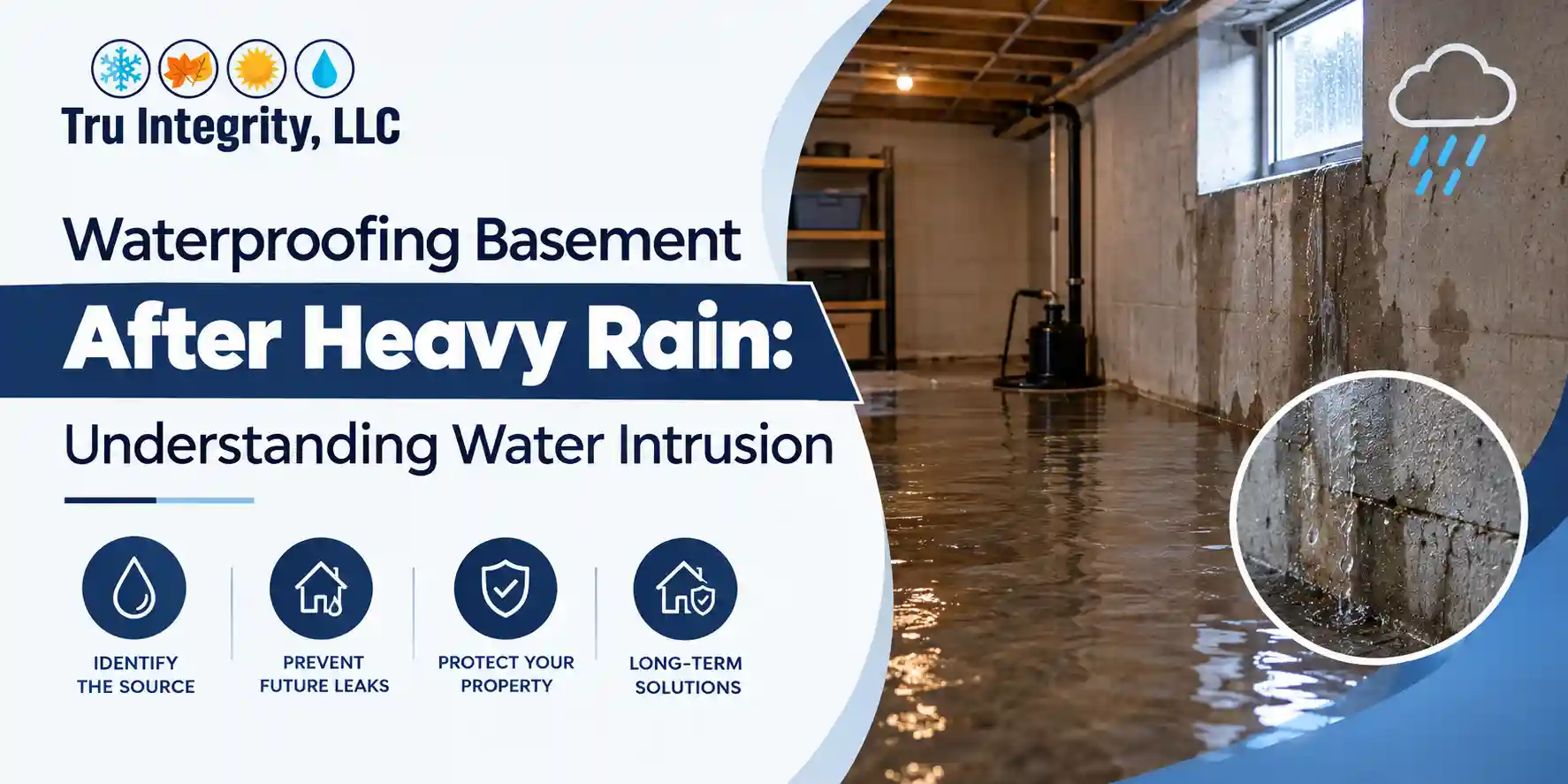
Heavy rain can quickly expose weak points in a basement, especially when drainage, foundation walls, or waterproofing basement systems are not working properly. If you notice basement leaking after rain, the first step is to find the source and address it before the moisture causes further damage.
This guide explains common causes of basement water intrusion and practical ways to protect your home before and after heavy rainfall.
Key Takeaways:
- Inspect foundation walls and floor joints.
- Keep gutters and downspouts clear.
- Make sure water flows away from the foundation.
- Test your sump pump regularly.
- Dry wet areas as soon as possible.
- Track recurring leaks and where they appear.
- Get professional help when moisture continues.
Understand Why Heavy Rain Causes Basement Water Problems
Heavy rainfall saturates the soil around your foundation. As the ground fills with water, pressure can build against basement walls. If there are cracks, gaps, or drainage problems, moisture may eventually find its way inside.
Basement water intrusion after heavy rain can enter through several areas, including:
- Foundation cracks
- Wall joints
- Basement windows
- Floor cracks
- Wall-to-floor joints
The longer the soil remains saturated, the greater the pressure can become. Even a small weakness may allow moisture to enter.
Watch for these warning signs.
- Wet walls
- Damp floors
- Water stains
- Musty odors
- Peeling paint
- White mineral deposits
- Puddles near foundation walls
Finding the entry point is important because cleaning up the water alone will not stop the problem from returning.
Find Where the Water Is Coming From
Finding the source is the first practical step. Start inside the basement and examine areas where moisture appears.
Some basement leaks when it rains may come through foundation cracks. Others can be linked to overflowing gutters, blocked drains, or downspouts that release water beside the foundation.
Use this quick inspection checklist.
Inside the basement:
- Check foundation walls.
- Look around windows and doors.
- Inspect floor joints.
- Look for visible cracks.
- Note water stains or damp spots.
Outside the home:
- Check gutter condition.
- Inspect downspouts.
- Look at the soil slope.
- Check window wells.
- Look for standing water.
If basement leaking after rain repeatedly appears in the same location, that pattern can help identify the source.
Improve Drainage Around Your Home
Good drainage helps keep rainwater away from your foundation. Instead of allowing water to collect around the house, the goal is to direct it toward a safe drainage area.
Start with these simple improvements
- Clean the gutters
Remove leaves, dirt, and other debris so rainwater can flow freely. - Check the downspouts
Make sure they release water away from the foundation. - Inspect the soil grading
The ground should generally slope away from the home instead of directing water toward it. - Clear window wells
Remove dirt, leaves, and debris that could prevent proper drainage. - Watch for low spots
Areas where water collects near the foundation may need grading improvements.
These steps can reduce water exposure, but they may not solve an existing foundation or waterproofing issue.
Inspect Foundation Walls and Floor Joints
Foundation cracks should not be ignored, especially when they repeatedly allow moisture inside.
A small crack may become a pathway for water when pressure rises outside the foundation. Larger cracks or cracks that continue to change deserve closer attention.
Pay special attention to:
- Horizontal or vertical foundation cracks
- Wall-to-floor joints
- Cracks around windows
- Areas with repeated water stains
- Places where moisture appears after storms
If you discover a leak, mark the location and monitor it during future rainfall. This simple record can help show whether the problem is recurring and when it occurs.
Check Your Sump Pump and Drainage System
Your sump pump may have to handle a significant amount of water during a heavy storm. A pump that is blocked, damaged, or undersized may struggle when rainfall increases.
Before the next major storm:
- Test whether the pump starts correctly.
- Check that water is being discharged properly.
- Inspect the discharge pipe for blockages.
- Make sure water is not flowing back toward the foundation.
- Consider backup protection if power outages are common.
A sump pump that runs continuously or cannot keep up with incoming water may indicate that the drainage system needs further evaluation.
Know When Waterproofing Is Necessary
Routine maintenance can help with some moisture problems. However, repeated leaks may indicate a larger waterproofing concern.
For example, water leaking in basement when it rains can be connected to foundation cracks, groundwater pressure, poor drainage, or an ineffective waterproofing system.
Depending on the cause, possible solutions include:
| Problem | Possible Approach |
| Foundation cracks | Professional crack repair |
| Groundwater pressure | Interior or exterior drainage |
| Poor surface drainage | Grading and downspout improvements |
| Sump pump problems | Pump repair or replacement |
| Foundation moisture | Waterproofing system |
| Window well drainage | Improved window well drainage |
The appropriate solution depends on the source and severity of the water intrusion. A temporary seal may not solve an ongoing moisture problem.
Protect the Basement From Further Damage
Once water enters your basement, quick action can help limit damage.
Follow these immediate steps
Remove: Move standing water and wet belongings away from affected areas.
Dry: Use fans or dehumidifiers when appropriate to reduce remaining moisture.
Inspect: Check walls, flooring, insulation, wood, and stored belongings for water damage.
Monitor: Look for continuing moisture after the initial cleanup.
Pay particular attention to materials that absorb water. Cardboard, fabrics, wood, and other porous materials can stay damp for longer than expected.
Avoid covering water stains with paint before fixing the moisture source. Doing so may only hide the visible symptom.
Take Preventive Steps Before the Next Storm
Preparing before the next storm can reduce the chance of another water problem.
Create a simple seasonal routine
Around the home
- Clean gutters.
- Check downspouts.
- Inspect grading.
- Clear window wells.
- Look for standing water.
Inside the basement
- Check previous leak locations.
- Inspect foundation walls.
- Test the sump pump.
- Check drainage areas.
- Move valuable items away from known leak zones.
For recurring moisture problems, a professional assessment can help identify the most suitable long-term approach. Tru Integrity can evaluate basement water concerns and help homeowners understand available waterproofing and drainage options.
Regular maintenance is useful, but repeated leaks should not be treated as a normal part of heavy rain.
Know When to Call a Basement Waterproofing Professional
Some basement moisture problems may be manageable through routine maintenance. Others require professional attention.
Consider an inspection when:
- Water returns after major storms.
- Foundation cracks continue to leak.
- Basement walls stay damp.
- Water enters through the floor.
- Drainage improvements have not helped.
- The sump pump struggles to keep up.
- Moisture damages stored belongings.
- Musty odors continue.
When comparing best basement waterproofing services, do not focus only on price. Look for a professional who can identify the source of the water and explain why a specific solution is recommended.
Frequently Asked Questions:
1. Why does my basement leak only after heavy rain?
Heavy rain can saturate the soil around the foundation and increase pressure against basement walls. Water may then enter through cracks, joints, windows, or other weak points.
2. Are small foundation cracks a serious problem?
Not every small crack indicates a serious structural issue. However, cracks that grow, change, or repeatedly allow water inside should be professionally assessed.
3. Can better gutters prevent basement water?
Proper gutters and downspouts can reduce the amount of rainwater reaching the foundation. They are an important part of drainage maintenance but may not resolve every basement water problem.
4. How can I protect my basement before a storm?
Clean gutters, inspect downspouts, check drainage areas, test the sump pump, and look for standing water around the foundation. Address known problem areas before the next major storm.
5. What should I do if my basement keeps getting wet?
First, look for obvious exterior water sources and identify where the moisture enters. If the problem continues, arrange a professional waterproofing inspection to determine whether drainage repairs, crack repairs, or a broader waterproofing solution is needed.