
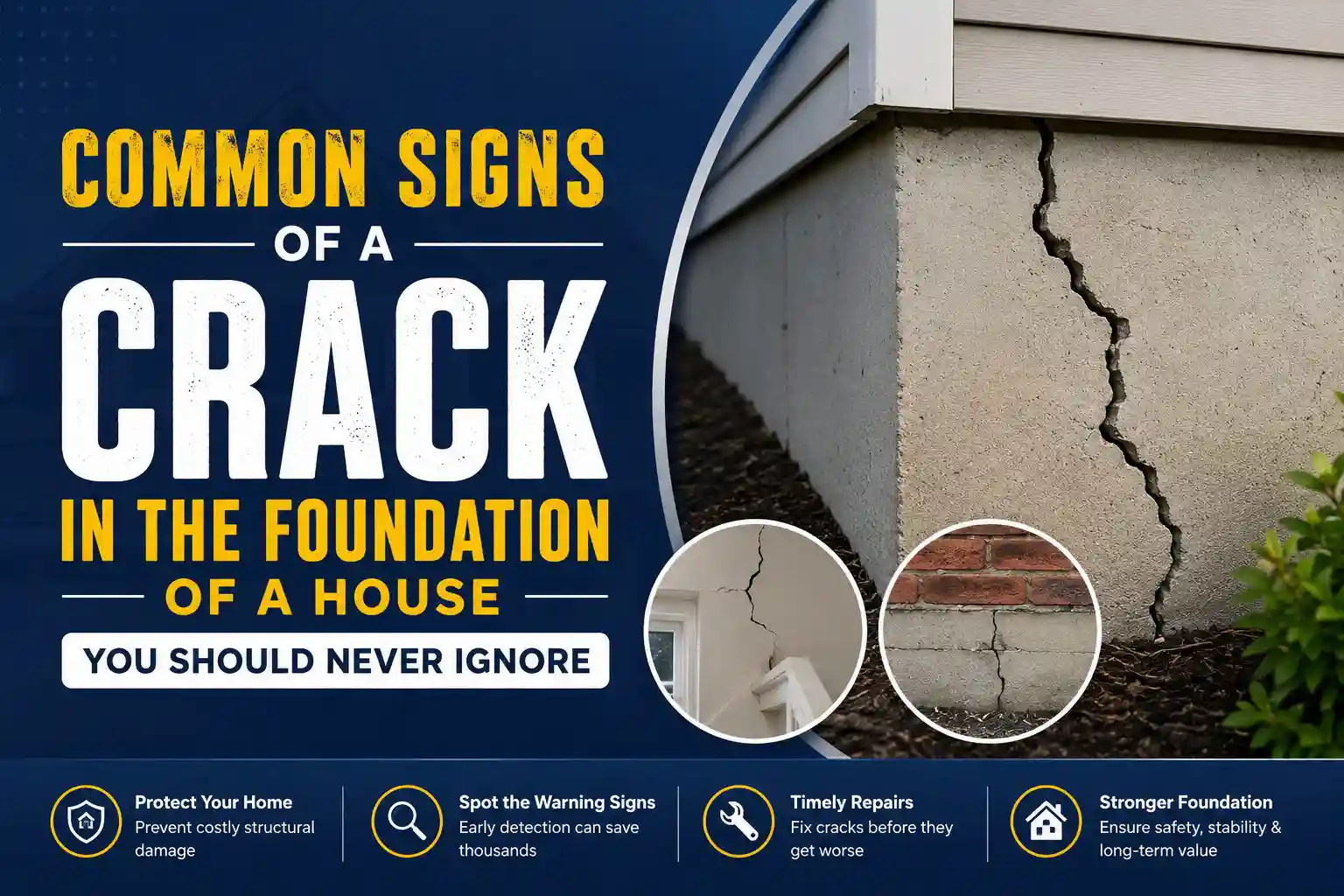
Your home is your biggest investment, and keeping it safe starts from the ground up. When structural shifting happens, catching warning signs early can save you from thousands of dollars in major repairs.
Every homeowner worries about spotting a crack in the foundation of house, and for good reason. These fissures often act as the very first warning bells telling you that your home is under serious stress.
In this guide, we will break down what causes these gaps, how to identify the dangerous ones, and what steps you can take to protect your property.
Key Takeaways:
- Spotting structural warning signs early prevents minor shifting from turning into expensive disasters.
- Sticky doors, uneven floors, and drywall gaps are major red flags pointing to ground movement.
- Proper outdoor grading and clear gutters keep damaging moisture away from your concrete walls.
- Always match your repair method to the specific size, depth, and direction of the fissure.
- Addressing foundation wear immediately protects your home’s long-term safety and resale value.
- Consulting professional structural engineers before attempting major DIY fixes saves you from costly mistakes.
Why Foundation Issues Happen and What They Mean
Core Insight: Soil expansion, poor drainage, and natural settling put immense pressure on your concrete slab or basement walls, forcing the structure above to absorb heavy loads.
Finding a crack in the foundation surface does not always mean your house is falling tomorrow, but ignoring it certainly invites bigger structural failures. Understanding the root cause helps you determine whether you are dealing with harmless cosmetic shrinking or a deeper structural nightmare.
Telltale Signs Your Foundation Needs Immediate Help
| Warning Sign | What It Looks Like | Potential Danger |
| Sticky Doors & Windows | Jammed frames that won’t close smoothly | Frame distortion from ground shift |
| Ceiling Gaps | Spaces opening up near crown molding | Structural settling or separation |
| Sloping Floors | Uneven surfaces where objects roll | Foundation sinking or footer failure |
| Drywall Fractures | Diagonal cracks shooting from corners | Wall stress caused by shifting earth |
When these warning signs appear, a crack repair foundation project may become your next major weekend priority. It is always wise to inspect your walls regularly so you can catch these shifts before they warp your doorframes.
Exterior and Interior Warning Signs to Watch
- Perimeter Check: Walk around your property and look closely at brickwork, siding, and concrete footings for gaps wider than a nickel.
- Moisture Defense: Implementing proper exterior foundation crack repair methods early stops water from seeping into small gaps and freezing during winter.
- Basement Inspection: Regularly check your lower levels for damp spots, white powdery efflorescence residue, or actual pooling water on the floor.
- The Ultimate Risk: Moisture intrusion paired with a crack in foundation walls creates an ideal breeding ground for mold, mildew, and rotting beams.
The Hidden Costs of Waiting to Fix Foundation Damage
- Warning: Putting off minor home repairs might feel like a smart way to save cash today, but structural issues never fix themselves. Waiting almost always multiplies your final repair bill.
- Small hairline gaps quickly widen as weather changes and moisture cycles repeat.
- Warped doorframes lead to higher heating and cooling bills due to air leaks.
- Untreated moisture invites toxic mold growth that threatens your family’s health.
- Severe structural neglect can destroy your home’s resale value overnight.
Addressing warning signs quickly keeps your repair budget under control and protects your asset.
Related Blog:
How to Repair a Cracked Foundation and Repair Costs Fast
When to Call a Professional vs. DIY Repair
- DIY Territory: Hairline shrinkage cracks under 1/8 inch with zero water leakage can typically be handled by handy homeowners using basic concrete sealants.
- Professional Territory: Horizontal or diagonal cracks, bowing basement walls, and active water flooding demand immediate intervention from experienced foundation repair contractors.
- Engineering Assessment: Any shifting that causes massive drywall tears or severe structural tilting requires urgent evaluation by a certified structural engineer.
Getting a professional inspection gives you peace of mind and ensures the root cause gets fixed.
Smart Solutions and Preventive Maintenance
Tackling structural issues can feel overwhelming, but staying informed makes it manageable.
Knowing how to repair a cracked foundation depends on the fissure’s size and direction. Horizontal cracks require professional steel piers, while vertical settling cracks can often take epoxy injections. For minor seepage, fixing foundation cracks with DIY hydraulic cement works well.
However, if water gushes in or walls bow inward, call a certified structural engineer. At Tru Integrity, we always recommend a professional assessment before starting major DIY fixes.
Good drainage is your best defense. Keep gutters cleared far from exterior walls and ensure your yard slopes outward to protect your concrete for years.
Frequently Asked Questions:
Q1. Are all house foundation cracks dangerous?
No, minor hairline fractures caused by normal concrete curing and settling are usually cosmetic and harmless. However, any gap wider than 1/4 inch, horizontal cracks, or stair-step patterns in brickwork require immediate professional evaluation.
Q2. How much does it typically cost to fix structural concrete gaps?
Costs vary wildly depending on the severity of the damage, ranging from a few hundred dollars for simple epoxy injections to over $10,000 for major piering and underpinning projects. Getting an early inspection helps keep these costs as low as possible.
Q3. Can I sell a house that has structural issues?
Yes, you can sell a home with structural flaws, but you must legally disclose them to potential buyers. Many buyers will request a price reduction or ask you to complete repairs through Tru Integrity or another licensed contractor before closing the deal.
Q4. What causes concrete slabs to crack in the first place?
Fluctuating soil moisture levels are the primary culprit. When clay-rich soil gets soaked, it expands and pushes against your walls; when it dries out, it shrinks and leaves your foundation unsupported.
Q5. How can I stop water from entering through my basement walls?
Start by cleaning your gutters, extending your downspouts at least six feet away from your foundation, and ensuring your yard slopes outward. For existing leaks, apply interior waterproof sealants or install an exterior French drain system.