
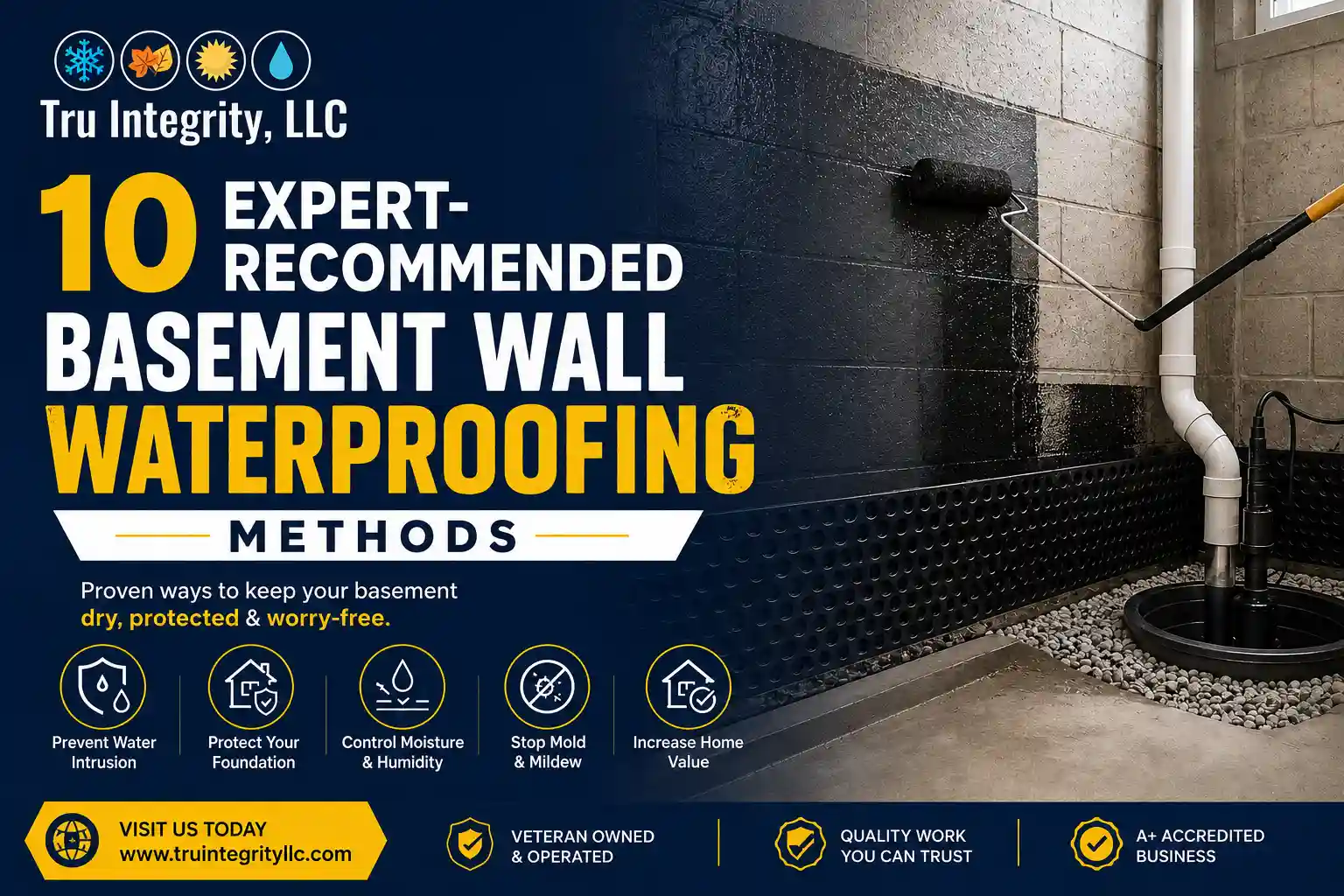
Basement moisture can lead to stains, mold, musty odors, and costly structural problems. Basement wall waterproofing helps keep water out and protects your home from long-term damage. The right method depends on where the water enters and how serious the problem is.
The goal of this guide is simple: help you understand practical waterproofing methods and choose the right solution before a small moisture issue becomes a major repair.
Key Takeaways:
- Identify the source of water before selecting a repair.
- Exterior and interior methods solve different moisture problems.
- Repair foundation cracks before they become larger pathways for water.
- Keep gutters, downspouts, and exterior drainage working properly.
- Consider sump pumps and interior drainage when groundwater is a concern.
- Control indoor humidity to reduce condensation.
- Get professional help for recurring leaks or serious foundation concerns.
1. Find the Source of the Water First
Before choosing a waterproofing method, find out where the moisture is coming from. Water may enter through wall cracks, floor joints, windows, porous concrete, or hydrostatic pressure.
Start by checking the basement after heavy rain. Look for:
- Damp or discolored wall areas
- Water stains or peeling paint
- Cracks around windows
- Moisture near floor-wall joints
- Musty smells
- Standing water
A professional inspection can help identify whether the issue is caused by surface runoff, groundwater, plumbing, or foundation drainage.
2. Choose Exterior or Interior Waterproofing
There are two broad approaches to protecting basement walls. Waterproofing basement walls from outside focuses on stopping water before it reaches the foundation. This may involve excavation, exterior membranes, drainage systems, and repairs to the foundation surface.
Waterproofing basement walls from inside manages moisture after it has reached the foundation. Interior solutions can include sealants, drainage channels, sump pumps, and interior membranes.
The right choice depends on the source of the water, foundation condition, property layout, and budget. In some cases, combining exterior and interior methods provides better protection.
3. Apply a Waterproof Membrane
A waterproof membrane creates a protective barrier over foundation walls. Exterior membranes are commonly applied after the soil around the foundation is excavated.
The wall is cleaned and repaired first. Then the membrane is applied to help prevent groundwater from reaching the foundation.
A quality membrane should:
- Cover the required wall surface
- Handle normal foundation movement
- Resist moisture penetration
- Be installed according to manufacturer instructions
Membranes are especially useful when exterior water pressure is a major concern. Learn more about the different foundation waterproofing methods available for your home.
4. Seal Foundation Cracks
Small foundation cracks can become pathways for water. Even a narrow crack can allow moisture to enter during periods of heavy rain or high groundwater.
The repair method depends on the crack type. Some cracks can be filled with suitable sealants, while structural or actively leaking cracks may require professional repair.
Do not simply paint over a leaking crack. The source should be addressed first.
5. Improve Exterior Drainage
Water should move away from your foundation instead of collecting around it. Poor grading can send rainwater directly toward basement walls.
Check the area around your home for:
- Low spots near the foundation
- Blocked drainage paths
- Damaged downspouts
- Short downspout extensions
- Soil that slopes toward the house
Extending downspouts and improving the grade can reduce the amount of water reaching foundation walls.
6. Install or Repair a French Drain
A French drain can help collect groundwater and redirect it away from the foundation. Exterior systems are often installed around the foundation perimeter.
A typical system may include a perforated drain pipe surrounded by drainage material. Water enters the system and is directed toward an appropriate discharge point.
Drainage works best when the system is correctly designed for the property. A poorly installed drain may clog or fail to move enough water.
7. Use an Interior Drainage System
When exterior excavation is impractical, an interior drainage system can help control water that enters through the foundation.
These systems commonly collect water along the basement perimeter and direct it toward a sump pit. The sump pump then removes the collected water.
Interior drainage can be useful for older homes, properties with difficult access, or basements where exterior work would be highly disruptive.
8. Install a Reliable Sump Pump
A sump pump is an important part of many basement moisture-control systems. It collects groundwater and pumps it away from the foundation.
A good setup should include:
- A properly sized pump
- A suitable discharge line
- A reliable power source
- An airtight sump lid where appropriate
- Backup protection for power failures
Test the pump periodically. A waterproofing system is only as dependable as the components that keep water moving away from your basement.
9. Waterproof Basement Windows
Basement windows can become an overlooked source of moisture. Water may enter through damaged frames, poor seals, or window wells that collect rainwater.
Check the window area for cracks, deteriorated caulking, and standing water. Window wells should drain properly and remain clear of leaves and debris.
If the window itself is damaged, replacement may be more effective than repeatedly sealing it.
10. Control Interior Humidity
Not every damp basement has a foundation leak. High indoor humidity can also create condensation on cool walls and pipes.
A dehumidifier can help maintain a more comfortable moisture level. Good ventilation and proper airflow can also reduce condensation, similar to how moisture sealing is approached in crawl spaces.
Look for signs such as:
- Moisture on walls or pipes
- Condensation on windows
- A persistent musty smell
- Damp stored items
Humidity control works alongside waterproofing. It does not replace repairs when groundwater is entering through the foundation.
How to Choose the Best Method for Your Basement?
There is no single solution for every property. The best way to waterproof basement walls depends on the cause and location of the moisture.
For example, exterior membranes may make sense when groundwater is reaching the foundation from outside. Interior drainage may be more practical when excavation is not possible.
Consider these factors:
- Where the water is entering
- How often the problem occurs
- Whether the foundation has cracks
- Whether exterior access is available
- The age and construction of the foundation
- Whether drainage systems are already installed
A professional assessment can help prevent you from spending money on a solution that only treats the visible symptom.
What Is the Right Approach for Your Home?
If you are wondering how to waterproof a basement wall, start with the water source rather than the wall surface alone. A coating may help with minor moisture, but it will not solve every drainage or foundation problem.
For more serious leaks, the solution may involve several steps. These could include crack repair, exterior drainage, an interior drainage system, sump pump installation, or a combination of methods.
The best approach is one that controls water at its source and gives it a reliable path away from the foundation.
Protect Your Basement Before Water Causes More Damage
Basement moisture rarely improves by itself. Ongoing water can cause stains, odors, mold growth, and other damage.
At Tru Integrity, the focus is on finding the cause and recommending practical solutions. Effective basement wall waterproofing should address water entry, drainage, and foundation conditions instead of simply covering visible damage.
Frequently Asked Questions:
1. What is the most effective way to waterproof a basement wall?
The most effective approach depends on the source of the moisture. Exterior waterproofing can stop groundwater before it reaches the foundation, while interior drainage can manage water that enters the basement.
2. Can I waterproof basement walls from the inside?
Yes. Interior systems may include waterproof coatings, drainage channels, sump pumps, and interior membranes. The appropriate method depends on the type and severity of the water problem.
3. Does sealing a foundation crack stop basement leaks?
It can help with certain types of cracks, but the correct repair depends on the cause and movement of the crack. Recurring or significant leaks should be professionally assessed.
4. Should basement waterproofing be done from inside or outside?
Neither option is automatically better for every home. Exterior waterproofing can address water before it reaches the wall, while interior systems may be more practical when excavation is difficult.
5. How can I prevent basement walls from getting wet?
Keep water away from the foundation with proper grading, functioning gutters and downspouts, suitable drainage, and a waterproofing system matched to the source of the moisture.