
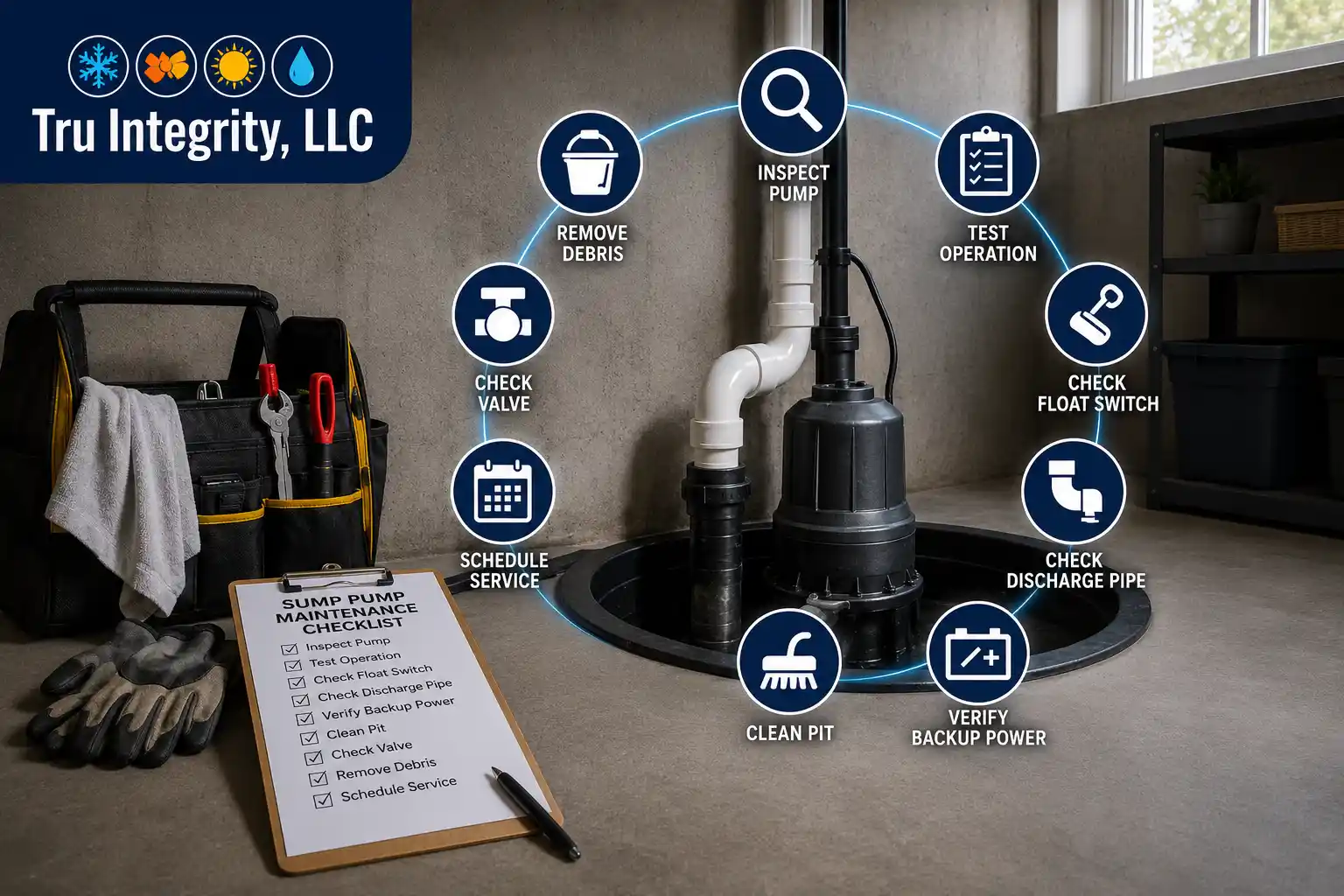
Nobody thinks about their sump pump until it stops working. It sits quietly in the basement, doing its job in the background, right up until a storm hits and it doesn’t turn on.
That’s when a small oversight turns into a flooded floor and an expensive weekend. The fix is simpler than most people expect: a little routine sump pump maintenance, done consistently, is enough to keep that pump reliable for years.
The Pump You Forget Is the One That Fails
Sump pumps are built to run on their own, so it’s easy to assume they’ll always be ready. But motors wear down, switches stick, and pits fill with grime nobody checks. None of that shows up until the pump is asked to do its job, and by then it’s too late to fix quietly.
This is why homeowners searching for how to maintain a sump pump often start looking only after something’s gone wrong. A short routine, repeated a few times a year, catches almost every problem while it’s still small. The sump pump maintenance tips below cover what that routine looks like.
Key Takeaways:
- Run the bucket test every three to four months, and again before storm season
- Keep the pit and discharge line clear of debris and blockages.
- Install a battery backup and test it regularly, not just once
- Watch for warning signs like unusual noise, constant running, or slow draining.
- Bring in a professional once a year to catch what a DIY check might miss.
1. Start With the Bucket Test
This one takes two minutes. Fill a bucket with water and pour it slowly into the sump pit. The float should rise, the pump should switch on almost instantly, and the water should drain within a minute, without straining.
Do this every three to four months, and once more before storm season. It’s the easiest habit that separates a working pump from a surprise flood.
2. Clean Out the Pit
Sump pits collect dirt, gravel, and silt that most people never notice. That buildup forces the intake screen to work harder than it needs to, which shortens the motor’s life.
- Clear out visible debris by hand.
- Rinse the pit with a hose occasionally
- Scrape away any silt at the bottom
Do this alongside your bucket test, and buildup rarely becomes serious.
3. Check the Power Source
A pump can be in perfect mechanical shape and still fail for one reason: it lost power. This is one of the most overlooked parts of basement sump pump maintenance, since people assume the outlet is fine simply because it always has been.
Make sure the pump plugs into a dedicated outlet, not a shared circuit or extension cord. A loose or dead outlet is one of the most common reasons pumps fail during a storm.
4. Install a Battery Backup
Storms and power outages tend to arrive together, which is the worst timing for a pump that only runs on electricity. A battery backup keeps it running for hours after the lights go out.
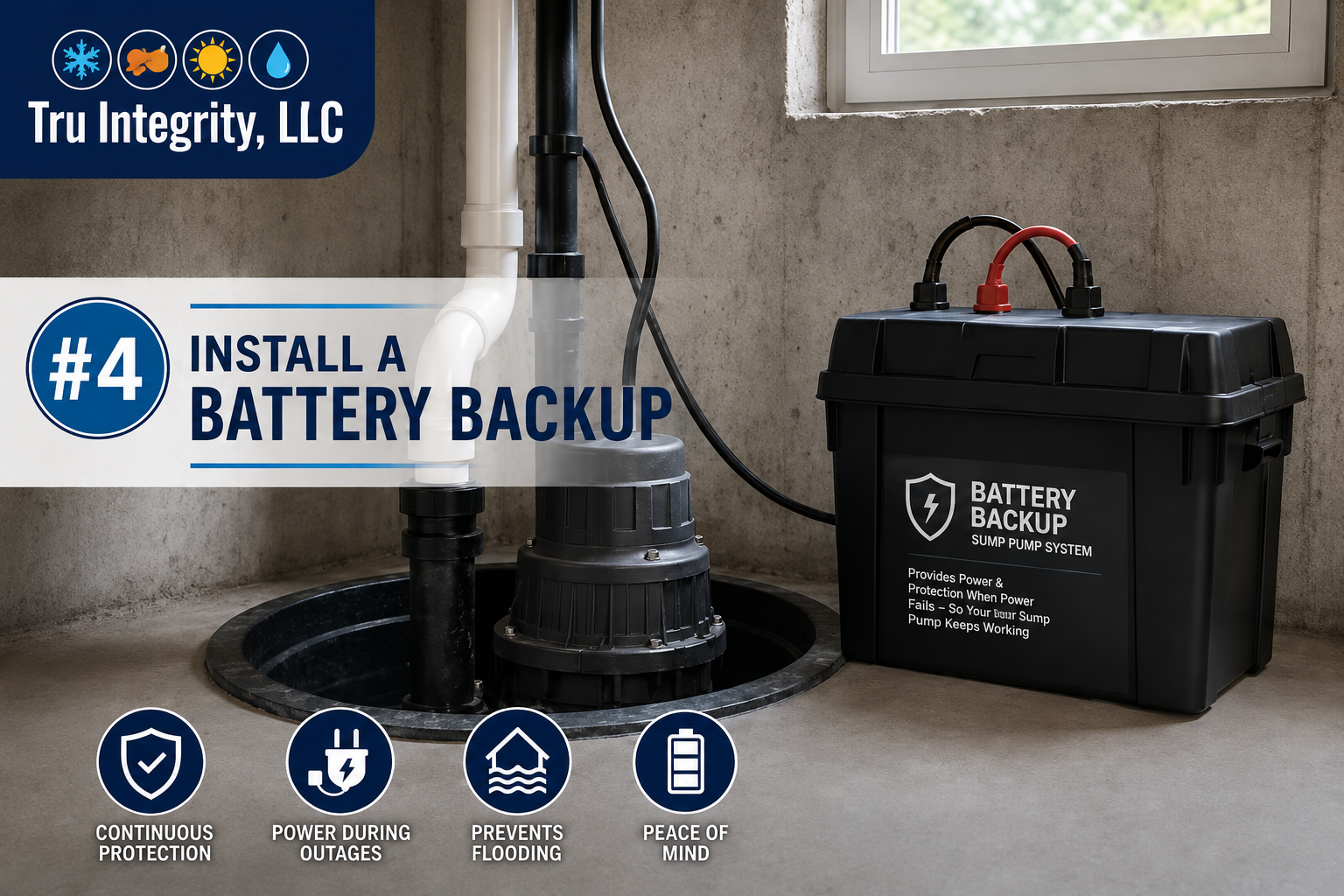
- Choose a backup rated for at least six to eight hours
- Test the battery every few months
- Replace it every two to three years, even if it still holds charge
This single upgrade prevents the scenario most homeowners fear: a storm, a power cut, and a silent pump. See our full breakdown of whether a battery backup sump pump is worth it for more detail.
5. Inspect the Check Valve
Tucked into the discharge pipe is a check valve. Its job is simple: stop water from flowing back into the pit after it’s pumped out. When it wears out, the pump ends up pumping the same water twice, straining the motor.
Look for cracks, stiffness, or water flowing backward into the pit. It’s a cheap part, and replacing it early beats dealing with a burned-out motor later.
6. Clear the Discharge Line
The discharge line carries water away from your foundation. Leaves clog it in fall, ice blocks it in winter, and dirt settles in year-round.
Walk outside occasionally and check the end of the pipe. Clear anything blocking it, and confirm it directs water at least 10 feet from the foundation.
7. Pay Attention to Unusual Sounds
A pump in good shape runs with a quiet, steady hum. Grinding, rattling, or a strained sound usually means something inside has shifted or worn down.
Catch it early, and it’s often just a loose part or a minor jam. Ignore it, and you’re looking at full motor failure, which is when homeowners typically need to repair sump pump components instead of simply maintaining them.
8. Give the Float Room to Move
The float switch tells the pump when to turn on, and it only works if it has clear space to rise and fall. Wires, uneven pit walls, or debris can cause it to stick.
Check that it moves freely and isn’t leaning against the pit wall. If it’s triggering too early or too late, adjust its height slightly. A stuck float is one of the quietest ways a pump fails.
9. Get a Professional Inspection Once a Year
Even a diligent DIY routine misses things a trained eye catches instantly. Once a year, have a professional check the parts you can’t easily inspect yourself, like internal motor wear or wiring condition. A short visit like this often catches problems months before they’d otherwise surface.
Turning This Into an Actual Habit
None of this works as a one-time effort. Homeowners who never deal with a flooded basement are the ones who turn this into a habit. Set a reminder every three months and run through the checks above.
Fifteen minutes, four times a year, beats thousands in water damage. Keeping these sump pump maintenance tips in your regular home-care routine can make problems easier to spot, and go a long way toward preventing basement flooding altogether.
At Tru Integrity, we hear the same story often: a small warning sign gets ignored for months and eventually turns into a basement full of water. Most of those situations could have been caught early with a five-minute check.
Signs That Mean Stop Waiting and Call Someone
A few warning signs mean it’s time to act right away:
- The pump runs constantly, even when it hasn’t rained
- Water sits in the pit and won’t drain
- The motor smells hot or gives off a burning odor
- The pump cycles on and off rapidly without settling
If you notice any of these, don’t wait it out. Call a trusted local technician before it turns into a full basement flood.
Your Basement Deserves a Pump That Won’t Let You Down
A sump pump only earns your trust after a storm, when it’s already too late to fix anything quietly. That’s why a small, consistent routine matters more than a one-time fix. Test it, clean it, listen to it, and back it up with a battery so it never depends on the power grid alone.
Keep up with it, and the next storm will be nothing more than background noise. And if you’d rather have an expert handle it, the team at Tru Integrity is always ready to help you build a routine that sticks. Consistent sump pump maintenance can help keep your system dependable when heavy rain arrives.
Frequently Asked Questions:
Q1. How often should I test my sump pump?
Test your sump pump every three to four months, especially after heavy rainfall, to prevent unexpected failures and basement flooding.
Q2. How do I know if my sump pump needs to be replaced?
If it’s over 10 years old, makes unusual noises, or struggles during heavy rain, it’s likely time for a replacement.
Q3. Can I do sump pump maintenance myself?
Yes. Testing the float, cleaning the pit, and checking the discharge line don’t require special tools or training.
Q4. What causes a sump pump to fail during a storm?
Power outages, a clogged discharge line, a stuck float switch, or a motor worn out from age.
Q5. How long does a sump pump usually last?
Most last 7 to 10 years with regular care. Skipping maintenance can shorten that considerably.