
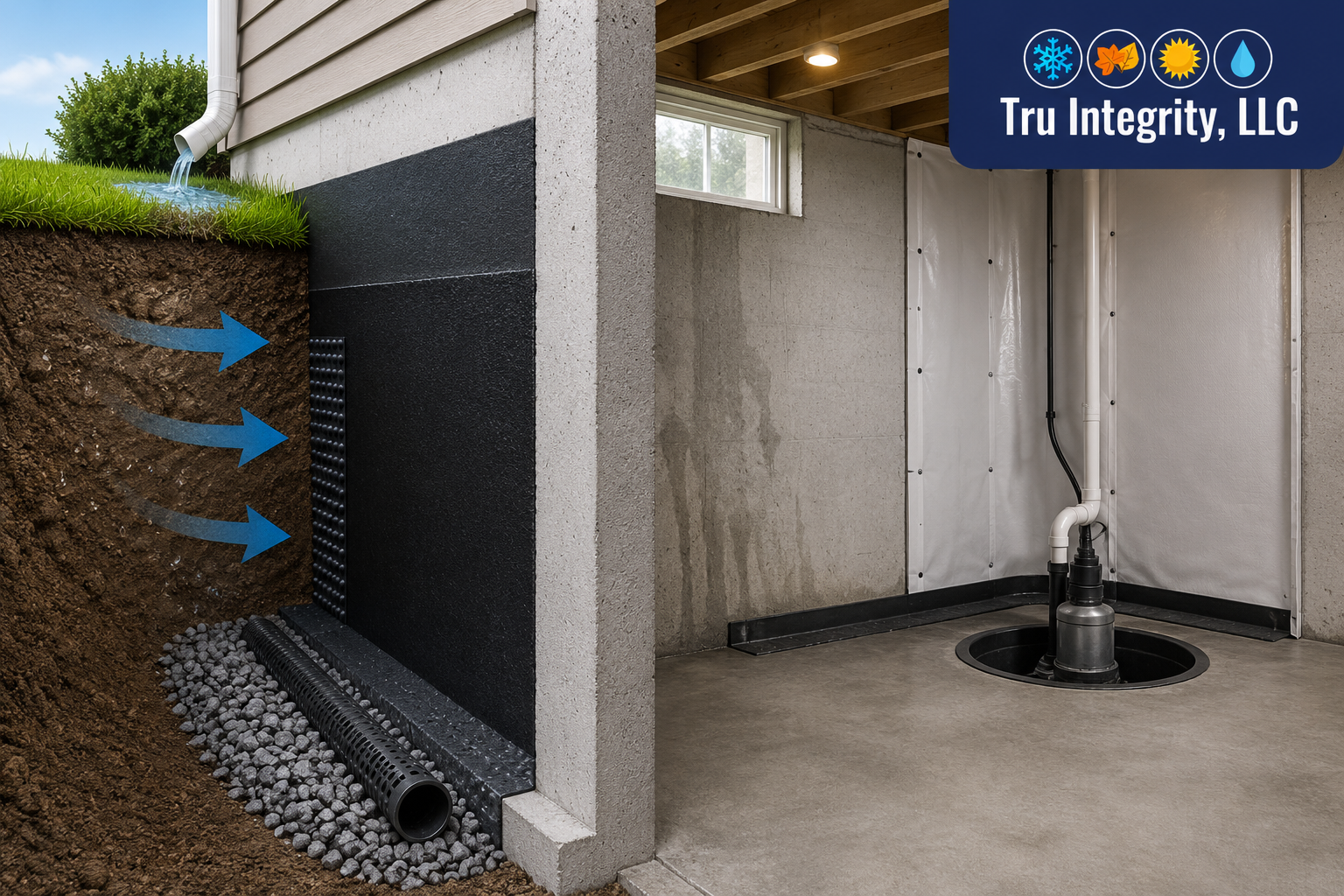
A dry basement begins with healthy foundation walls. Homeowners may see damp spots, peeling paint, musty odors, or visible cracks when moisture starts to seep through basement walls. These signs may seem small at first, but they can indicate conditions that need attention before they become bigger problems.
Did you know? According to the Federal Emergency Management Agency (FEMA), maintaining proper drainage around a home’s foundation is an important step in reducing the risk of water damage during heavy rainfall.
Understanding Homeowners can make educated decisions about how to protect their property when they know the causes of basement wall moisture and the waterproofing solutions that are available. At Tru Integrity LLC, we believe the best approach is to find the source of moisture before recommending repairs. Every home is different, and the best waterproofing solution will depend on the construction type, drainage conditions, and reason for water intrusion.
Key Takeaways
- Basement wall moisture can result from drainage, groundwater, or foundation issues.
- Small warning signs should be addressed before they become larger problems.
- Waterproofing methods vary depending on the source of moisture.
- Regular maintenance helps support long-term basement protection.
- Professional evaluations help identify the most appropriate waterproofing solution.
Why do basement walls develop moisture problems?
Basement Walls Prone to Moisture Basement walls are in direct contact with the soil and tend to have moisture issues over time. Rainfall, groundwater levels, soil movement, and drainage conditions all affect how water can impact the foundation.
Some common contributing factors include:
- Poor exterior drainage
- Hydrostatic pressure
- Foundation settlement
- Cracks in foundation walls
- Improper grading around the home
- Aging waterproofing materials
Choosing the right basement wall waterproofing approach begins with identifying which of these conditions is allowing moisture to enter.
What warning signs should homeowners look for?
Moisture problems can develop slowly.
Some of the most common warning signs include:
- Damp or discolored walls
- White mineral deposits (efflorescence)
- Musty odors
- Mold or mildew
- Peeling paint
- Water stains
- Small wall cracks
These signs do not necessarily mean that there is serious structural damage, but they may indicate that more evaluation is warranted.
How are basement wall cracks connected to moisture?
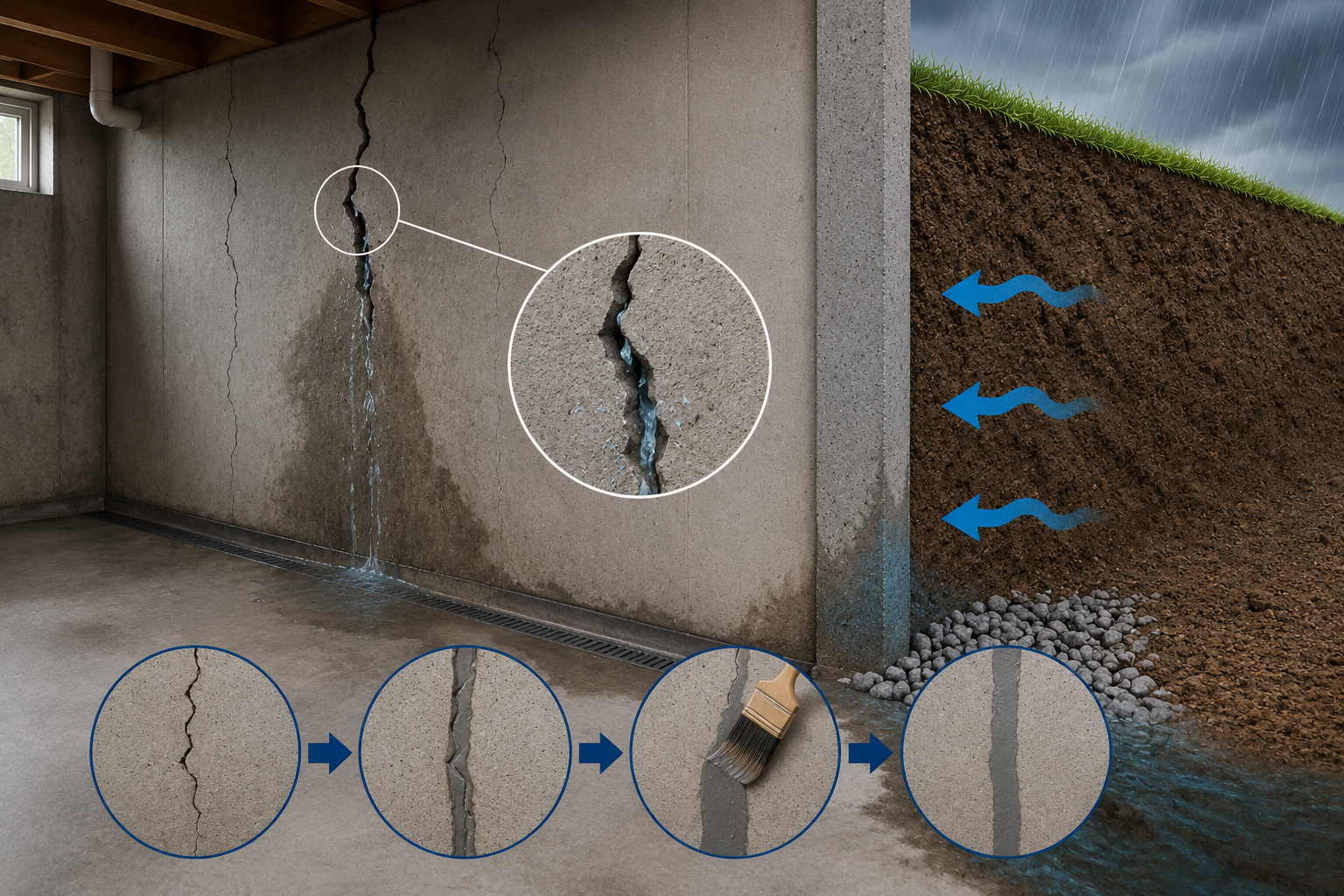
During periods of heavy rain or changing groundwater conditions, cracks may allow water to enter the basement.
The significance of a crack will be determined by its size, location and cause
If the inspection shows water entering through the damaged areas, basement wall crack repair may be recommended along with or even before waterproofing.
Fixing visible cracks without correcting the source of water may not completely solve the recurring moisture problem.
What waterproofing options are available?
There is no single waterproofing method that works for every property.
Depending on the home’s condition, waterproofing solutions may include the following:
- Interior drainage systems
- Exterior drainage improvements
- Foundation wall membranes
- Crack sealing where appropriate
- Sump pump systems
- Moisture management solutions
The idea is to control or divert water before it reaches the basement living area.
Professional assessments are valuable in identifying the best approach for the property’s needs.
Is waterproofing always done from the inside?
Not always.
When homeowners think about waterproofing basement walls, they tend to picture coatings or sealants applied to the inside of the basement. While interior measures are important, some moisture problems originate outside the home, and they may require exterior drainage or foundation improvements.
The appropriate solution depends on:
- Source of water intrusion
- Foundation construction
- Soil conditions
- Existing drainage
- Severity of moisture problems
Some homes benefit from interior systems, while others may require a combination of interior and exterior measures.
What is the best waterproofing approach?
Homeowners often ask about the best waterproofing for basement walls. However, there is not usually one answer that is right for everyone.
The most effective solution depends on various factors:
- Water entry points
- Drainage performance
- Foundation condition
- Basement construction
- Long-term maintenance goals
Selecting a waterproofing method without identifying the cause of moisture can lead to the same problems occurring again in the future. At Tru Integrity LLC, we make recommendations based on what we see at the property, not a one-size-fits-all solution.
What are the long-term benefits of waterproofing?
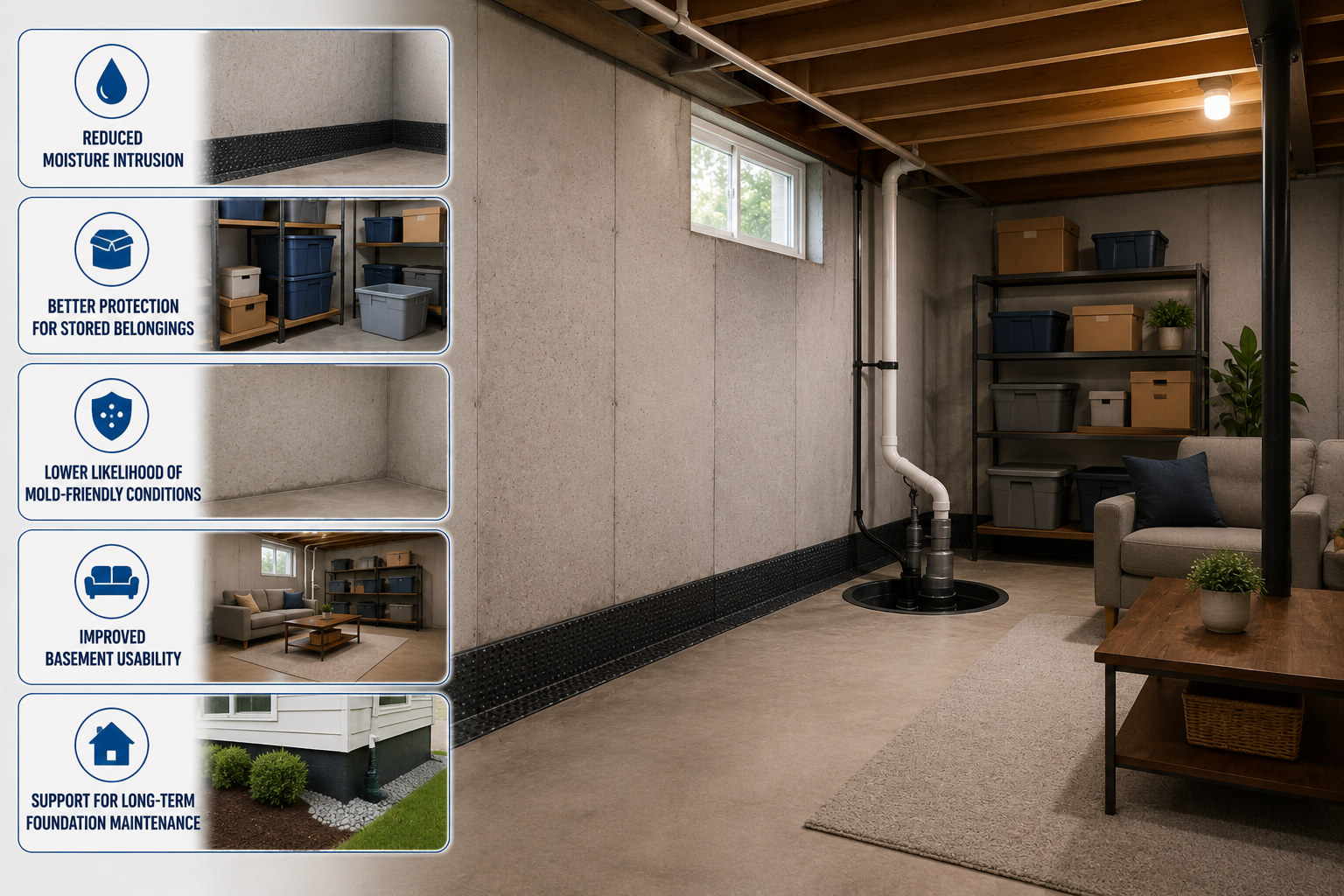
There are a few long-term benefits to waterproofing your basement walls.
Potential benefits include the following:
- Reduced moisture intrusion
- Better protection for stored belongings
- Lower likelihood of mold-friendly conditions
- Improved basement usability
- Support for long term foundation maintenance
While each property is different, taking care of moisture issues early on can help homeowners avoid more sizable repair projects later.
How can homeowners help protect basement walls?
It’s important to do regular maintenance to reduce moisture-related issues. Basic maintenance measures can complement professional waterproofing measures and contribute to long-term basement protection.
Helpful practices include:
- Cleaning gutters regularly
- Extending downspouts away from the home
- Monitoring for new wall cracks
- Maintaining proper grading
- Watching for signs of dampness after storms
Protect Your Basement Walls for the Long Term
Never neglect moisture coming in through basement walls. The first step to protecting your home is to identify the source of the problem, whether it’s poor drainage, groundwater pressure, or foundation cracks. A professional basement wall waterproofing solution can solve current moisture problems and help keep your foundation in good shape for the long haul.
Tru Integrity LLC will assess each property on its own merit and make recommendations specific to that property’s needs. Contact our team today to schedule a professional inspection and help protect your basement from future water intrusion.
Frequently Asked Questions
Q1. What causes moisture on basement walls?
Ans: Moisture can result from groundwater pressure, drainage problems, foundation cracks, or changing soil conditions around the home.
Q2. Does every basement wall need waterproofing?
Ans: No. The need for waterproofing depends on the condition of the basement, signs of moisture, and the source of water intrusion.
Q3. Can basement wall cracks allow water inside?
Ans: Yes. Depending on their size and location, cracks may allow moisture to enter and should be professionally evaluated.
Q4. Is interior waterproofing enough to solve basement wall leaks?
Ans: It depends on the source of the water. Some homes may also require exterior drainage improvements or foundation repairs.
Q5. How do I know which waterproofing solution is right for my basement?
Ans: A professional inspection can identify the cause of moisture and recommend the most appropriate waterproofing approach for your home’s specific conditions.