
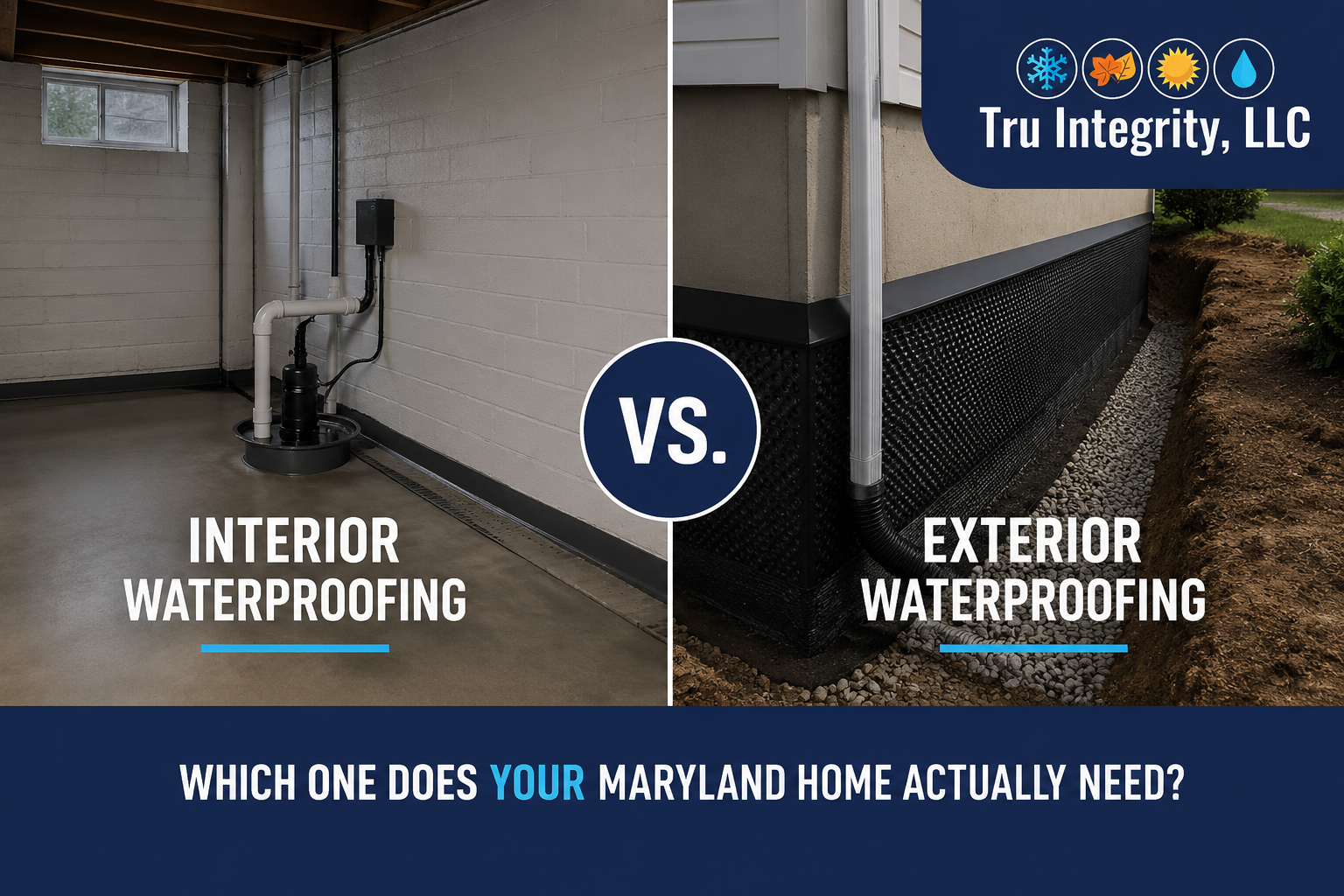
At some point, if you want to stop your basement from flooding, you will face a big decision: whether to start from the inside or the outside. After all, it is rarely as clear as you might think because each house is different in construction, drainage situation, and moisture problems.
According to the U.S. Environmental Protection Agency (EPA), controlling moisture is one of the most effective ways to prevent mold growth inside homes and buildings.
If you know what separates one waterproofing method from another, you can choose the one that best suits your home instead of guessing. We at Tru Integrity LLC understand that deciding on a waterproofing method largely depends on understanding the problem in the first place. An in-depth examination can uncover if the moisture is seeping through the foundation walls, floor joints’ cracks, drainage issues, or a combination of these.
Key Takeaways
- Exterior and interior waterproofing solves different types of moisture problems.
- The best solution depends on what the actual source of water intrusion is.
- An inspection can help determine the root cause before repairs begin.
- Combination of waterproofing methods may be beneficial for some homes.
- Identifying moisture early can prevent bigger issues down the road.
What’s the difference between interior and exterior waterproofing?
The main thing that differentiates them is the location of the water management system in the house.
Generally, interior waterproofing systems deal with the water that has already entered the foundation area; they remove it so that it can’t cause damage inside the basement. Exterior systems aim to decrease the amount of water that gets to the foundation walls.
If you are going to compare interior vs. exterior basement waterproofing, you have to keep in mind that one method is not always better than the other. The right decision is often based on site conditions, drainage patterns, foundation design, and the source of moisture intrusion.
When might an interior solution make sense?
In certain cases, homeowners might even consider interior basement waterproofing as a viable solution when water is coming through wall-floor joints, small seepage areas, or a basement where drainage improvements could effectively handle moisture.
Typical components may include:
- Interior drainage channels
- Water collection systems
- Drainage improvements
- Moisture management measures
- Sump systems when needed
It’s these factors that mainly influence the choice of the right solutions, which are usually based on the conditions revealed through a thorough inspection rather than adopting a standard formula
The main aim is typically to control water effectively and also to safeguard the basement areas that are fit for use
What situations may require exterior waterproofing?
Sometimes dampness comes from outside the house, and you may need to fix issues around the foundation.
Keeping water away from foundations is very effective in preventing moisture-related problems in basements, and this approach is why exterior basement waterproofing is generally preferred.
However, the work required for property changes can vary significantly from one property to another.
According to the property, exterior work can involve:
- Foundation wall protection measures
- Exterior drainage improvements
- Soil grading corrections
- Water diversion strategies
- Foundation inspections and repairs where appropriate
Does Maryland’s climate influence the decision?
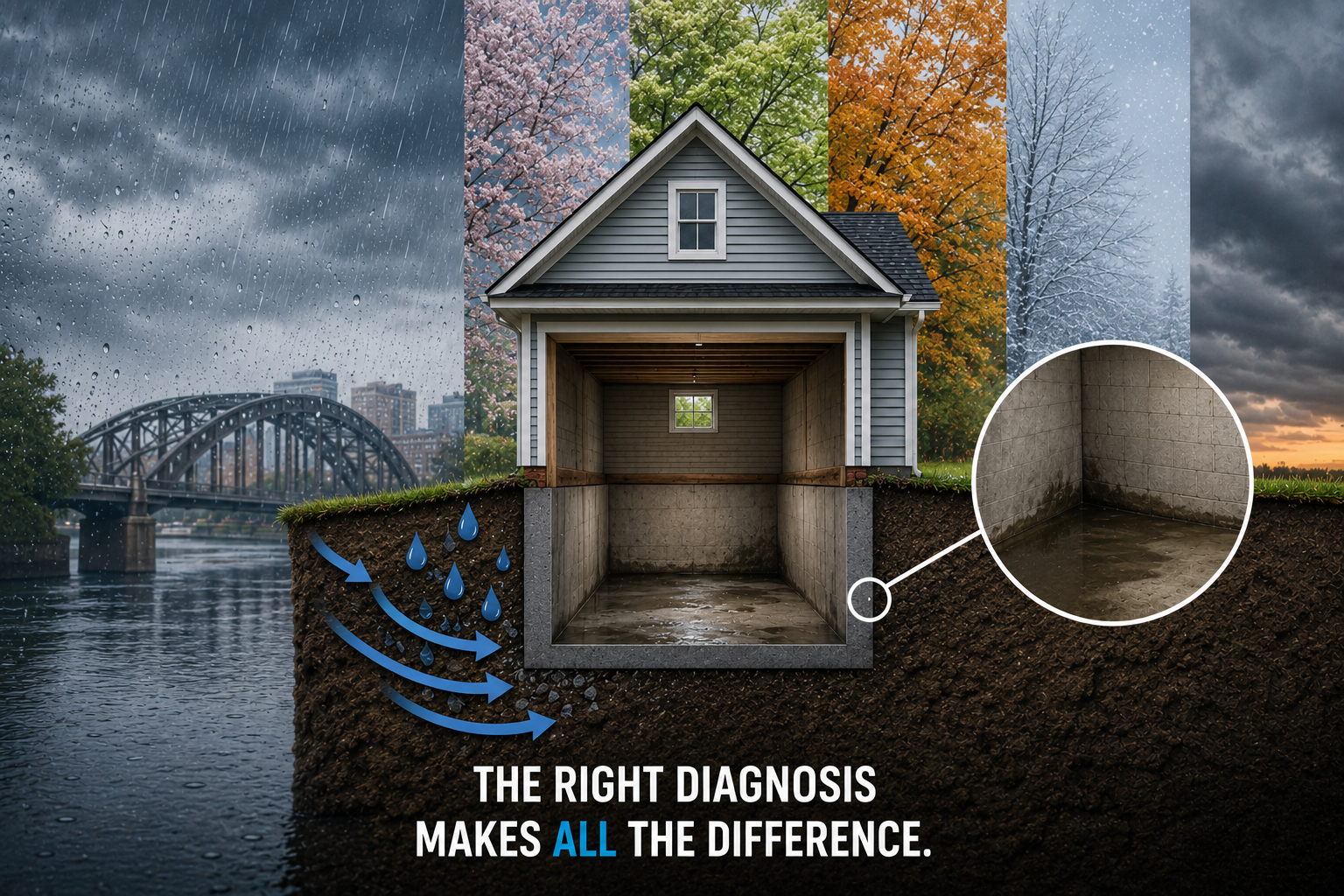
Maryland’s climate is characterized by seasonal rains, diverse weather changes, and different types of soils, which also vary from one part of the state to another. All these aspects may have an impact on the flow of water around the foundations of a house.
This variability is one reason many homeowners seek professional basement waterproofing in Severn Maryland services when signs of moisture begin appearing.
Usually, it is the source of water that matters more than the visible signs. It is possible for two different houses to have equally damp basements, but at the same time, they might each need a totally different waterproofing method.
Getting the first diagnosis right is one of the most important factors in how effective any chosen method will be.
Why isn’t there a single answer for every home?
Most homeowners want a quick recommendation, but waterproofing solutions usually require a detailed assessment.
Recommendations could be based on:
- Foundation type
- Age of the home
- Existing drainage conditions
- Presence of foundation cracks
- Groundwater activity
- Landscape grading
- Severity of moisture intrusion
At Tru Integrity LLC, we take these factors into consideration to create a solution that is specific to the conditions of the property, not a cookie-cutter repair approach.
This inspection-based process can help ensure that recommended work is addressing the root cause of moisture issues.
Could some homes benefit from both approaches?
In certain situations, yes.
There are some homes where different issues contribute to the problem and a single solution will not be able to fully address the situation.
For instance, a house may need drainage work in the basement, and at the same time, corrections to the exterior water management around the foundation could be helpful.
The main question is not which side to choose, but which actions will best protect the house.
In fact, this is why you should get a professional evaluation before making major waterproofing decisions.
How does moisture control relate to the overall situation?
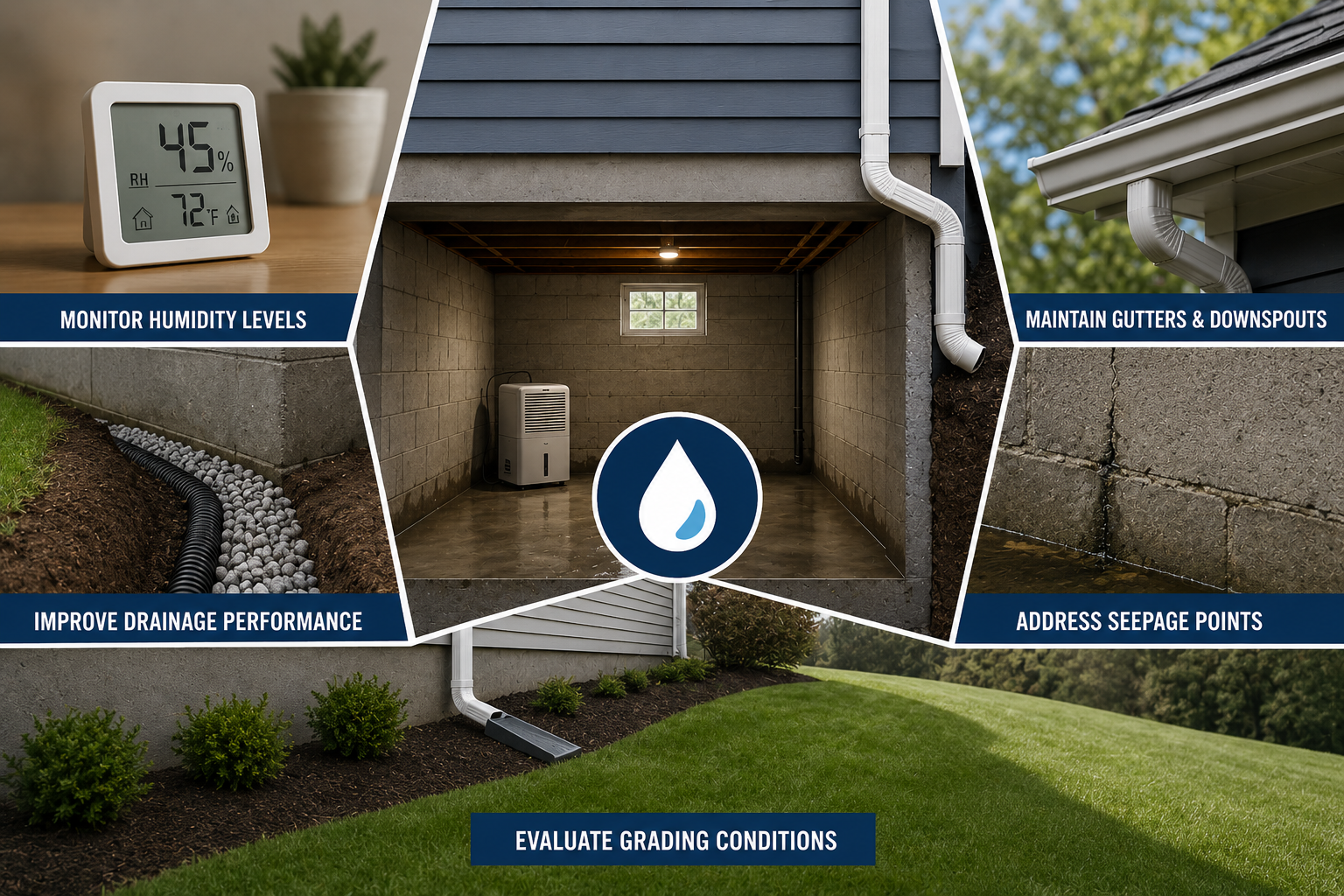
Long-term basement moisture control involves more than stopping visible water.
Implementing effective moisture control may include:
- Monitoring humidity levels
- Improving drainage performance
- Addressing seepage points
- Maintaining gutters and downspouts
- Evaluating grading conditions around the home
Using the whole plan the right way will lower the chance of the moisture problems coming back and, at the same time, keep the basement healthier all along.
Because moisture problems can develop very slowly, it is usually best to recognize them as soon as possible.
Schedule a Professional Basement Evaluation Today
If you see evidence of basement dampness, water seepage, or moisture, having a professional evaluation is a wise step to understand what to do next. Each house is different, so finding the correct answer takes a thorough diagnosis of the real problem.
Tru Integrity LLC helps homeowners with their moisture issues by suggesting waterproofing solutions that meet the home’s requirements. Get in touch with our experts to learn how to safeguard your basement and foundation against water problems. Contact us today to schedule a consultation and discover the right solution for your home.
Frequently Asked Questions
Q1. What is the main difference between interior vs. exterior basement waterproofing?
Ans: Generally, interior waterproofing deals with water after it has reached the foundation, while exterior waterproofing aims to prevent water from coming into contact with the foundation.
Q2. Which waterproofing method is usually better?
Ans: Neither one is better per se. The best solution is largely dependent on the house’s particular moisture conditions and the foundation type.
Q3. Can interior waterproofing stop all basement leaks?
Ans: It may assist in controlling several moisture problems, yet the extent of its effectiveness depends upon where the water is coming from and the overall state of the building.
Q4. Is exterior waterproofing always necessary?
Ans: No. In fact, some houses may end up with a very good moisture condition through interior methods or other drainage actions that come up during inspection.
Q5. How can I tell which waterproofing solution my Maryland home needs?
Ans: Generally, a well-conducted professional basement inspection is the most dependable method to locate the moisture source and declare the waterproofing options.