Changing weather constantly exposes backyards, increasing their likelihood of water accumulation. Poor drainage can lead to water pooling, soil erosion, and gradual damage to nearby buildings. These problems could reduce the usefulness of outdoor spaces and negatively impact the property as a whole over time.
Choosing the right Drainage Solutions for Backyards is a key part of controlling how water flows across your land. Many homeowners look for long-term solutions that help control water flow instead of quick fixes.
Did you know? According to the United States Geological Survey, runoff happens when water from rain or irrigation flows over land surfaces. If not managed properly, such runoff can cause pooling and erosion.
At Tru Integrity LLC, drainage solutions focus on moving water away from important areas. This helps keep outdoor spaces and buildings strong over time.
Key Takeaways
- Bad drainage can cause problems with your home and yard for a long time.
- For the best results, you may need more than one drainage system.
- Grading correctly is an important first step in controlling water.
- Preventive solutions help lower the need for repairs in the future.
- A professional assessment makes sure the right solution is used.
Why Should Backyard Drainage Be a Priority?
If water isn’t directed properly, it can pool in low spots, soak into the soil, and slowly damage nearby foundations. Even if you don’t immediately feel the effects, prolonged exposure to excessive moisture can lead to ongoing maintenance issues.
Installing yard drainage solutions early can lower these risks and help you make better use of your outdoor space. Taking steps to stop water damage before it happens is usually better than fixing it afterwards.
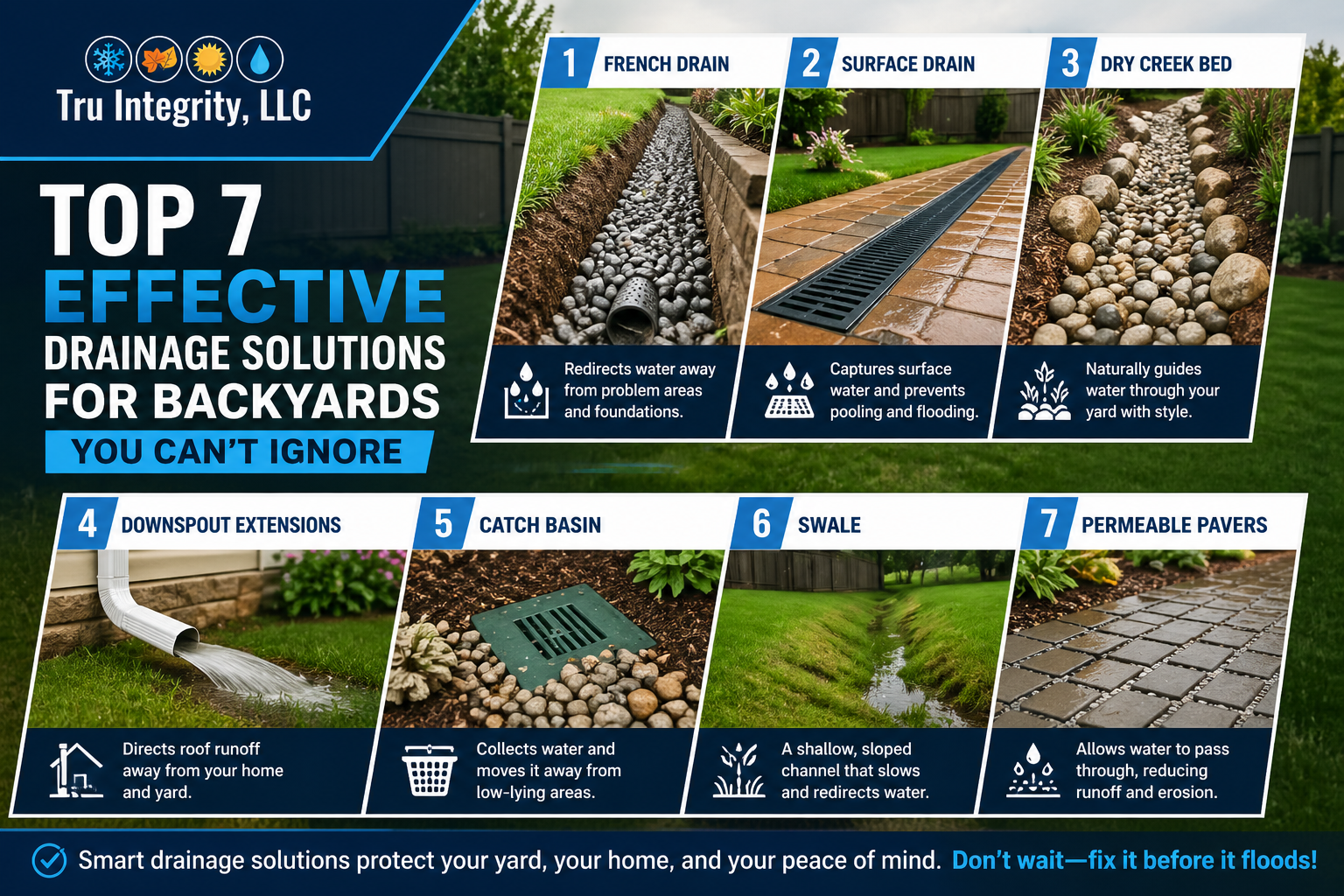
1. Are French Drains a Reliable First Step?
French drains are often used to move water away from places where it tends to pool. This system usually consists of a pipe with holes in it that is placed in a trench filled with gravel. This lets water flow through and away from the yard.
They may be suitable for:
- Areas with consistent pooling
- Sloped landscapes where water needs direction
- Keeping areas near the foundation safe
When put in the right way, French drains can help control the flow of water below the surface.
2. Can Surface Drains Help With Standing Water?
Surface drains are meant to collect water from the ground and move it away through pipes that are buried underground. People often put these drains in places where water collects after it rains.
They may help:
- Reduce standing water on flat surfaces
- Improve overall yard usability
- Support quicker water removal after storms
When water collects on the surface often, people often think about surface drains.
3. How Effective Are Downspout Extensions?
If not handled correctly, roof runoff can cause a lot of water problems in the backyard. Extensions for downspouts help move water from gutters farther away from the house.
This simple solution may:
- Reduce water pooling near the foundation
- Limit soil saturation around the house
- Support overall drainage performance
Extending downspouts is often a good first step toward better water control.
4. Do Dry Wells Help with Drainage Over Time?
Dry wells are structures that are built underground to collect water and slowly release it into the soil around them. They are often used in places where there are no direct drainage outlets and too much water needs to be controlled.
Dry wells may be beneficial for:
- Managing runoff from roofs or paved areas
- Reducing surface pooling
- Supporting gradual water absorption
This solution works best when the soil can drain well.
5. Is Grading the Yard an Important Factor?
Proper grading is essential for keeping water from getting into the house. If the yard slopes toward the foundation, water may naturally flow the wrong way.
Adjusting the slope of the land may help:
- Improve natural water flow
- Reduce pressure on drainage systems
- Prevent water accumulation near structures
Grading is often considered the first step before putting in other drainage systems.
6. Can Channel Drains Improve Water Flow?
Channel drains are long, narrow drainage systems that are usually put in on paved or hard surfaces. They are made to catch water along a straight path and move it away quickly.
They may be suitable for:
- Driveways and patios
- Walkways with poor drainage
- Areas with concentrated water flow
Channel drains help control water on the surface, especially in busy outdoor areas.
7. Should You Use Waterproofing and Drainage at the Same Time?
Occasionally, it’s best to combine drainage improvements with other protective measures. A waterproofing services company may look at how water affects both the yard and the building.
This combined approach may help:
- Improve overall moisture control
- Support foundation protection
- Reduce long-term maintenance concerns
At this point, Tru Integrity LLC usually looks at the property and suggests solutions based on the drainage conditions that are there.
How Do These Solutions Help Keep Property Values High Over Time?
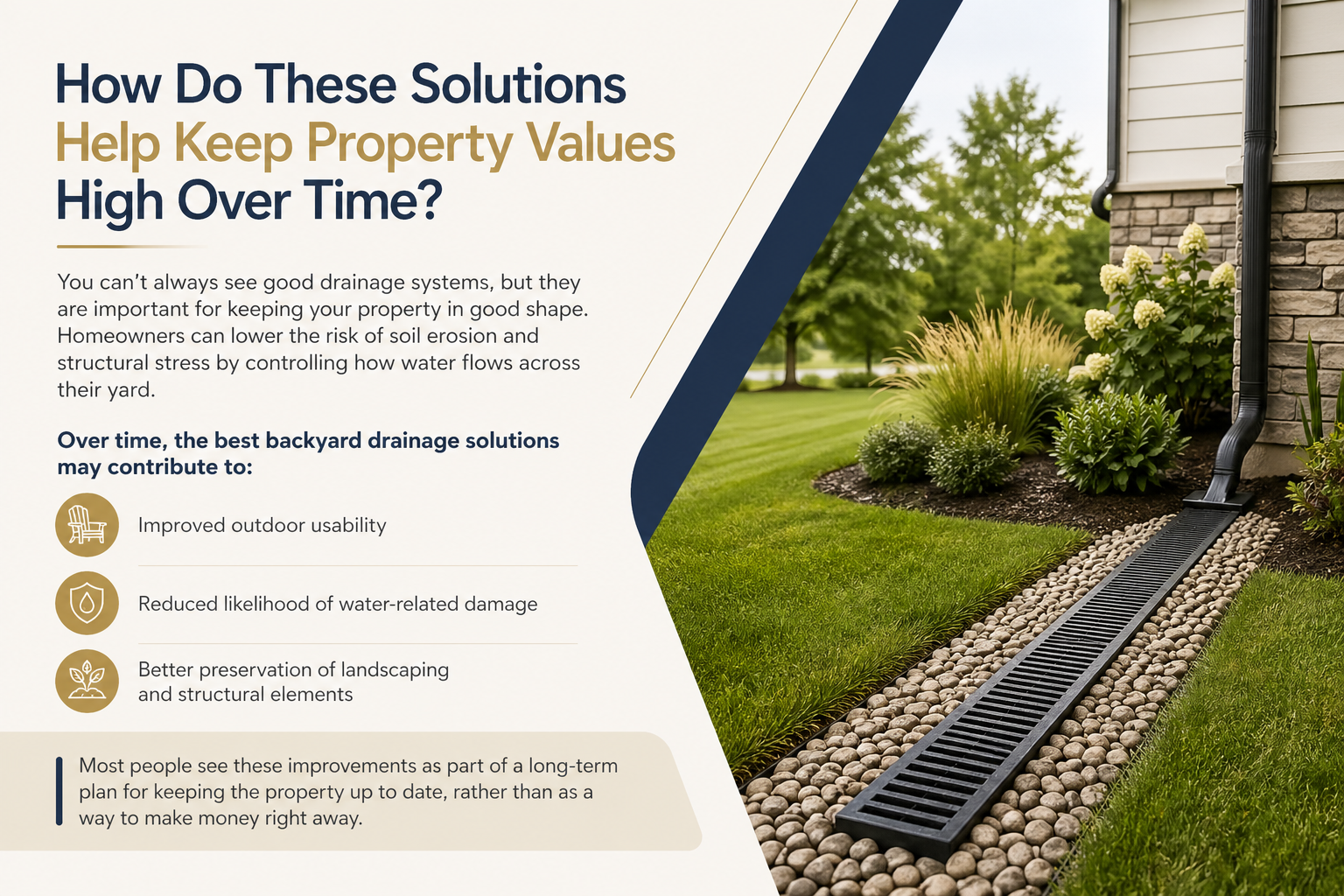
You can’t always see good drainage systems, but they are important for keeping your property in good shape. Homeowners can lower the risk of soil erosion and structural stress by controlling how water flows across their yard.
Over time, the best backyard drainage solutions may contribute to:
- Improved outdoor usability
- Reduced likelihood of water-related damage
- Better preservation of landscaping and structural elements
Most people see these improvements as part of a long-term plan for keeping the property up to date, rather than as a way to make money right away.
What Should You Consider Before Choosing A Drainage Solution?
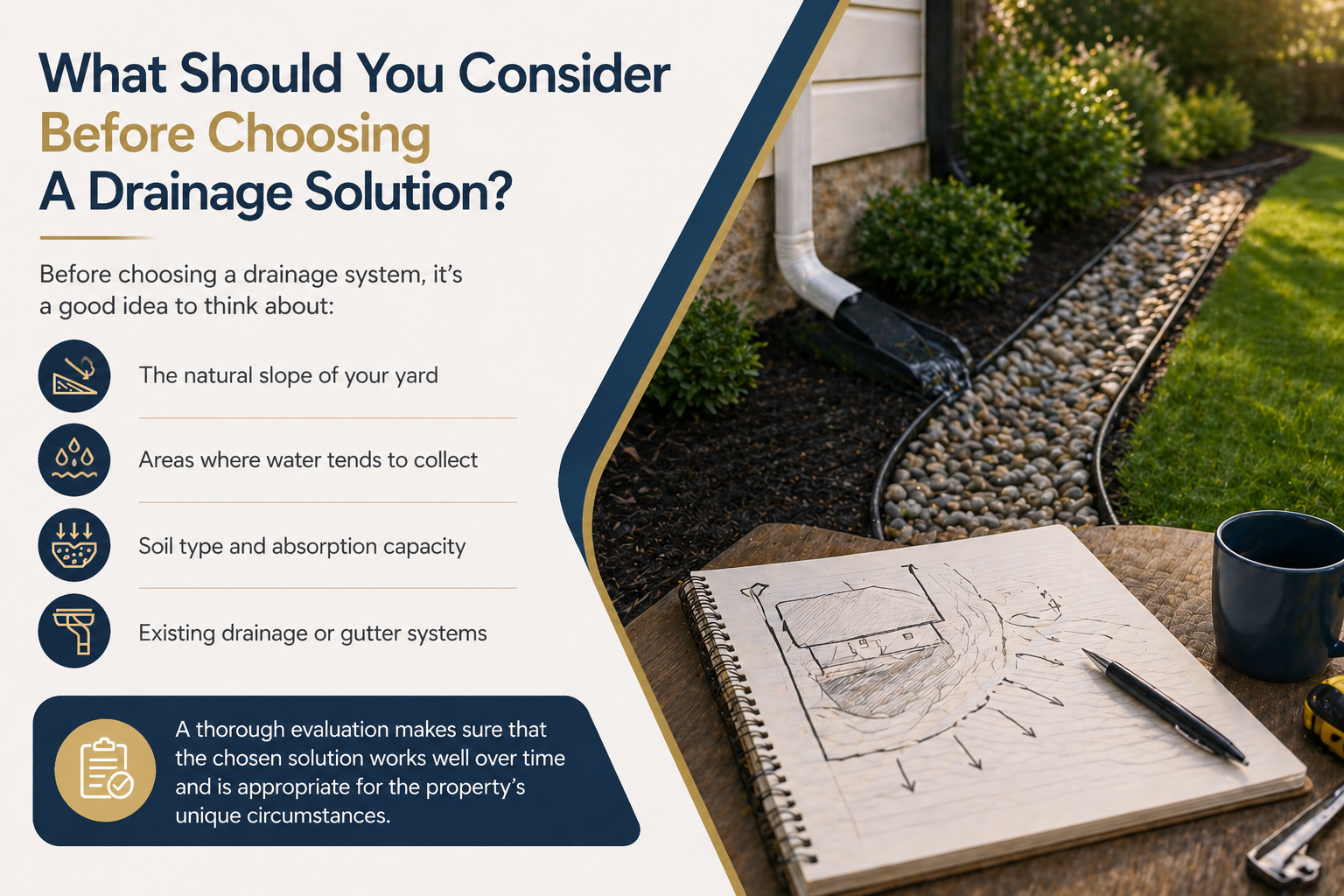
Before choosing a drainage system, it’s a good idea to think about:
- The natural slope of your yard
- Areas where water tends to collect
- Soil type and absorption capacity
- Existing drainage or gutter systems
A thorough evaluation makes sure that the chosen solution works well over time and is appropriate for the property’s unique circumstances.
Take Control of Backyard Water Issues Today
Taking care of the water in your backyard is an important part of keeping your outdoor space stable and useful. The goal of drainage solutions for backyards is always the same: to move water away from important areas and lower long-term risks.
Homeowners can improve the drainage on their property and keep it in good shape by focusing on practical and well-thought-out solutions. It is best to think of these steps as preventative measures that help keep both usability and structural integrity.
If you have drainage problems or want to make improvements, Tru Integrity LLC has solutions that will help move water around effectively and keep your property in good shape for a long time. Contact us today to learn about options that are right for your yard.
Frequently Asked Questions
Q1. What are the most effective Drainage Solutions for Backyards?
Ans: Depending on the needs of the property, drainage solutions for backyards may include French drains, surface drains, grading, and downspout extensions.
Q2. What are common signs I need yard drainage solutions?
Ans: Common signs are water pooling near the foundation after it rains, standing water, and soil erosion.
Q3. How do I choose the best backyard drainage solutions?
Ans: The best ways to drain your backyard depend on the slope of the yard, the type of soil, and how water currently flows across the property.
Q4. Can a waterproofing services company help with drainage issues?
Ans: A company that offers waterproofing services might look at both the yard drainage and the foundation to suggest a full moisture control plan.
Q5. Do drainage systems increase property value?
Ans: Improvements to drainage may help keep the property in good shape and lower risks, which can help long term value instead of short-term profit.