
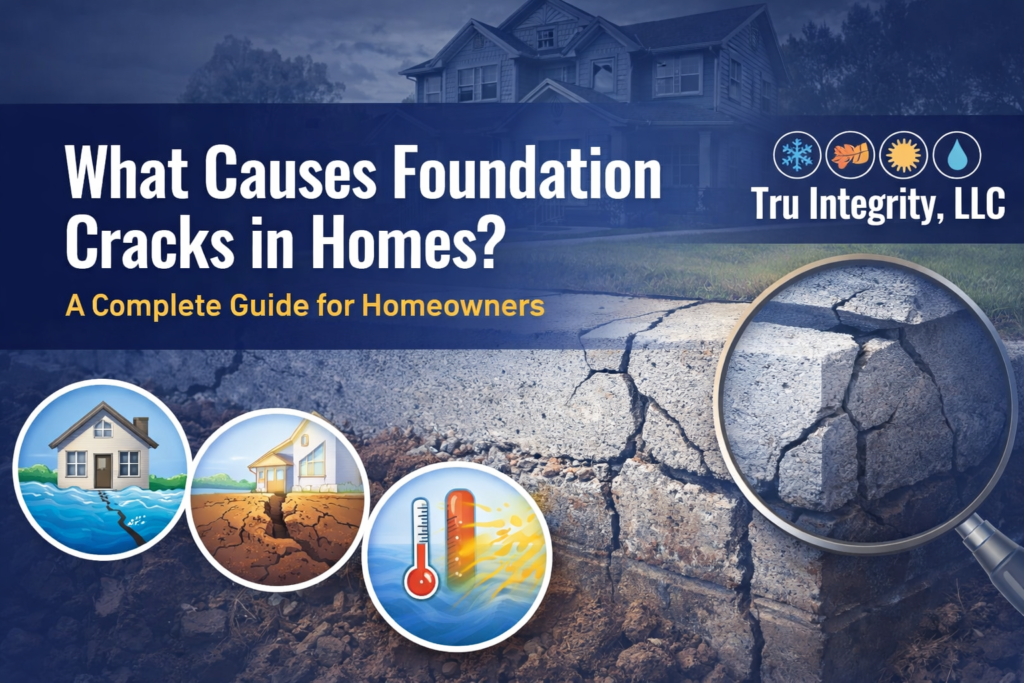
Even small cracks in a home’s foundation can worry homeowners because it supports the whole structure. Some cracks may happen on their own as a house settles, but others could be signs of moisture pressure, soil movement, or drainage problems around the property. Understanding the causes of foundation cracks helps homeowners determine whether the issue is minor or requires professional evaluation.
First, many homeowners see cracks when they do regular checks, after a lot of rain, or when water starts to pool in the basement. These early signs are often a sign that the foundation may be getting too wet or stressed out.
Did you know? According to the U.S. Geological Survey (USGS), soil expansion and contraction due to moisture changes is one of the most common reasons foundations shift or crack.
Tru Integrity LLC services are mostly about helping homeowners deal with moisture and drainage issues in their basements that could cause problems with their foundations. Taking Taking care of possible problems early can lower the chances of having long-term structural issues.
Key Takeaways
- Cracks in the foundation can happen when the soil moves, when there is too much moisture, or when the building settles naturally.
- Over time, water that builds up near the foundation can put more stress on the structure.
- Basement walls that are cracked are often the first thing you can see that something is wrong.
- Early inspections can help find problems with the foundation before they get worse.
- Taking care of drainage and moisture in the basement can help keep the foundation safe.
Objective:
This blog talks about the most common reasons why foundations crack so that homeowners can spot warning signs early and know when a professional inspection might help keep moisture or structural problems from happening.
Why Do Foundation Cracks Appear in the First Place?
Over time, many homes get small cracks in their foundations. Sometimes, these happen just because the building materials expand, contract, and settle as the building gets older. But some environmental or structural factors may speed up the process.
Some common factors that contribute are:
- Soil movement around the foundation
- Water pressure near basement walls
- Poor drainage systems
- Natural settling of the home
By identifying these patterns, homeowners can closely monitor their property and determine the appropriate time to seek professional assistance.
Could Soil Movement Be the Hidden Cause?
The stability of a home’s foundation depends a lot on the soil. Soil gets bigger when it soaks up water. It might get smaller when it’s dry. These changes in the amount of soil can put stress on the walls of the foundation.
Over time, this pressure could cause small changes in the structure and cracks. The stress on the foundation can go up in areas where the soil conditions change a lot.
When these cracks show up, homeowners sometimes start looking into foundation crack repair services to see if they need to call in a pro.
How Water Around Your Home Can Create Structural Stress
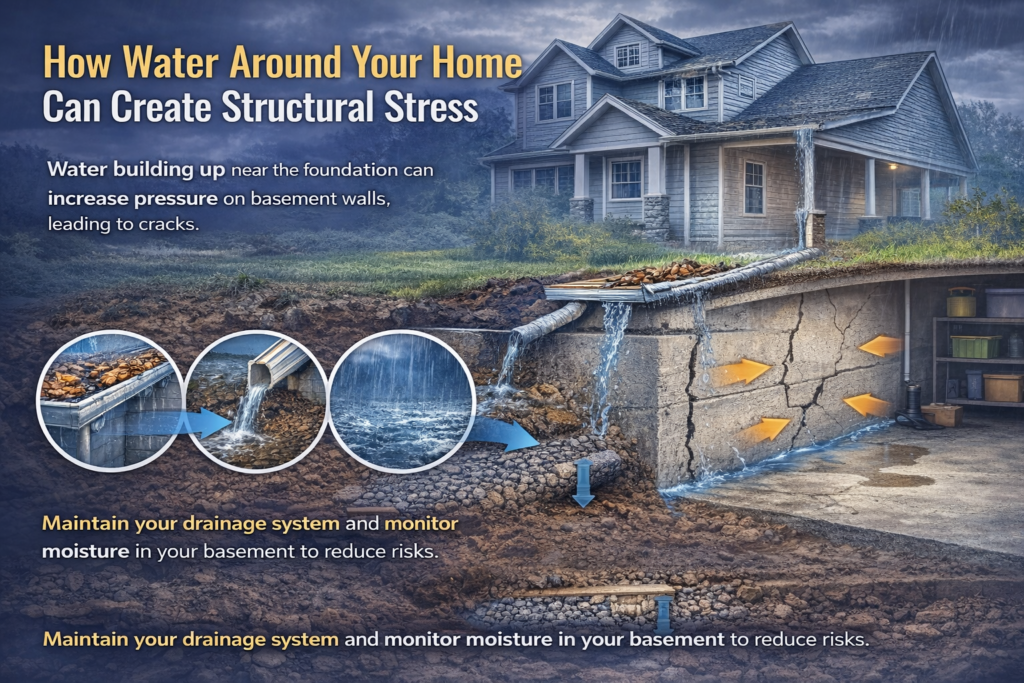
Another thing that might cause structural stress is water building up near the foundation. Water can build up near basement walls if the drainage isn’t adequate, the gutters are clogged, or it rains a lot.
The foundation may feel more pressure from the water as it builds up in the ground. This pressure may cause the concrete to crack or make small holes over time.
In many homes, the first signs of moisture pressure appear as foundation cracks in basement walls. The pressure on the structure can make these cracks look like stairs, vertical lines, or horizontal lines.
Keeping your drainage systems in good shape and keeping an eye on the moisture in your basement can help lower these risks.
Is Natural Settling Always a Problem?
Over time, all houses settle a little bit. This process usually happens slowly as the building’s weight changes the soil underneath it.
In many cases, settling causes small hairline cracks that don’t pose any immediate structural problems. However, if the cracks become larger or appear unexpectedly, a closer examination may be necessary.
Homeowners often ask about the foundation crack repair cost when they see visible cracks forming. The final cost depends on the crack’s size, the damage’s location, and the suggested repair method after inspection.
What Should Homeowners Watch for Inside the Basement?
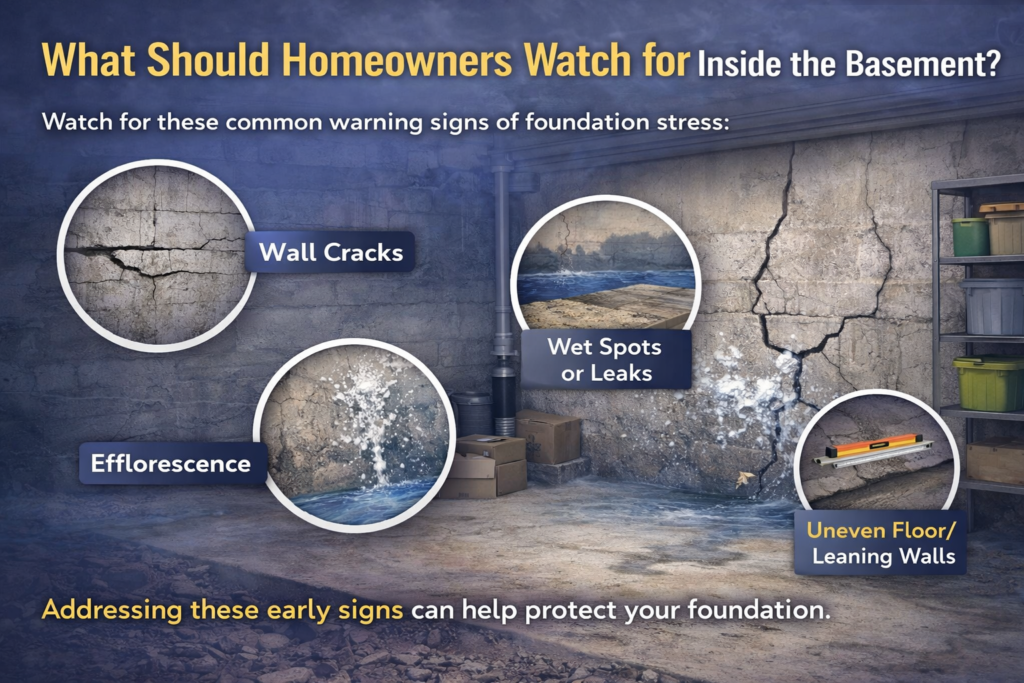
Basements are often the first places to show signs of stress on the foundation. Because you can see the foundation walls in many basements, cracks or water damage may show up there first.
Some common warning signs are:
- Cracks that you can see in concrete walls
- Wet spots or water leaking
- Efflorescence is when white mineral deposits form on walls.
- Floors that aren’t level or walls that move a little
If these symptoms keep happening after heavy rain or changes in the seasons, it could mean that moisture pressure is affecting the foundation.
At this stage, identifying the causes of foundation cracks can help determine whether drainage improvements or repairs are necessary.
How Moisture Control Can Help Protect Your Foundation
Controlling water around the house is one of the best ways to keep the foundation from getting damaged. Systems for managing moisture and drainage can lower hydrostatic pressure on basement walls.
Things that might help are:
- Keeping gutters and downspouts in good working order
- Keeping water from getting to the foundation
- Putting in systems that are meant to control moisture in the basement
- Keeping an eye on how well the sump pump works
Tru Integrity LLC works with homeowners to look at the water management conditions that might be putting stress on the foundation in the middle of many basement waterproofing evaluations. Dealing with moisture issues early on can often stop small cracks from getting worse.
Protecting Your Home’s Structure Starts with Awareness
There are many reasons why cracks can form in the foundation, such as soil movement, water pressure, and settling over time. While some cracks may appear minor, others may indicate moisture or structural issues that require attention.
If homeowners know the warning signs, they can act early and reduce property risk. Monitoring the basement and ensuring proper water drainage are crucial steps in safeguarding the foundation. Tru Integrity LLC offers services to help you check the condition of your basement walls and fix any problems that could be affecting your home’s foundation.
Contact us today for a professional inspection and protect your home before small issues become costly repairs.
Frequently Asked Questions About Foundation Cracks in Homes
Q1. What are the most common causes of foundation cracks?
Ans: Soil movement, water pressure around the foundation, the house settling naturally, and drainage problems that let moisture build up near basement walls are all common causes.
Q2. Are foundation cracks in basement walls always serious?
Ans: No, not always. Some cracks happen naturally over time, but if they are bigger or let water in, you may need to have a professional look at them.
Q3. How much does foundation crack repair cost?
Ans: The cost of fixing a foundation crack depends on its size, location, and how it needs to be fixed after inspection.
Q4. When should homeowners consider foundation crack repair services?
Ans: If cracks get bigger, water gets into the basement, or doors, windows, or floors start to move around, you might want to hire a professional.
Q5. Can moisture control help prevent foundation cracks?
Ans: Managing moisture in the basement, having proper drainage, and having working sump pumps can all help lower the water pressure around the foundation and keep cracks from forming.