
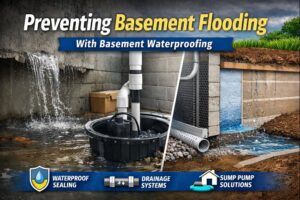
One of the worst things that can happen to a homeowner is flooding in the basement. Water intrusion can happen slowly over time or all at once after a lot of rain, snowmelt, or being exposed to moisture for a long time. In a lot of cases, people don’t notice the early warning signs until they see damage.
Tru Integrity LLC sees basement waterproofing as a way to stop damage from happening in the first place. The first step to keeping your basement safe for a long time is to know how and why water gets in.
Key Takeaways
- Flooding in the basement usually happens over time.
- Waterproofing is all about controlling the flow of water.
- A professional evaluation points you in the right direction.
- Taking action early helps limit damage in the future.
- Basements and crawlspaces have an effect on each other.
Objective
To explain how basement waterproofing stops flooding and water damage by finding and fixing moisture sources, water pressure, and weak spots in the foundation through inspections.
What does it really mean to stop flooding in the basement?
To prevent basement flooding, it’s not enough to just fix the leaks you can see. You also need to control how water moves around the foundation. Flooding happens a lot when the pressure of groundwater, surface runoff, or wall seepage is too much for the protection that is already there.
The goal of preventative waterproofing is to stop water from building up. This could mean sealing off entry points, moving moisture around, or controlling pressure along the walls of the foundation. Each method is based on what is seen, not what is thought.
What is the point of basement waterproofing if it only stops water from moving?
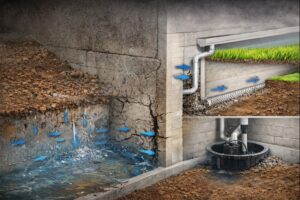
Water naturally moves in the direction that is easiest for it to go. When soil becomes saturated, pressure builds against basement walls and floors, increasing the likelihood of seepage through cracks or joints.
A basement waterproofing company usually looks at where water is coming in and why it is building up. Then, solutions are made to either direct water away from the structure or lessen its effects.
This targeted approach helps fix the problem that causes flooding, not just the signs.
How does professional waterproofing help reduce long-term risks?
The main goals of professional waterproofing are strength and consistency. Systems are built to deal with moisture problems that happen again and again, not just temporary fixes.
When water problems don’t go away or get worse over time, homeowners often look for basement waterproofing services near me. A professional evaluation can help you decide if waterproofing should be done inside, outside, or both.
TruIntegrity LLC stresses that waterproofing methods should match actual moisture patterns instead of using broad solutions halfway through the assessment process.
What waterproofing methods are commonly used?
Different ways to waterproof a basement depend on the type of foundation, the source of the water, and how bad the intrusion is. Some methods focus on sealing cracks and joints, while others deal with water after it gets into the basement.
These methods were chosen carefully to minimize disruption while still being effective at controlling moisture. The goal is to manage water in a controlled way, not to get rid of all moisture.
This plan is very similar to How to Stop Basement Flooding with Waterproofing, which focuses on fixing known entry points and pressure zones.
How does waterproofing help stop basement water damage?
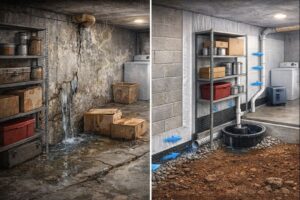
Water damage can start before you can see it. Moisture can damage walls, floors, and things you have stored long before water starts to pool.
Waterproofing supports effective ways to stop basement water damage by reducing prolonged moisture exposure. By managing water flow and pressure, waterproofing helps maintain more stable basement conditions.
This can lower the chances of having to clean up or fix things again over time.
Does location influence waterproofing needs?
Yes, local soil conditions, rainfall patterns, and property layout all influence waterproofing strategies. Homes in certain areas may experience higher groundwater pressure or slower drainage.
For homeowners seeking basement waterproofing in Severna Park, location-specific evaluation helps make sure that the solution they choose works with the area’s conditions and how moisture usually acts.
This local knowledge leads to more reliable long-term results
How do crawlspaces and basements work together?
Crawlspaces and basements are both parts of the same foundation system. Problems with moisture in one area can make things worse in the other.
Crawlspace and basement waterproofing services often consider how moisture travels beneath the home. Taking care of both areas at the same time can help balance moisture control and stop problems from happening in the future.
This broad view helps keep the whole foundation safe all the time.
When should homeowners consider basement waterproofing?
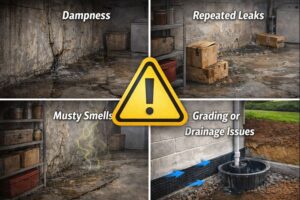
Homeowners might think about waterproofing if they see dampness, leaks that keep happening, or musty smells. It can also be a good idea for properties that are known to have problems with grading or drainage.
Early evaluation helps figure out if waterproofing is needed right away or if just keeping an eye on things is enough. This careful method keeps the home safe without doing extra work.
Are you ready to keep your basement safe from flooding in the future?
Contact us today to schedule a professional waterproofing assessment and get a clear plan to protect your basement from recurring moisture and flooding issues.
To keep your basement from flooding, you need to know how water gets to your foundation.
Frequently Asked Questions
Q1. Is basement waterproofing only needed after flooding occurs?
Ans. No, it is often used as a preventative measure.
Q2. Can waterproofing stop all basement moisture?
Ans. It helps manage water, but some moisture control may still be required.
Q3. Are waterproofing systems permanent?
Ans. They are designed for long-term use but should be inspected periodically.
Q4. Does waterproofing require major excavation?
Ans. Not always; methods vary based on the situation.
Q5. Should crawlspaces be waterproofed along with basements?
Ans. In some cases, addressing both areas provides better overall protection.