
Did you know? Basements are one of the most water-vulnerable parts of a home, especially in regions with high water tables and clay soils, like across Maryland. When moisture enters a basement, it can damage walls, promote mold growth, and compromise structural integrity.
At Tru Integrity, LLC, we emphasize proactive solutions for waterproofing basement walls from inside and beyond to help homeowners protect their foundations and avoid costly damage.
In this guide, we’ll walk through five effective methods for keeping your basement dry and explain the pros, limitations, and contexts where each approach makes sense.
Key Takeaways
- Waterproofing is beneficial in maintaining the dryness of basement walls and it also works as a protective measure for the foundation of your house.
- The use of sealants and drainage systems is an example of an interior method that deals with water that has already entered the basement.
- By the time water gets to the walls, exterior methods are there to prevent it and, therefore, they last longer.
- Good yard arrangement and the use of gutters not only eliminate water but also lessen the pressure on the foundation caused by moisture.
- Most thorough waterproofing plans consist of a combination of different methods to attain the best outcome.
Objective:
The aim of this blog post is to present five reliable ways of protecting the basement from water seepage. These measures will include both inside and outside solutions thus giving the owners of the houses the freedom to decide wisely.
Let’s Discuss Interior Sealants and Vapor Barriers
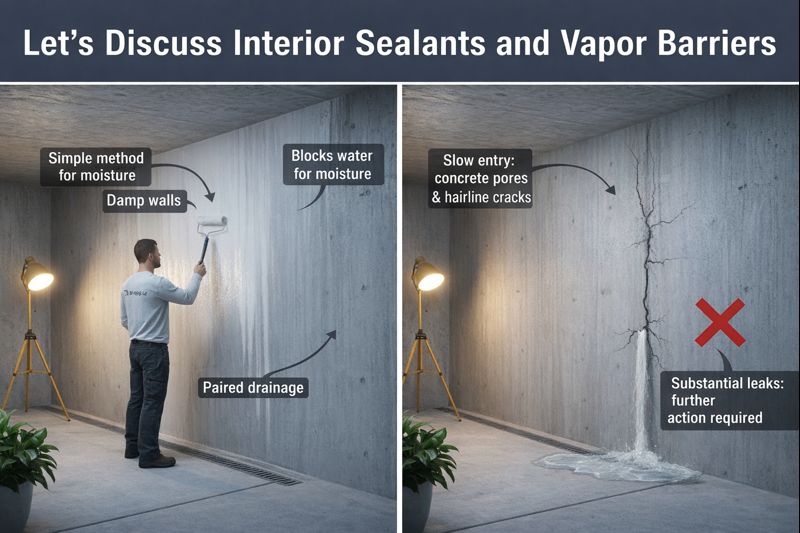
A simple method of dealing with moisture is to coat the inside of the basement walls with waterproofing agents or epoxy. In essence, these products create a barrier that can block water vapor and a small amount of water from getting into the living areas.
Contractors like those at Tru Integrity, LLC, often employ top-tier membranes or epoxy coatings on basement walls as the interior part of a moisture-control plan. This interior treatment is beneficial for damp walls and is frequently suggested alongside drainage solutions, particularly when waterproofing basement walls from inside is appropriate for the situation.
Interior sealants and vapor barriers are most effective when water is slowly entering through concrete pores or hairline cracks. For more substantial leaks, however, further action may be required.
Why Installing Drains Inside Can Help
Interior drainage systems offer a practical approach to dealing with water that has already infiltrated a basement. These systems function by gathering water at the base of walls or around the floor’s edge, then channeling it to a sump pump or drainage outlet.
Common choices for interior basement drainage include French drains, baseboard channels, and sub-floor drainage. When paired with interior wall waterproofing, these systems help manage moisture before it accumulates and causes problems.
Since this method addresses water after it has entered, it should be part of a comprehensive plan, particularly if you frequently experience water issues.
Keep in mind: Proper installation is crucial for interior drainage to ensure water flows efficiently toward the discharge points.
Addressing the Question of Waterproofing Basement Walls from the Outside
To address the root of moisture problems, many homeowners opt for waterproofing basement walls from the outside. Exterior waterproofing typically involves excavating around the perimeter of your home, then applying a waterproof membrane or protective barrier to the foundation walls.
Exterior waterproofing necessitates the excavation of soil surrounding a dwelling’s foundation, the application of waterproof membranes to the foundation itself, and the installation of exterior French drains designed to divert water away from the basement before it can infiltrate.
This method, while typically more costly and demanding in terms of labor than interior alternatives, directly tackles the fundamental issue of water intrusion by preventing its entry at the point of origin. Consequently, exterior waterproofing often offers enduring protection and can diminish the necessity for subsequent maintenance.
The Role of Proper Grading and Site Drainage
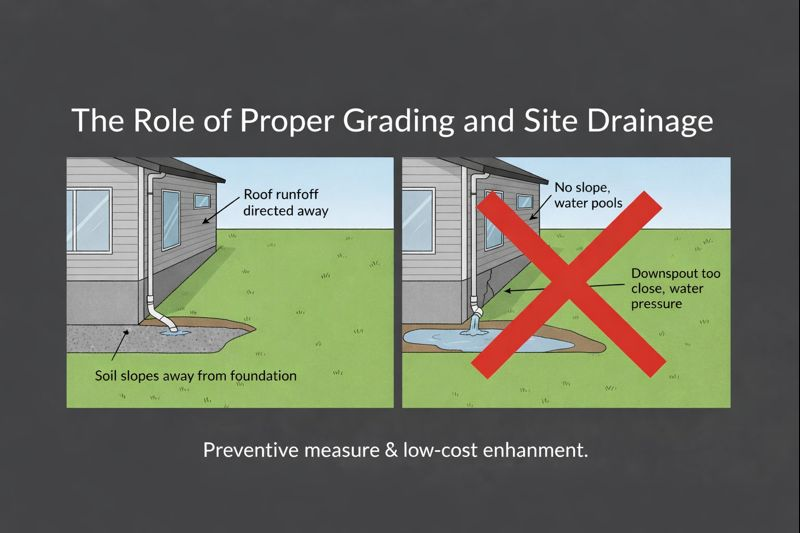
Grading and surface drainage around your home, which are sometimes neglected, are actually the main tools for controlling groundwater at the very source, i.e., before it reaches your foundation.
Making sure that the soil is sloping away from your foundation walls and that the downspouts are taking the roof runoff far away from your basement can definitely lessen water pressure against your walls. These yard-level adjustments support other waterproofing strategies and are commonly recommended as part of a broader basement and crawl space waterproofing plan.
It is true that proper grading will not be able to completely solve serious water intrusion problems; however, it is a reasonable preventive measure and a low-cost way to enhance your home’s resistance to moisture in general.
Sump Pumps and Drainage Systems for Final Water Protection
A well-installed sump pump is, for many, the basis of basement safety. A sump pump gathers the extra water in a container and forcibly expels it away from the root of your home before it can be stored on the floor or wet the walls.
Although the waterproofing basement costs differ a lot from place to place and are dependent on the services chosen, the combination of internal drainage and a sump pump is often a source of safe protection in an area with heavy rains or high groundwater pressure.
If you desire, Tru Integrity, LLC, can also install a sump pump system with the drainage opening or French drain so the water is taken care of thoroughly, and you get the feeling of security that your basement is protected from different sides.
Thinking About Costs Before You Choose a Method
Naturally, homeowners ask how much does it cost to waterproof a basement before making decisions. Actual costs depend on the method used, basement size, foundations, soil conditions, and local labor rates.
Interior sealants and coatings tend to be less expensive than complete exterior excavation systems. Interior drainage systems paired with sump pumps typically fall in a mid-range cost category, while complete exterior solutions with membranes and drainage excavation are often the most significant investment.
Every home’s needs are unique, so getting a professional inspection and estimate is recommended to determine the most effective and cost-efficient approach.
Protect Your Basement the Right Way
Basement waterproofing done right is a very important money spending that should be put first in a house care plan. If humidity has started to make its way to your home just recently or you are looking for total guardedness, the most efficient methods would be both inside and outside treatments. Tru Integrity, LLC is the company that provides professional knowledge and handy solutions to the clients in need of maintaining their basements dry, safe, and strong in terms of structure.
Frequently Asked Questions
How do I know if my basement needs waterproofing?
Signs such as water stains, damp walls, or musty odors typically indicate moisture entry and may signal a need for waterproofing.
What’s the difference between exterior and interior waterproofing?
Interior methods manage water once it’s inside, while exterior methods prevent water from reaching the walls at all. Exterior tends to be more comprehensive but costlier.
Can waterproofing also help with mold and mildew?
Yes, by reducing moisture levels on and near basement walls, waterproofing helps limit conditions that promote mold growth.
Is waterproofing the same as damp proofing?
No. Damp proofing slows moisture but isn’t as effective against significant water pressure as accurate waterproofing methods.
Do I need both interior and exterior waterproofing?
In many cases, a combined approach provides the most durable defense, particularly for homes with chronic water issues.