
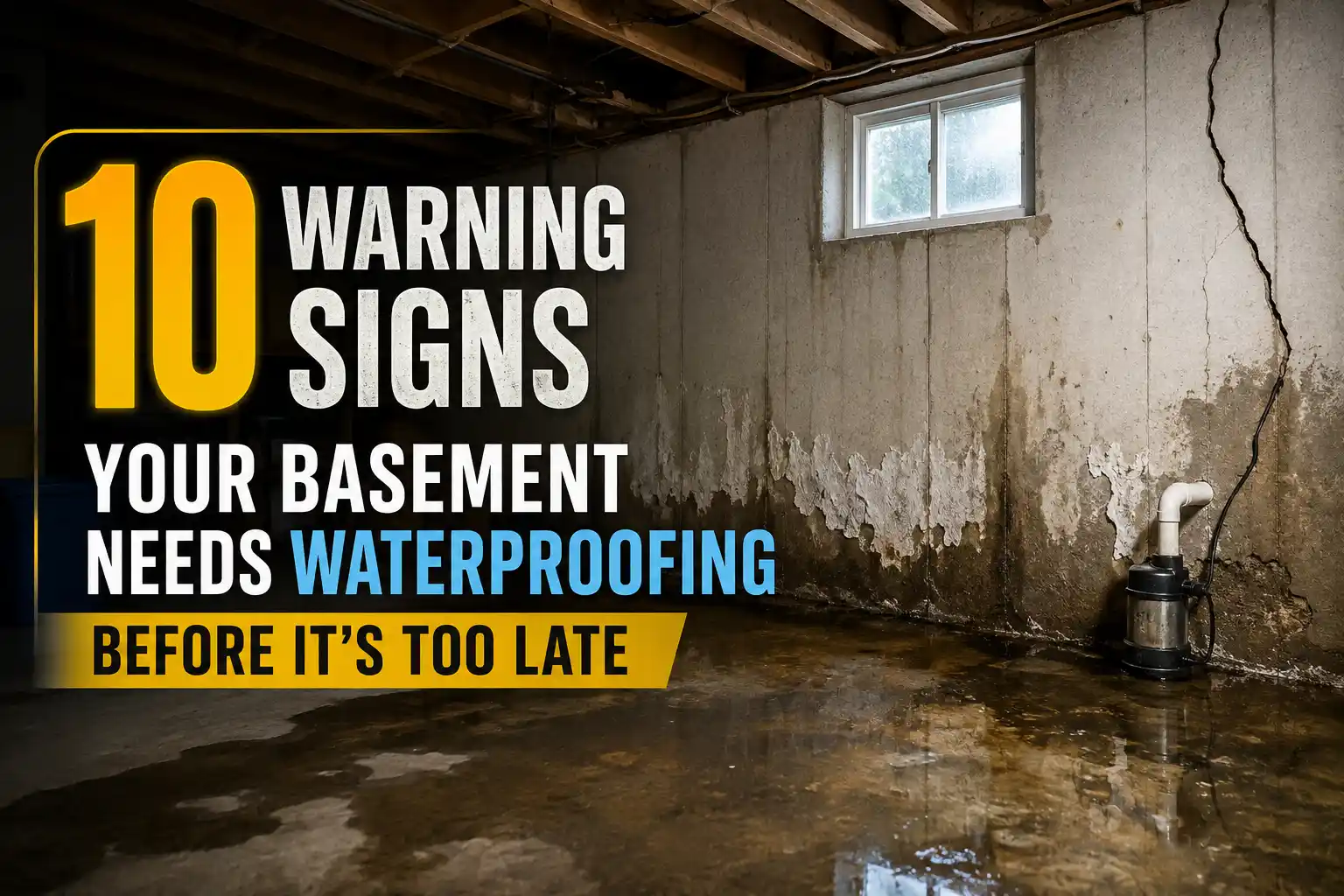
Have you ever walked downstairs and been hit by a damp, heavy smell that instantly makes you wonder what is hiding behind your walls?
That creeping chill and musty odor are often the very first whispers of trouble brewing beneath your feet. When you notice early basement water damage signs, it is crucial to act fast.
A wet basement can quickly turn into a stressful and costly nightmare for any homeowner, threatening both your property value and your peace of mind. The main objective of this is to help you spot early trouble so you can stop moisture in its tracks, protect your home’s foundation, and keep your living space safe and dry.
Key Takeaways:
- Spotting moisture issues early prevents expensive structural damage and keeps your family healthy.
- Musty smells, peeling paint, and efflorescence are clear indicators of hidden water intrusion.
- Hydrostatic pressure from wet soil causes wall cracks and requires professional intervention.
- Waterproofing protects your investment and prepares your home for future remodeling projects.
Why Early Detection Matters?
Discovering moisture issues early saves you thousands of dollars in major structural repairs. When you notice basement water damage signs, acting fast prevents mold growth and keeps your indoor air safe and breathable.
Water rarely stays in one place. It travels through concrete, rusts metal supports, and rots wooden framing. Fixing a small leak today is much cheaper than rebuilding a ruined foundation tomorrow.
1. Musty Odors and Damp Air
- What to look for: Does your lower level smell like a locker room even when it is dry outside? That distinct musty smell is the first clue of hidden moisture.
- Why it happens: Trapped humidity breeds mold and mildew behind your drywall and under your carpets. This is one of the clearest signs of water damage in basement areas that often gets ignored by busy homeowners.
2. Peeling Paint and Bubbling Drywall
- What to look for: Paint that starts to bubble, flake, or peel away from the walls in strange patches.
- Why it happens: Water vapor pushes from the outside soil right through the porous concrete. Whenever you spot basement water damage signs like discolored paint, moisture is actively trapped inside the walls. Left alone, the drywall will eventually crumble.
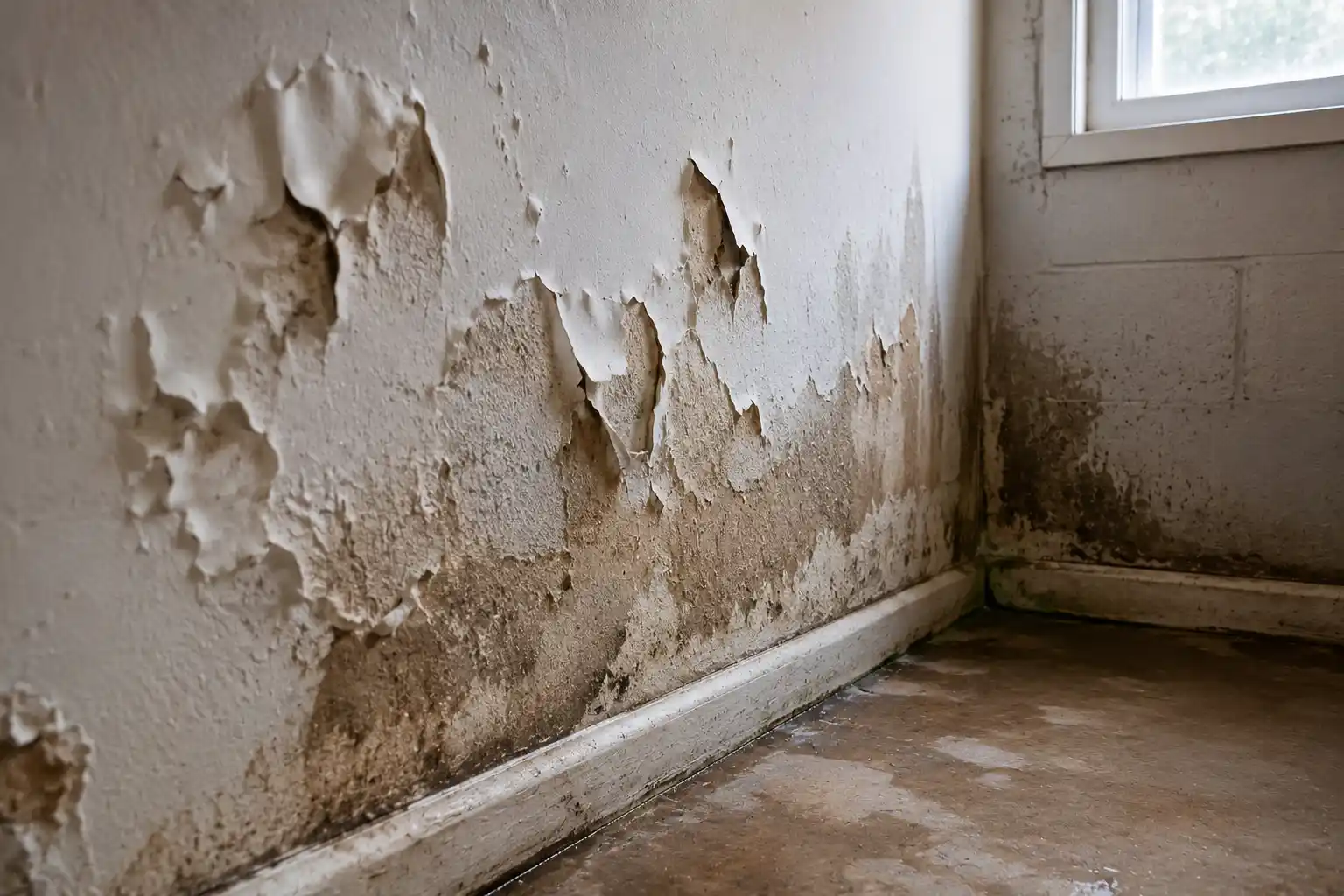
3. Efflorescence and Chalky White Residue
- What to look for: A white, chalky, or crusty powder forming across your concrete or brick foundation walls.
- Why it happens: This buildup occurs when water carries natural salts through the masonry and leaves them behind as it evaporates, proving that moisture is constantly seeping through.
4. Cracked Walls and Foundation Shifts
- What to look for: Expanding, wide, or jagged cracks running horizontally or vertically across your foundation walls.
- Why it happens: Hydrostatic pressure from saturated soil pushes hard against your structure. Understanding how to tell if a basement has water problems often starts with checking for these shifting wall cracks.
5. Rusted Metal Framing and Fixtures
- What to look for: Rusted metal window frames, support posts, and anchor nails in your lower level.
- Why it happens: Metal should never rust under normal conditions. Corrosion is a direct chemical reaction to standing water and high humidity, signaling chronic moisture issues.
6. Warped Wood and Sagging Floors
- What to look for: Doors that suddenly stick, windows that jam, or floorboards that feel bouncy overhead.
- Why it happens: Wood absorbs moisture like a sponge, causing it to swell and rot. Dealing with water damage in the basement requires checking all wooden structural elements before support beams fail.
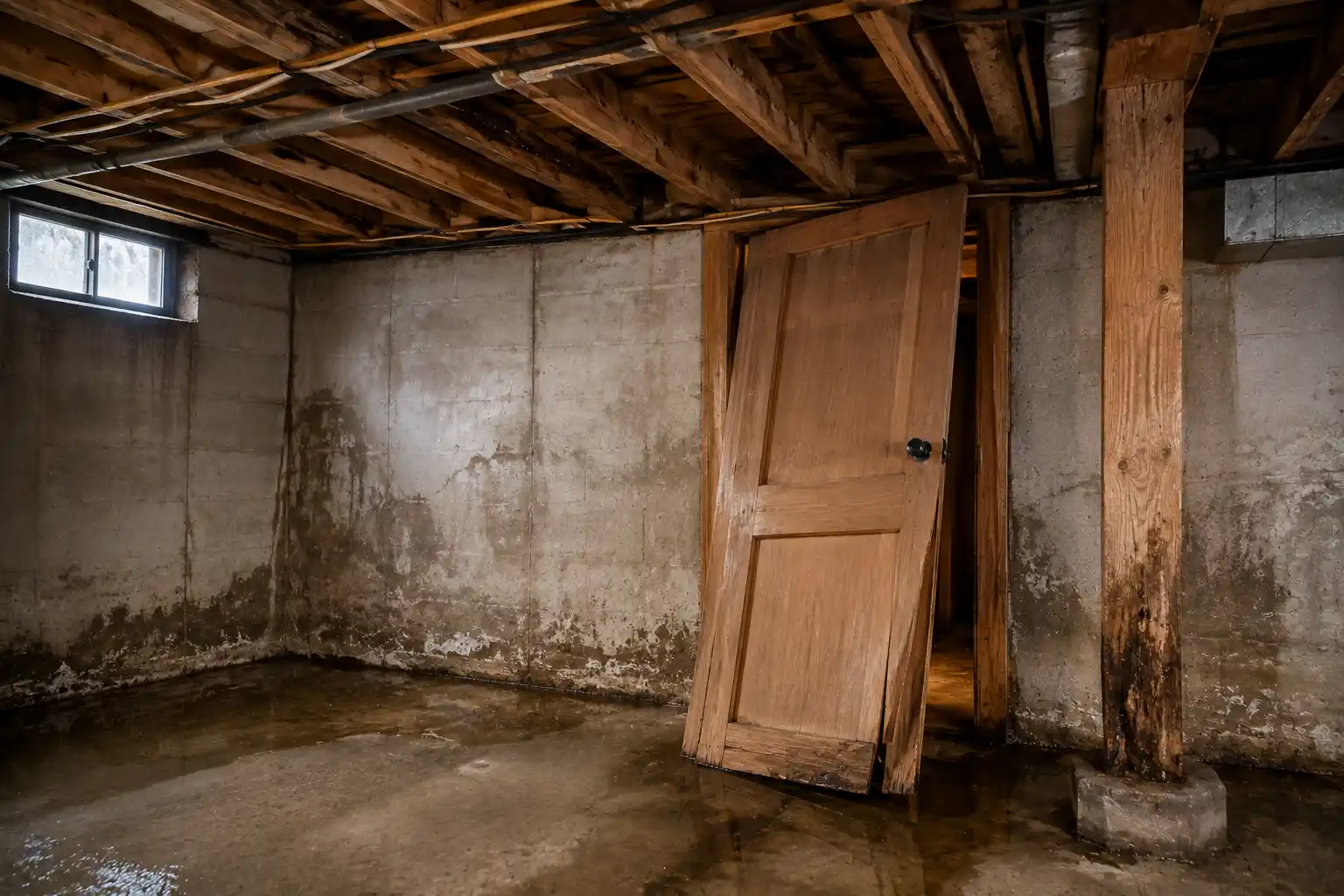
7. Pooling Water and Damp Puddles
- What to look for: Actual standing puddles gathering on the concrete floor after a heavy rainstorm.
- Why it happens: Water should never pool inside your living space. Whether it trickles through a floor crack or backs up through a drain, active pooling means your drainage system is failing.
8. Pests and Unwanted Visitors
- What to look for: A sudden influx of silverfish, centipedes, termites, or rodents scurrying across the floor.
- Why it happens: Damp, dark spaces attract pests that thrive in humid environments and wet organic matter. Keeping the space dry is the best way to keep these critters away.
9. Mold and Mildew Colonies
- What to look for: Black, green, or white mold spots clustering on baseboards, corners, or behind old wall paneling.
- Why it happens: Homeowners often plan warning signs your basement needs remodeling projects, only to find toxic mold hiding out of sight. Always clear out moisture issues before starting renovations.
10. High Indoor Humidity and Condensation
- What to look for: Sticky air the moment you walk downstairs and constant condensation dripping down glass windows.
- Why it happens: If a dehumidifier runs constantly without making a difference, large amounts of water are actively entering your home from the surrounding soil.
Understanding Root Causes and Long-Term Risks
| Issue Type | Primary Cause | Long-Term Risk |
| Poor Exterior Drainage | Yard sloping toward the house | Heavy hydrostatic pressure against walls |
| Saturated Foundation | Unextended roof gutters | Foundation shifts and structural failure |
| Hidden Leaks | Chronic soil moisture | Rotted load-bearing beams and mold growth |
Simple Steps for Everyday Moisture Prevention
- Extend Downspouts: Ensure roof downspouts push rainwater at least six feet away from your foundation walls.
- Grade Your Yard: Check that the soil around your house slopes gently outward to encourage proper runoff.
- Clear Gutters: Clean your roof gutters regularly to prevent overflow from soaking your foundation perimeter.
- Run a Dehumidifier: Use a quality dehumidifier during humid months to keep indoor humidity levels low.
Why Professional Waterproofing is Essential
Tackling severe moisture problems requires specialized equipment and proven techniques. Surface sealants only offer a temporary fix for deeper foundation leaks.
Professional contractors evaluate your entire property layout, exterior drainage, and soil composition to design a custom defense strategy. Investing in expert waterproofing solutions safeguards your family and secures your property value for the long run.
Frequently Asked Questions:
Q1. Can I waterproof my basement myself?
You can handle minor fixes like sealing small cracks or adding downspout extensions. However, serious structural leaks require professional systems like interior French drains and sump pumps.
Q2. How much does basement waterproofing cost?
Costs vary based on the severity of the issue and the size of your home. Simple repairs are affordable, while full perimeter systems require a larger investment.
Q3. Will homeowners insurance cover water damage?
Most standard policies cover sudden pipe bursts, but they typically exclude groundwater seepage and weather-related flooding unless you buy a separate rider.
Q4. How often should I check for leaks?
Inspect your lower level at least once a month and immediately after heavy storms or rapid snowmelt.
Q5. Why choose Tru Integrity for my home?
Tru Integrity provides expert inspections, reliable solutions, and top-tier waterproofing services designed to keep your home dry. Trust Tru Integrity to handle your toughest moisture problems safely.